
 There is a quiet but powerful shift happening in how innovation moves across borders
Published: Fri 13 Feb 2026, 8:24 PM
Updated: Sat 14 Feb 2026, 12:47 AM
By: Nabil Arnous | Partner Content
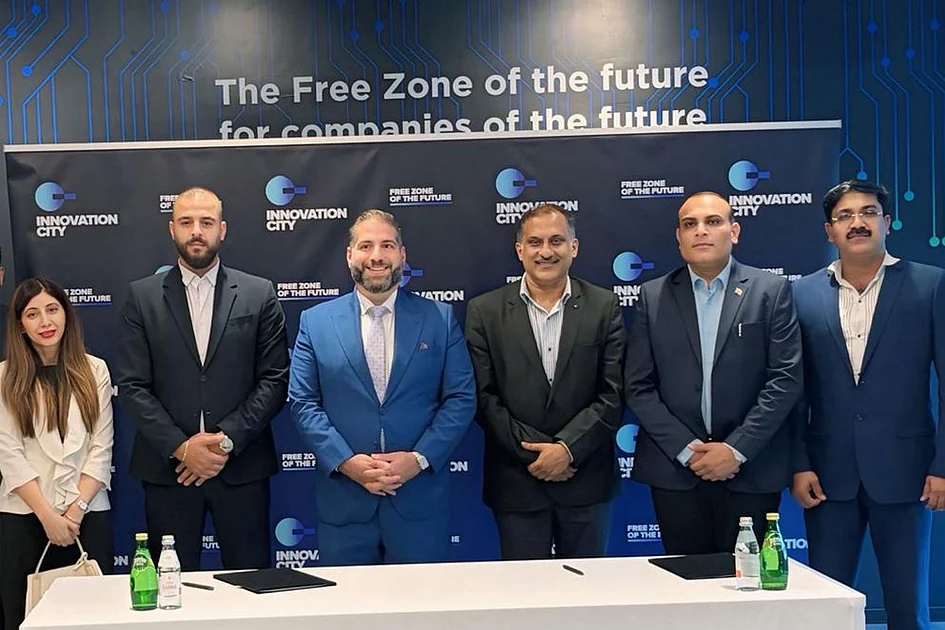
For decades, startups have looked at the West first. Today, the most dynamic growth corridors are being built between emerging innovation economies which are agile, ambitious, and globally minded from day one. That is why the collaboration between Innovation City Free Zone, Bhubaneswar City Knowledge Innovation Cluster and KIIT Technology Business Incubator matters.
On 15th February, I am attending what I strongly believe is the beginning of a structured India–UAE innovation corridor.
What excites me most about this collaboration is its intent. We are not talking about generic exposure or soft-landing programmes. We are building deliberate pathways and identifying founders who are truly ready for global expansion and connecting them to a regulatory environment designed for scale.
Ras Al Khaimah has been quietly sharpening its edge. Through Innovation City, it has created a free zone engineered for the next generation of industries such as AI, Web3, digital assets, gaming, fintech and advanced technologies. But infrastructure alone does not create an impact. Ecosystems do.
India, and particularly Bhubaneswar, represents one of the most compelling startup growth stories outside the usual metropolitan narratives. The partnership with BCKIC and KIIT-TBI is strategic because it taps into an ecosystem where academia, government, and entrepreneurship already intersect. That maturity matters. It ensures we are engaging founders who understand both innovation and execution.
The programme’s design reflects this seriousness. A curated cohort of 10–15 startups will be selected not for potential alone, but for readiness, demonstrating scalability, regulatory awareness, and alignment with the UAE’s innovation-driven economy. This is about global viability, not aspiration.
I am particularly looking forward to seeing how these founders interpret the Middle East and North Africa (Mena) market opportunity. The UAE is no longer just a gateway; it is a launchpad. With regulatory clarity, international banking access, and proximity to capital, it offers what many early-stage companies struggle to find at home: speed.
What makes this collaboration distinctive is its structural nature. It is not a one-off delegation visit. It is a pipeline. A framework. A repeatable bridge between ecosystems.
Cross-border innovation has often been opportunistic. This is intentional.
If we are serious about shaping globally competitive entrepreneurs, we must move beyond networking events and towards systemic alignment, with government support, incubator depth, regulatory facilitation, and investor access working in concert. This initiative does precisely that.
For Ras Al Khaimah, it signals ambition. For India’s founders, it signals access. For the wider region, it signals a rebalancing of how global startup flows will move over the next decade.
I believe the future of innovation will belong to those who build bridges early and build them well.
This is one such bridge.