
NBC
The best TV shows of all time often don’t arrive fully-formed. Even “The Simpsons,” which remains one of the greatest series in small-screen history, began life as a series of janky cartoons designed to buffer the ad breaks on “The Tracey Ullman Show.” When the Simpson family finally did get their own series, it would take a season or two for the show to find its groove. Likewise, season 1 of “Friends,” though charming in its way, is full of generic sitcom jokes that would lessen as the series went on and found its way.
Sometimes, rather than letting these shows find their footing naturally, however, network executives step in to instigate a full refresh. Often, these overhauls can be the spark shows need to become hits. Take beloved ’90s sitcom “Saved By the Bell,” which started life as a totally different show called “Good Morning, Miss Bliss.” In that instance, the TV overlords were right to reinvent the series, shrewdly singling out the kids that made the original watchable and giving them a cool new show set in a California high school.
But sometimes, these attempts can make a bad show even worse. TV history is full of woefully ill-advised reinventions that have torpedoed series before they had a chance to settle in — and it’s not always down to clueless executives. Luckily for us, this has also resulted in some of the most hilarious and often unbelievable events in TV history. Here are five of the most shocking examples.
Nichols
NBC
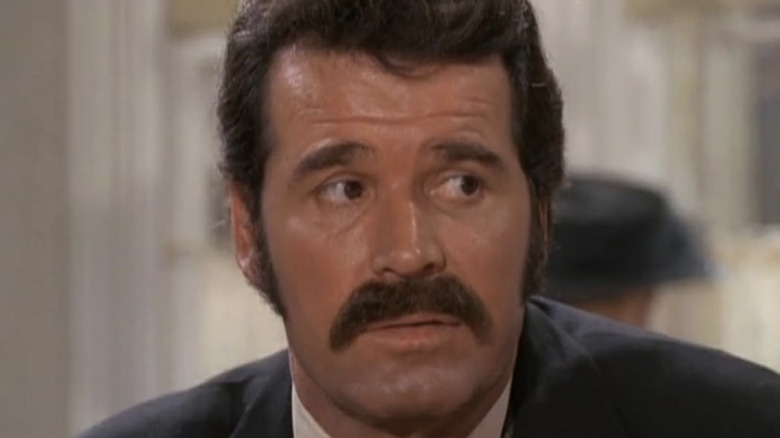
“Nichols” saw James Garner play Sheriff Frank Nichols in a short-lived “Western” series that was a bizarre enterprise from the get-go. This offbeat 1970s Western featured a “Superman” star in Margot Kidder, and followed Nichols as he dealt with criminality in the titular town (yes, the town is also called Nichols). The show was set in 1914 and saw the sheriff ride a motorcycle in an attempt to update the genre for the audiences of the 1970s. That was, of course, the decade the Western died, and “Nichols” didn’t help in that regard. The show was canceled after one season, but not before the finale completely reinvented the series.
In the final episode of season 1, Garner’s sheriff is gunned down by a criminal and dies, only for his identical twin, also played by Garner, to show up and attempt to avenge his brother’s death. This character was differentiated from his brother with a considerable mustache, and rode off on a motorcycle at the end of the episode suggesting he might return. All of which seemed to be setting up a new season with a more hardened lead character.
There are conflicting reports as to why this happened, with some suggesting it was NBC attempting to retool the show as a more traditional Western before pulling the plug altogether. In a Television Academy interview, however, Garner claimed that it was all his idea, saying, “They had canceled it, I said, ‘Okay, I’ll fix him.’ They want to cancel it, we’ll just kill him.” That doesn’t really account for why Nichols’ twin brother was brought in, but according to Garner it was simply because they “had to do the episode.” Needless to say, “Nichols” is not remembered as one of the best Western TV shows.
Baywatch Nights
The Baywatch Company
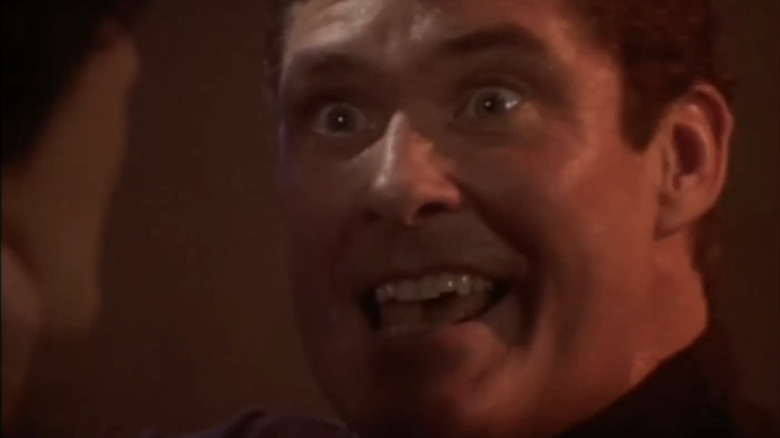
“Baywatch Nights” was a spin-off from the show proper which saw police officer Sgt. Garner Ellerbee (Gregory Alan Williams), decide to start a detective agency with Mitch Buchannon (David Hasselhoff) and a new detective by the name of Ryan McBride (Angie Harmon). The show debuted with a theme song crooned by Hasselhoff and none other than Lou Rawls, who also appeared throughout season 1 as nightclub owner Lou Raymond. When season 2 arrived, however, Rawls was nowhere to be seen, and he wasn’t the only thing that had changed.
Despite the mothership series being a massive hit in syndication, “Baywatch Nights” failed to find an audience. So, what did the producers do? Turn it into an “X-Files” rip-off. Suddenly, Buchannon was an investigator of the supernatural but his partner, Ellerbee — the character around which the show was originally conceived — evidently decided not to join him on this new venture. Instead, Buchannon was paired with Dorian Gregory’s paranormal expert Diamont Teague, and together the pair investigated everything from sea monsters to resurrected vikings and even a human/fish hybrid woman.
“Baywatch” was a silly, over-the-top show, but it was rooted in the real-world experiences of life-guards. “Baywatch Nights,” which was set in the same universe, became an absolutely unhinged series that saw Hasselhoff’s former lifeguard grappling with aliens and literal time travel. Unsurprisingly, this ill-advised attempt at emulating the success of “The X-Files” — itself inspired by a forgotten ’70s horror franchise — did not work and “Baywatch Nights” was canceled after the second season.
‘Til Death
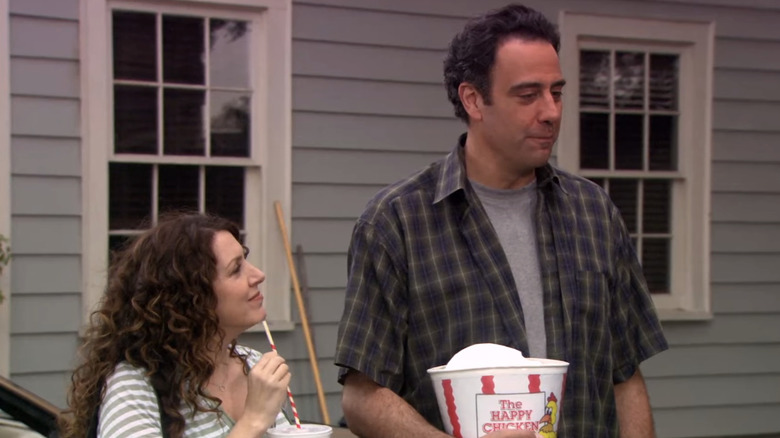
Fox
“‘Til Death” aired on Fox from 2006 to 2010, and by the time it finished it was almost unrecognizable. This time, however, it had nothing to do with network-mandated changes. Created by husband and wife duo Josh Goldsmith and Cathy Yuspa, the sitcom focused on Eddie and Joy Stark (Brad Garrett and Joely Fisher), a Philadelphia-based married couple who spent the first two seasons clashing with their newlywed neighbors, Jeff and Steph Woodcock (Eddie Kaye Thomas and Kat Foster). Things started to change in the third season as the focus shifted to Eddie and Joy’s relationship with Kenny Westchester (J. B. Smoove). What happened to Jeff and Steph? They disappeared and nobody mentioned them again. But the true craziness was yet to come.
The fourth and final season was produced to make the show eligible for syndication and the writers basically gave up, transforming the show into a bonkers, fourth-wall-breaking, surrealist dream. As The AV Club observed back in 2010, with its fourth season “‘Til Death” evolved from a sub-par, under-seen sitcom to “the weirdest show on television” and “something so balls-out bizarre that it would be borderline unwatchable.”
It’s hard to convey just how strange the show became, but the Stark’s daughter, Ally, is a good example. Krysten Ritter — whose 2025 thriller with Kiernan Shipka is a hidden gem on Netflix — played Ally in seasons 1 and 2 but the character was played by Laura Clery in seasons 3 and 4. In that final season, the character was also played by Lindsey Broad before that actor was once again replaced by Kate Micucci. Ally’s boyfriend and later husband, Doug Von Stuessen (Timm Sharp) then started to suspect he lived in a sitcom as a direct result of this parade of actors brought in to play his wife.
seaQuest DSV
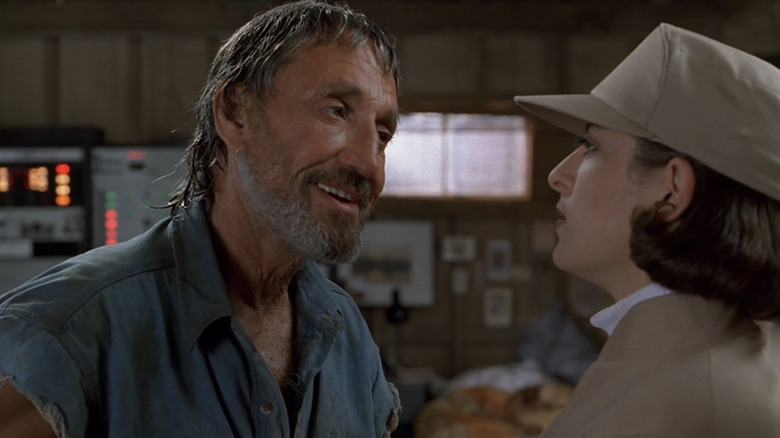
NBC
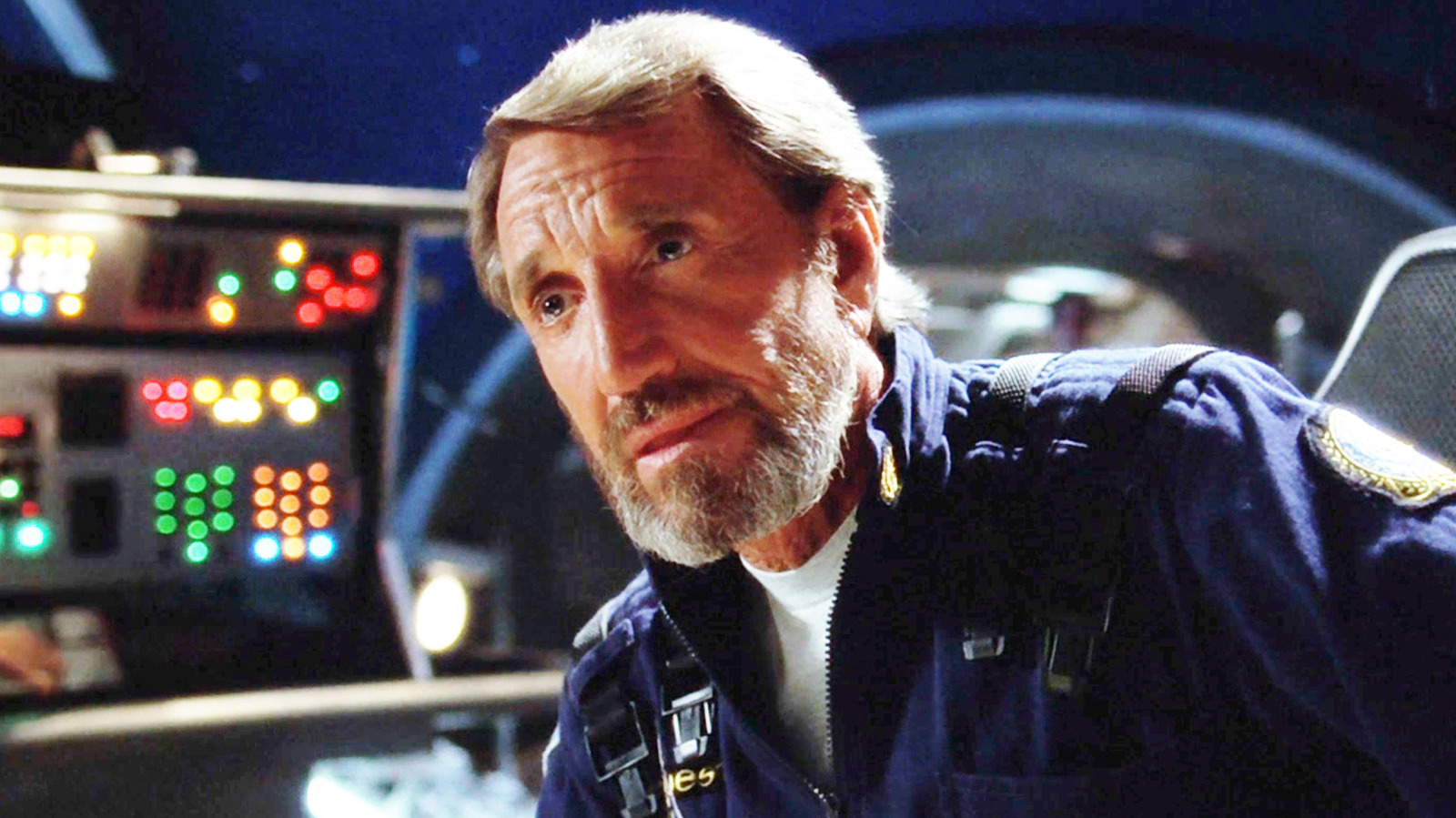
“Baywatch Nights” wasn’t the only show to go from grounded to fantastical sci-fi nonsense. Before David Hasselhoff went from investigating crimes to tangling with sea creatures, Roy Schneider had a very similar trajectory in “seaQuest DSV.” This show saw executive producer Steven Spielberg team up with a “Twilight Zone” writer to create a series which started out as a drama using realistic science fiction elements but ended up a completely different show with an all-new lead actor and even a title change.
When it debuted in 1993, “seaQuest DSV” focused on the titular submarine and its exploratory missions in the year 2018. Schneider starred as the leader of the submersible’s crew, Captain Nathan Bridger, who was tasked with carrying out oceanographic research. The first season mixed interpersonal drama with explorations of real-world environmental issues and politics. Then came the sea monsters.
“seaQuest DSV” wasn’t exactly a ratings hit for NBC and the network decided to shake things up for season 2. Cast changes ensured the crew of the DSV 4600 was suddenly younger and instead of carrying out boring old undersea research, now they were discovering alien ships and traveling through time. The ratings didn’t change but Schneider’s view of the show did. As the Orlando Sentinel reported, the actor spoke from the set of the newly-revamped series in 1994, and he didn’t hold back. “It’s total, total childish trash,” he said. “I’m ashamed of it.”
Unsurprisingly, Schneider departed after the second season, which as the Los Angeles Times reported, was considered “mystifying,” “ridiculous,” and “bafflingly unprofessional” based on an informal poll of producers. For its third and final season, the show became “seaQuest 2032,” changing the setting to the titular year and adding Michael Ironside as the star. It lasted for 13 episodes.
Superboy/The Adventures of Superboy
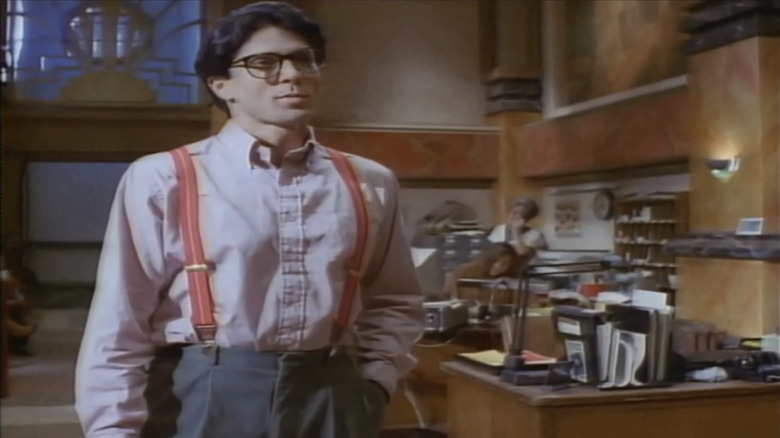
Alexander and Ilya Salkind Productions
“Superboy” is yet another series that underwent a seemingly unprompted sci-fi reinvention. This time, however, there was no “X-Files”-effect at play. The show premiered in 1988 and ran until 1992, with “The X-Files” debuting a year later in 1993. All of which raises the question of why this little-known DC superhero show was reinvented mid-way through to have its two stars investigate paranormal and supernatural activity as part of something called the The Bureau for Extra-Normal Matters.
“Superboy” was created by Alexander Salkind and Ilya Salkind, the producers behind Richard Donner’s 1978 classic and prototypical blockbuster “Superman.” When it first started airing in syndication, “Superboy” starred John Haymes Newton as the titular hero/Clark Kent, Stacy Haiduk as friend and love interest Lana Lang, and Scott James Wells as Lex Luthor. In season 2, both Newton and Wells were out, with Gerard Christopher taking over the lead role and Sherman Howard stepping in as Lex Luthor. It was the right move. “Superboy” was suddenly good after a first season that left a lot to be desired.
So, what did the producers do for season 3? Overhauled the show almost entirely. Now called “The Adventures of Superboy,” the series moved from being set at a University to The Bureau for Extra-Normal Matters in Capitol City, Florida. Clark and Lana went from students to interns at the agency, investigating all sorts of strange and eerie occurrences. Meanwhile the show got darker, both in terms of its look and tone, with Superboy at one point almost killing a man who’s suggested to be a rapist. Amazingly, “The Adventures of Superboy” actually ran for two seasons before it was canceled. If nothing else, it qualified as a ‘90s sci-fi TV show that’s worth watching just for how weird it was.