
ROCKFORD, Ill. (WIFR) – A page may soon turn on how mental health professionals diagnose certain disorders.
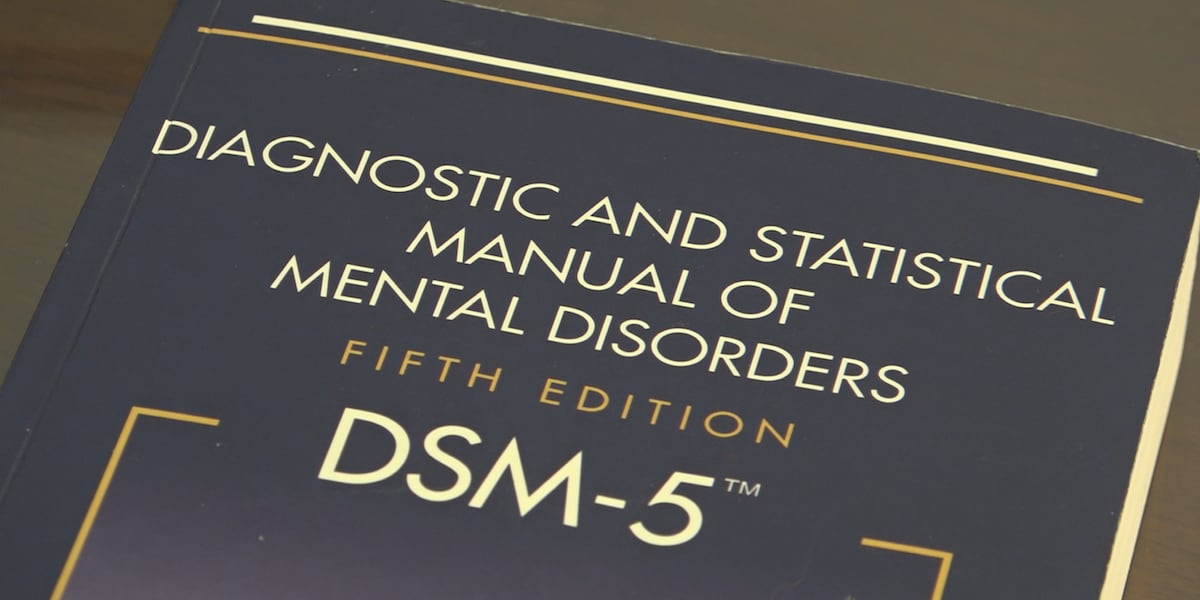
The American Psychiatric Association (APA) released a series of papers last month offering a proposed roadmap for the future of the Diagnostic and Statistical Manual of Mental Disorders or DSM.
What is the DSM?
Nicknamed “psychiatry’s Bible,” the DSM is used to categorize mental health disorders, create diagnostic criteria, and provide descriptive text to help professionals make an appropriate diagnosis based on their observations of a patient’s symptoms.
“With a host of other factors that we look at, we will see if a person meets the criteria that’s in the DSM. Right now, it’s the DSM-5. That would lead us to a diagnostic impression or initial diagnosis,” explained Kevin Polky, a licensed clinical social worker and founder of Four Corners Wellness Center.
The book is used by more than those in the psychiatric field. It is considered the foundation of how mental health issues are understood. It gives patients, researchers, insurance companies, lawyers and others a common language to identify particular mental health issues.
What could change with the DSM?
One of the major changes outlined in the paper is making the DSM an online “living document.”
“It guides almost every part of our work. We could update it live as it is coming out. This could really revolutionize how we look at mental health treatment,” said clinical psychologist Jason Soriano.
Right now, the book is currently more than 1,000 pages and hasn’t been significantly updated since 2013. Soriano says the gap in updates is a problem because it doesn’t take into account new research or techniques.
“The DSM is often considered outdated; it has trouble keeping up with updated research and new information. Autism is a great example. What has happened with our understanding of autism from 10 years ago is so different than now,” said Soriano.
More proposed changes
The papers also suggest incorporating more science-backed evidence, like biological markers, to help guide experts to understand mental disorders, their diagnoses and treatment.
“We’re now better able to look at some of those testing, some of those scans to see what is playing a part,” said Polky.
Experts agree that changes must be made to their “bible,” but they are leery and wait for more details.
“From an empirical, data-based research basis is what I will be more interested in finding out how that is vetted,” said Polky. “I am encouraged by it, but I also am looking to see what is that actually going to mean.”
There is no timeline for the changes. Until a change happens, Soriano says clinicians should keep themselves updated.
“All of us are responsible for staying up to date and not just relying on one source,” said Soriano.
Copyright 2026 WIFR. All rights reserved.