
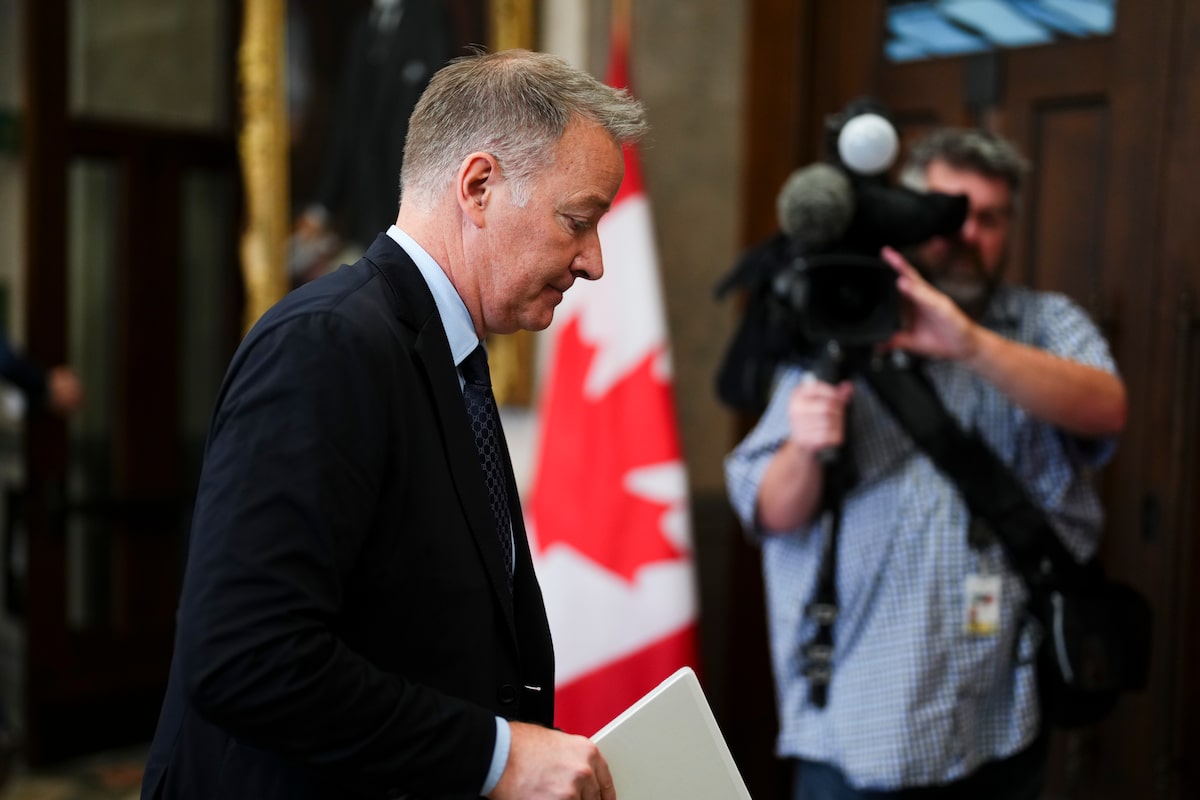
Secretary of State for defence procurement Stephen Fuhr at the House of Commons in October, 2025.Sean Kilpatrick/The Canadian Press
Ottawa is promising to buy Canadian, cut down bureaucratic barriers and re-arm Canada in its new defence industrial strategy, in which the federal government also plans to pick champions in a sea of companies vying for a piece of the country’s ballooning defence budget.
Over the next ten years, the federal government says it plans to double Canada’s defence exports, create 125,000 new jobs, increase the share of defence acquisitions awarded to Canadian firms to 70 per cent and grow defence revenues for small- to medium-sized businesses by more than $5.1-billion annually.
The strategy, which was supposed to be released last week but delayed because of the mass shooting in Tumbler Ridge, B.C., follows a series of announcements by the federal government about its intention to boost Canada’s economy through increased defence spending. However, without the strategy to clarify where these dollars were to be spent, Canadian businesses have been left in limbo, trying to decide whether their expansion into the sector will pay off and increase their chances of selling at home.
Canada signs agreement to work with Denmark on Arctic security
In its 2025 fall budget, the federal government set aside $81.8-billion for defence over five years, $6.6-billion of which was allocated to its Defence Industrial Strategy.
By 2035, the federal government intends to boost defence spending to 5 per cent of its GDP. Achieving this goal by implementing its strategy will mean spending $180-billion on defence procurement, $290-billion on defence-related infrastructure, and $125-billion on downstream economic activity, according to the federal government.
In the strategy document’s introduction, Defence Minister David McGuinty, Industry Minister Mélanie Joly and Secretary of State for defence procurement Stephen Fuhr, reference Russia’s invasion of Ukraine and the COVID-19 pandemic as turning points for how Canada thinks about supply chain vulnerability. This, plus the ruptured world order Prime Minister Mark Carney spoke of during his recent speech in Davos, is the setting in which Canada’s industrial strategy is being released.
“In this uncertain world, it is more important than ever that Canada possess the capacity to sustain its own defence and safeguard its own sovereignty,” the strategy reads.