
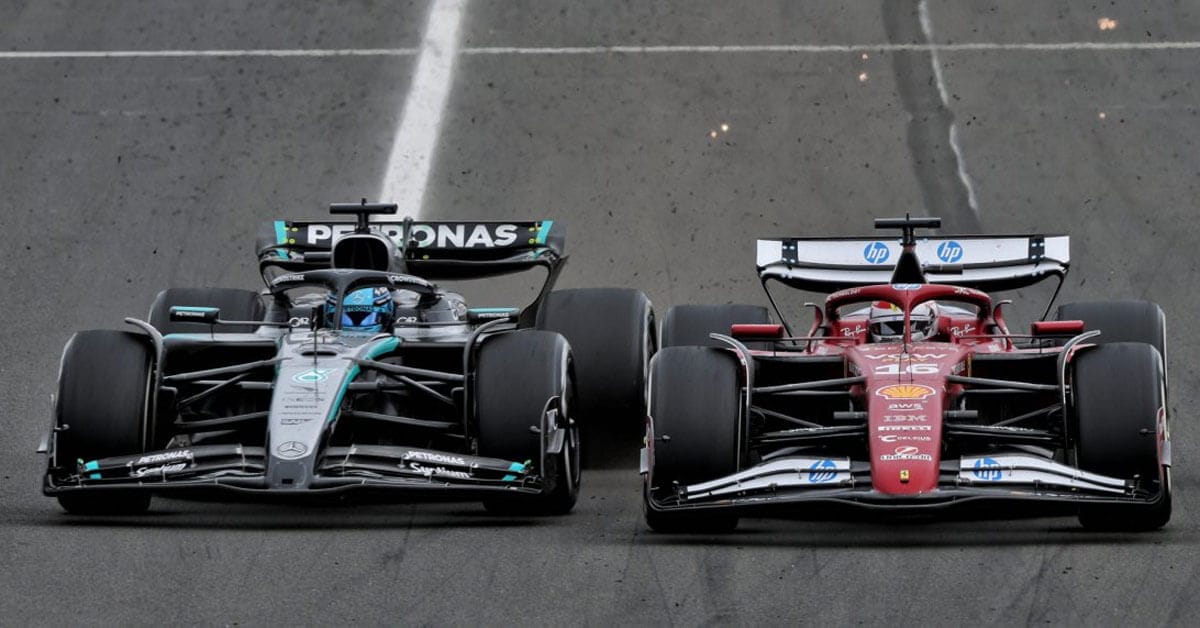
Ferrari expect FIA intervention over Mercedes engine advantage before Australian Grand Prix
Ferrari are understood to be among several Formula 1 teams who believe the FIA could step in and outlaw a controversial element of Mercedes’ new power unit before the season-opening Australian Grand Prix in Melbourne.
As Formula 1 prepares for a new era shaped by sweeping technical regulation changes, the spotlight has fallen firmly on engine performance, energy deployment, and race start procedures. The Australian Grand Prix will provide the first competitive benchmark of how all 11 manufacturers compare after an intense winter of development under the revised power unit framework.
However, the build-up to the 2026 season has not been without tension. Pre-season testing in Bahrain triggered widespread debate among drivers, engineers, and fans regarding the effectiveness and safety of the new hybrid power units. Both Max Verstappen and Lewis Hamilton have publicly expressed reservations about the direction of the regulations, particularly in relation to drivability and energy recovery systems. Concerns have also emerged about whether the revised turbo characteristics and battery deployment strategies could compromise race starts.
Against this backdrop, Mercedes’ engine concept has become a focal point of discussion. Reports suggest the German manufacturer has achieved an aggressive compression ratio within the internal combustion engine, potentially unlocking gains in thermal efficiency and straight-line performance. While Mercedes have not publicly detailed the specifics, rival teams are believed to be scrutinizing the interpretation closely.
According to reports from Swiss publication Blick, key stakeholders within Formula One Management are set to hold discussions regarding possible clarifications to the power unit regulations. McLaren, in particular, are said to be advocating for multiple rule adjustments ahead of Melbourne. Team principal Andrea Stella has reportedly voiced concerns that the turbo lag characteristics of the new engines could leave cars at the rear of the grid vulnerable during race starts, increasing the risk of stalled launches and dangerous speed differentials when the lights go out.
Ferrari had previously raised questions about race start dynamics during earlier regulatory discussions, but no formal changes were implemented at the time. In response, the Scuderia reportedly engineered their latest power unit architecture to mitigate turbo lag and optimize hybrid deployment off the line. This proactive development approach may now prove significant if further rule clarifications are introduced.
Beyond race starts, Andrea Stella is also believed to be worried about overtaking dynamics. With battery deployment strategies converging across manufacturers, there are fears that cars may reach similar top speeds on the straights, reducing passing opportunities and intensifying the importance of qualifying performance.

The same report indicates that Ferrari, Honda, and Audi are frustrated by what they perceive as an aggressive interpretation of the engine rules by Mercedes. It has been suggested that Ferrari expect the FIA to intervene and prohibit the elevated compression ratio concept currently associated with the Mercedes power unit before the Australian Grand Prix takes place.
If such a directive were issued, it could have significant implications not only for the Mercedes works team but also for customer outfits including McLaren, Alpine, and Williams. The logistical challenge of redesigning and manufacturing revised power unit components in time for Melbourne would be considerable, raising questions about competitive balance in the early rounds of the championship.
Ferrari staying calm amid power unit controversy
While attention swirls around Mercedes’ engine performance, Ferrari appear content to operate away from the media spotlight. Team principal Fred Vasseur has reportedly expressed satisfaction that pre-season headlines have not centered on the Scuderia. He indicated that maintaining a low profile allows the team to concentrate on internal development rather than external speculation.
Fred Vasseur suggested that, at this stage of the season, performance comparisons remain unreliable. Variables such as fuel loads, power unit modes, and car weight distort the true competitive picture, making it difficult to determine whether Mercedes, Ferrari, or any other team holds a definitive advantage. He emphasized that differences in testing configurations could outweigh the visible gaps between cars on the timing sheets.
The Ferrari team boss also underlined that the primary objective with a completely new car concept is to accumulate mileage and gather data. Unlike the previous season, when the team could benchmark against an established platform, the Italian side is effectively starting from zero with their latest design philosophy. Ensuring reliability and understanding the car’s behavior across different run plans are therefore seen as higher priorities than chasing headline lap times.
After a disappointing 2025 campaign in which Ferrari failed to secure a Grand Prix victory, pressure remains high on both Lewis Hamilton and Charles Leclerc to deliver results in the upcoming season. The stability of the Ferrari power unit project will be crucial if the Scuderia are to mount a serious title challenge under the new Formula 1 regulations.
With the FIA meetings looming and rival teams closely monitoring developments, the debate over compression ratios, hybrid deployment, and regulatory interpretation could shape the competitive order before a single race lap has been completed. The outcome of these discussions may not only define Mercedes’ early-season prospects but also influence the broader balance of power in Formula 1’s new technical era.
Feb 15, 2026Elena Rossi
Let other Scuderia Fans know about us


