
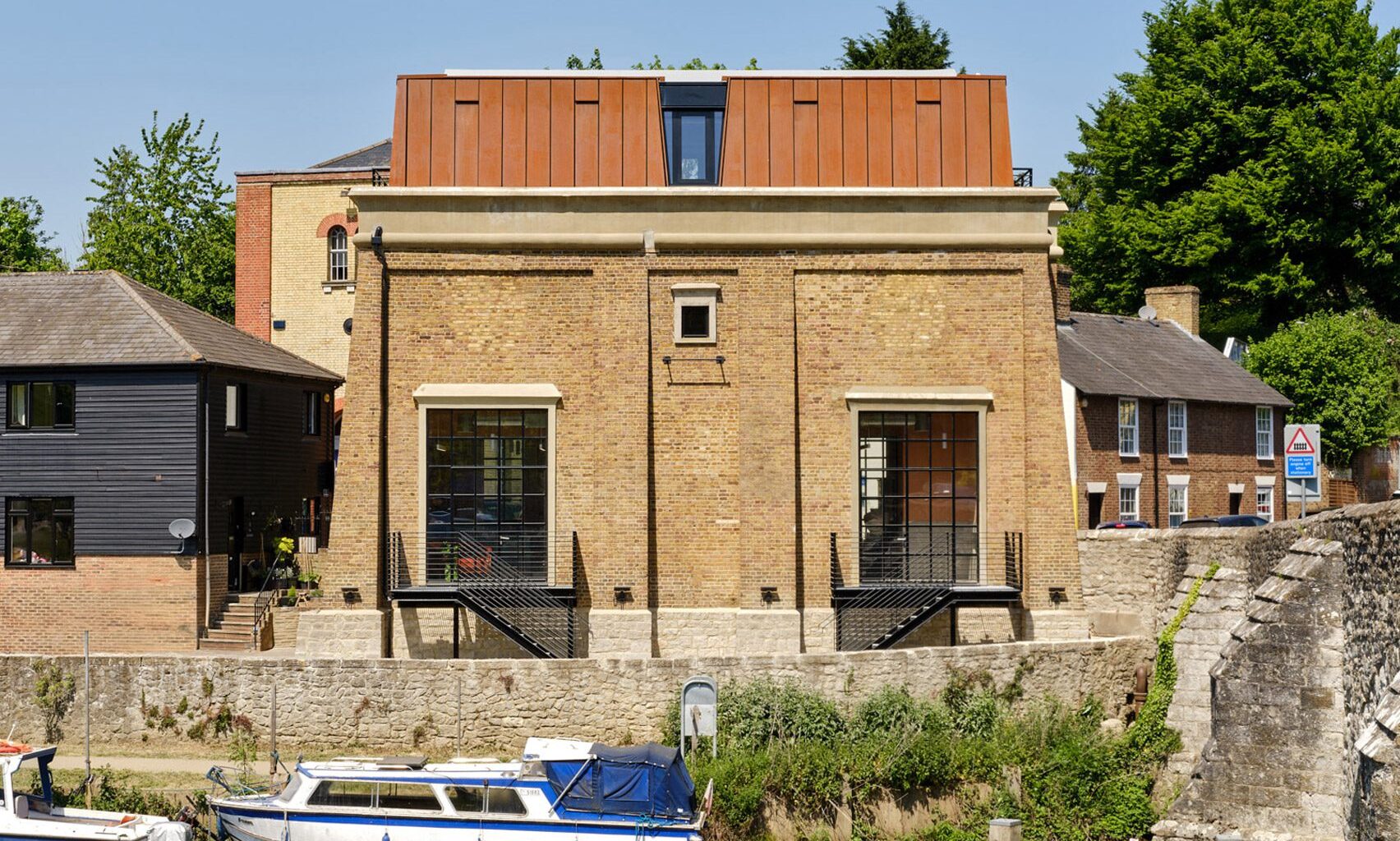
Sand-coloured walls, hieroglyph motifs and a trapezoidal rooftop extension celebrate the Egyptian revival style of this Grade II-listed boiler house in Kent, transformed into an office by local studio Felix Lewis Architects.
Now named The Works, the former boiler house overlooks the River Medway in East Farleigh. It was built in 1860 by architect James Pilbrow and represents a rare example of Egyptian revival architecture in Britain.
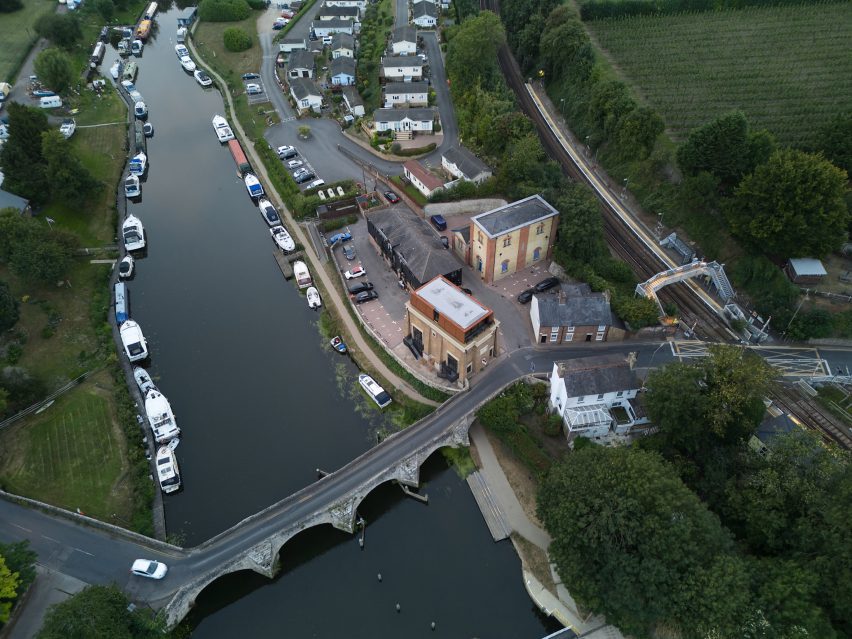 Felix Lewis Architects has converted an Egyptian revival-style boiler house
Felix Lewis Architects converted the structure into a headquarters for hi-fi company Chord Electronics, retaining its original character while overhauling its interiors with sand-toned walls and glazed partitions emblazoned with hieroglyphs.
On the roof of The Works, a training space is housed in an extension that continues the brick boiler house’s trapezoidal form, clad in rusty Corten steel in reference to the site’s former industrial purpose.
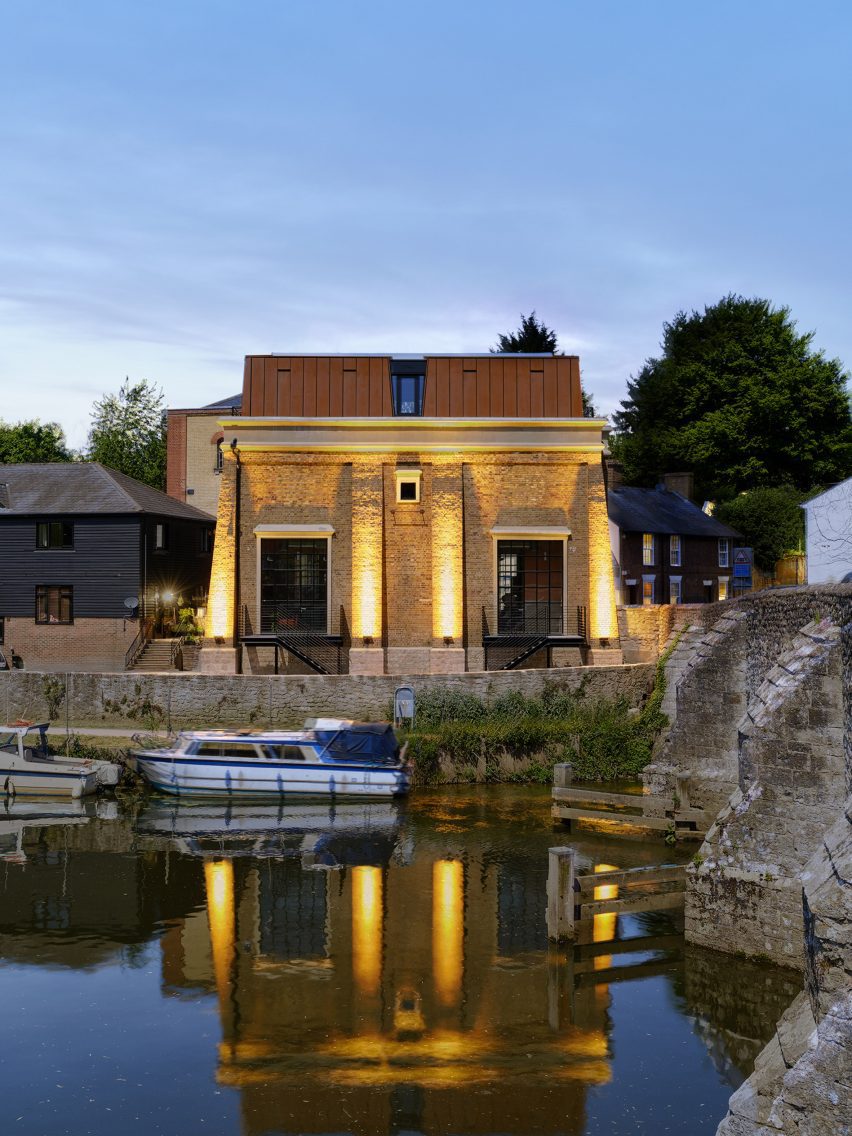 The building was updated with a trapezoidal rooftop extension
“A key ambition was for the extension to remain subservient to the original listed structure, responding to both planning and heritage requirements,” studio director Felix Lewis told Dezeen.
“Egyptian Revival architecture was historically used to express ideas of timelessness and eternity – often in memorials and tombs – and the intention here was to create something similarly timeless, with a slightly anachronistic quality,” he added.
“Rough industrial materials were used to reference the site’s industrial past, with the rusted tones of the Corten steel helping the building sit comfortably within the greens and browns of its semi-rural setting.”
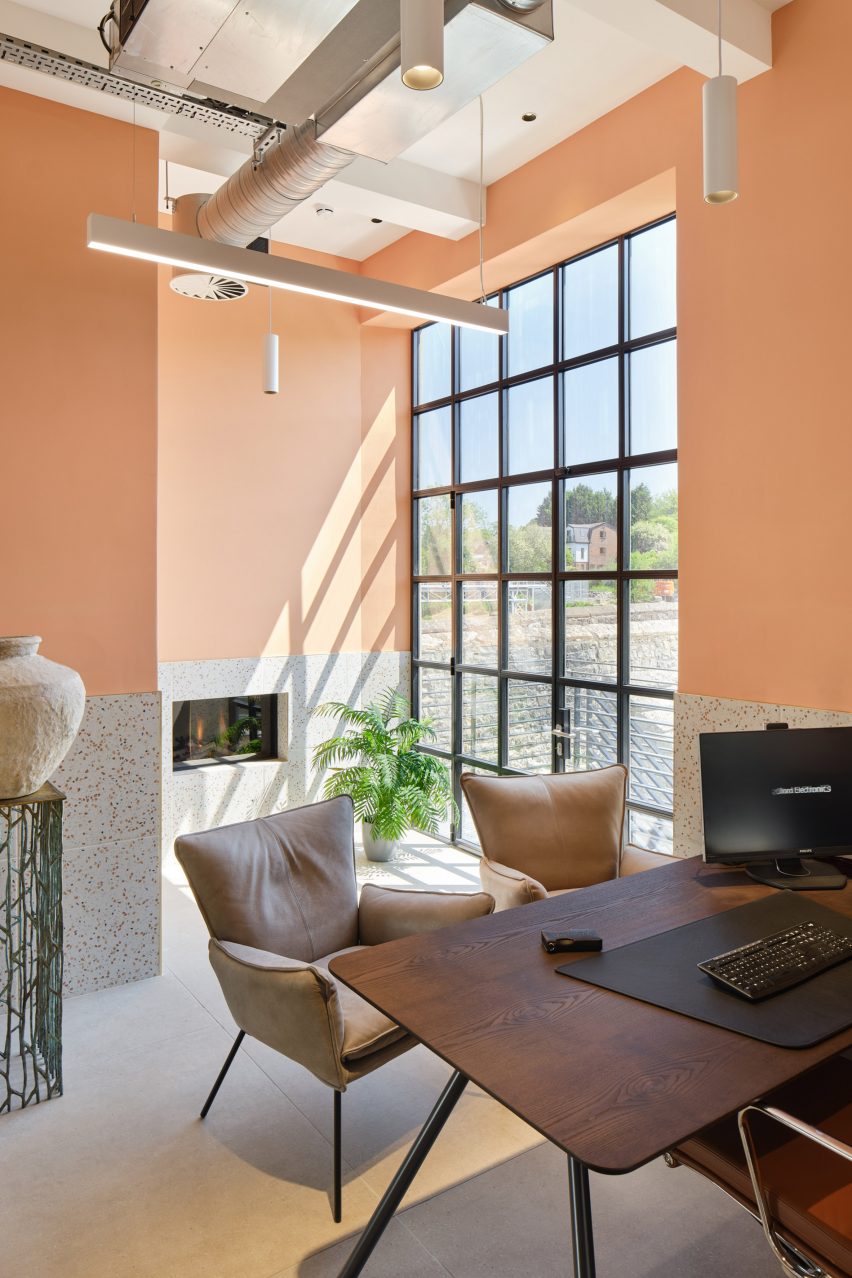 It now contains an office
The spaces of The Works have been distributed across three floors. A meeting room and the CEO’s office sit on the ground floor, featuring large windows overlooking the riverfront that can be accessed via two external black steel staircases.
In order to make the ground floor more flood resilient, it has been tanked and lined internally with a datum of terrazzo tiling, with the building’s services also raised above potential flood levels.
Nike and Palace Skateboards unveil transforming skatepark in Victorian public bathhouse
A timber-and-steel stair housed within a glazed volume leads up to further workspaces on the first floor. On both this level and the ground floor, bathrooms have been housed within the chunky volume of the boiler house’s former chimney.
On the top floor, the extension houses a large training space, which opens out onto a balcony created by stepping the extension back from the perimeter of the existing building’s roof.
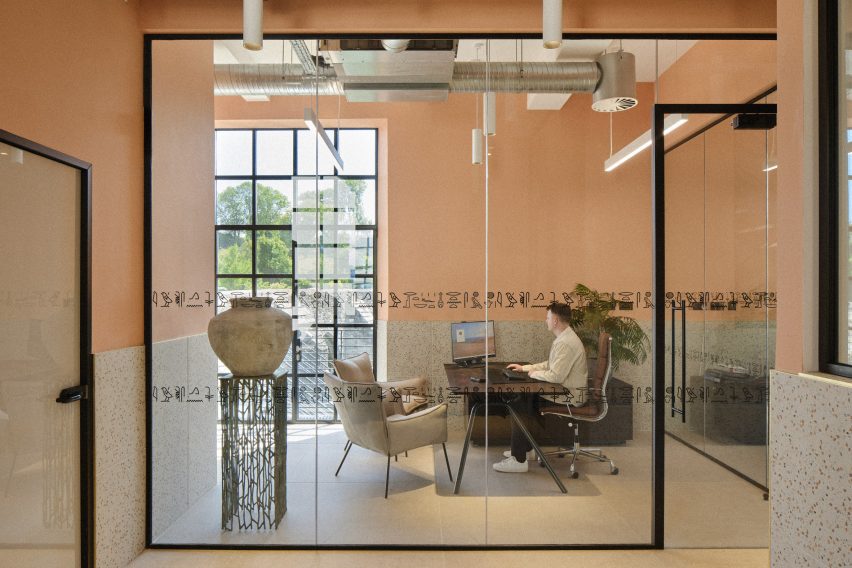 Sand-coloured walls and hieroglyph motifs feature throughout
While the balcony-facing side is fully glazed, the long sides of this extension were left blank to create what Lewis described as a “sense of monumentality”, with a single central window referencing the central opening in an Egyptian pylon or gateway.
Other conversions of former industrial workspaces into offices include 469 Bethnal Green Road in London by Carmody Groarke, which saw a former textile workshop expanded with a rooftop extension clad in galvanised steel, and Greencoat Place, which Squire and Partners created within a 19th-century warehouse with ornate cast-iron columns.
The photography is by Chris Snook.