
 Photographer: Eva Marie Uzcategui/Bloomberg
(Bloomberg) — About a decade ago, Saudi Arabia picked a veteran banker to help set up a debt-market program that’s since transformed the kingdom into one of the most prolific bond issuers globally. His next task is to help Riyadh draw in overseas cash and triple annual foreign direct investment to $100 billion by 2030.
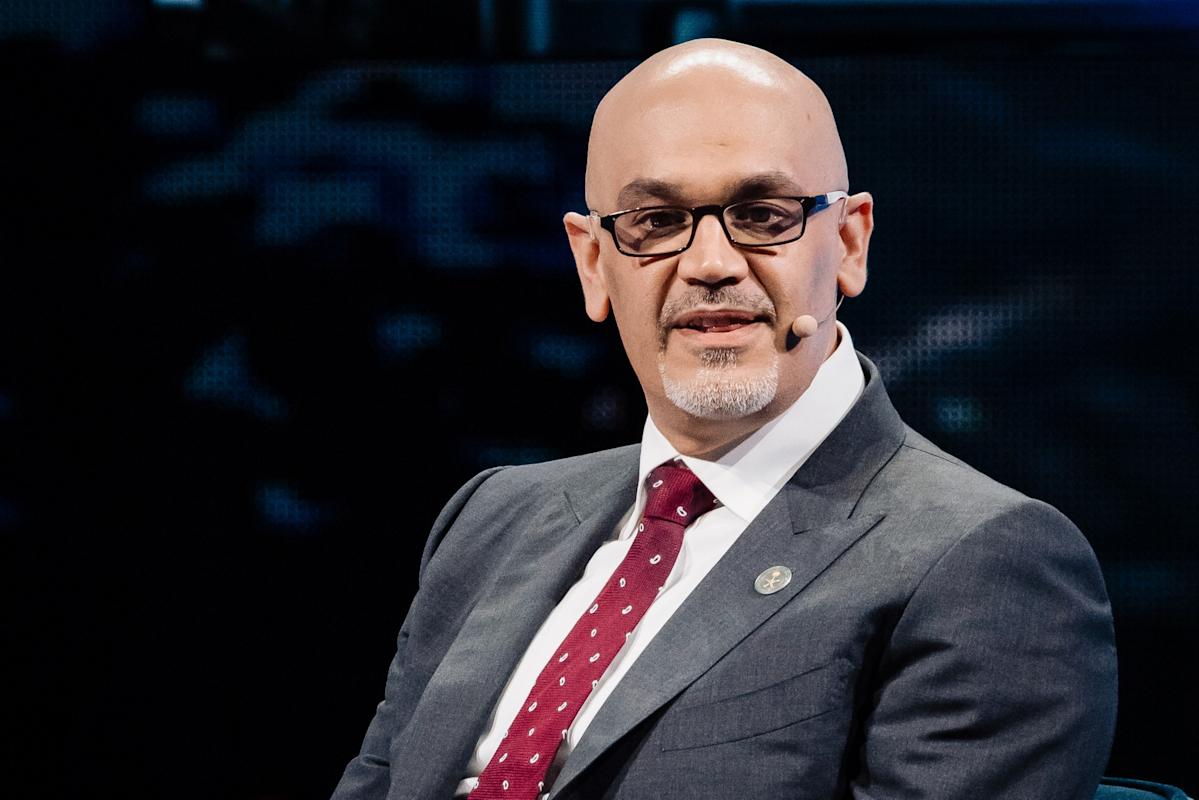
Fahad Al-Saif has become the new face of the Gulf nation’s push for capital, replacing Khalid Al-Falih as investment minister amid sweeping cabinet changes. In Al-Saif, the kingdom gets a finance veteran whose experience sits at the intersection of business, politics and sovereign wealth.
Most Read from Bloomberg
 Photographer: Eva Marie Uzcategui/Bloomberg
Al-Saif worked alongside Finance Minister Mohammed Al-Jadaan as Saudi Arabia started its debt program and began tapping global bond markets in 2016. When it raised a record $21.5 billion a year later, putting the kingdom on the map as one of the most active sovereign emerging-market issuers, Al-Saif was at the helm.
He’s held several positions at Saudi Arabia’s Public Investment Fund and at a Saudi banking giant backed by HSBC Holdings Plc, spending much of the last two decades navigating the worlds of investment and fundraising.
That experience will be critical for the kingdom, which increasingly needs cash as it cuts down on costly projects while working overtime to advance Crown Prince Mohammed bin Salman’s diversification plan.
More recently, he led investment strategy for the PIF. The $1 trillion fund is expected to lay out its plans for the next five years in coming weeks, potentially prioritizing domestic deals and targeting capital inflows to national champions like artificial intelligence firm Humain.
It’s unclear what Al-Saif’s appointment means for the PIF, and his profile was no longer available on a website detailing senior officials as of this week. The wealth fund and the investment ministry didn’t respond to requests for comment.
“He is fundamentally a banker and a financier, someone who speaks the language of international capital and understands the psychology and mechanics of investment flows,” according to Said El-Saadi, chief executive officer of Access KSA, a Saudi-based adviser to foreign businesses that works closely with the government.
“That financial discipline will be critical in aligning strategic priorities with the type of capital Saudi wants to attract,” he said.
Described by some as highly-strategic, data-driven and in tune with the requirements of international investors, Al-Saif has also served on several boards and committees, including at the Capital Market Authority, which is in the throes of reforming Saudi markets — also in a play for more cash from abroad.
He now faces the task of executing on Saudi Arabia’s vision to haul in more than $100 billion in annual FDI by 2030, about triple what it was in 2024. That will likely put him on tour of global financial capitals around the world, much like his predecessor, but with a focus on signing deals that translate into hard cash for the kingdom rather than promoting policies.
FDI is set to become an important part of Saudi Arabia’s economic diversification plan in the years ahead. Officials have been more uniform in that messaging, with Al-Falih among the first to say openly in October that the government would do less so the private sector could do more.
A month later, Al-Saif took the stage at the American Business Forum in Miami to pitch US investors on opportunities he said would advance Saudi Arabia’s role as a conduit of business between East and West.
At the event, he characterized the kingdom as global and friendly, and named six key areas for capital deployment including tourism, advanced manufacturing and logistics. Al-Saif singled out Humain, Savvy Games Group, Alat and Lucid — in which the PIF is the top shareholder — as companies ripe for partnership.
Mideast Money newsletter
Most Read from Bloomberg Businessweek
©2026 Bloomberg L.P.