
Read: 2 min
Canadian researchers have discovered a way to speed up the production of cell therapies to treat cancer.
Cell therapies have become a more common way to treat cancers in recent years, but these therapies are expensive and can take a long time to produce.
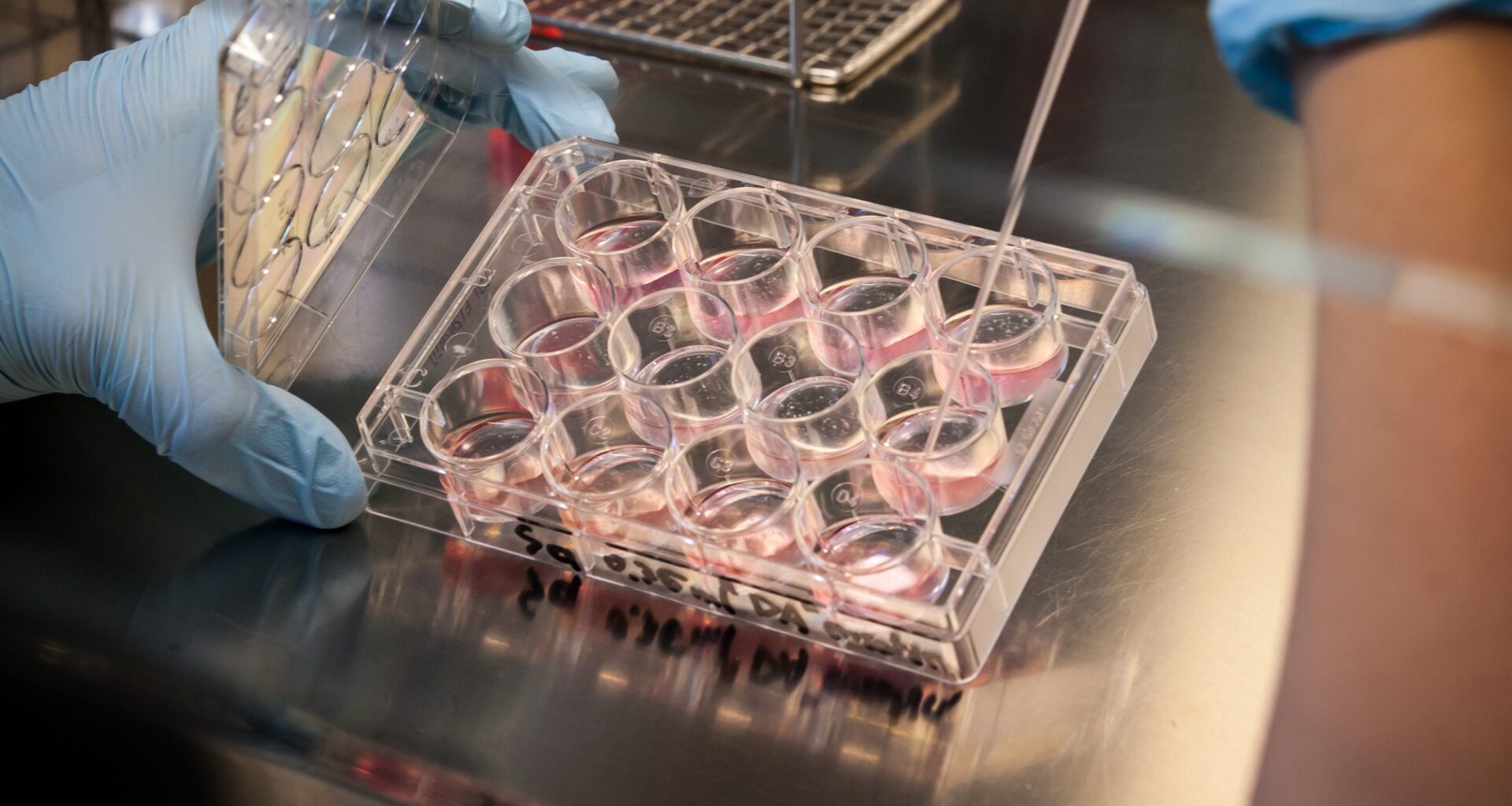
Researchers at the University of British Columbia and B.C. Children’s Hospital Research Institute have recently discovered how to use stem cells to create the immune cells needed for effective cell therapy.
The researchers’ finding “opens the door to manufacturing therapeutic [treatments] for a variety of diseases including cancer, autoimmunity, chronic inflammation, and transplant,” says the January study where the researchers’ findings were published.
Hard to do
Cell therapies are mainly created in two ways.
The first is by using a patient’s immune cells to create what is called a “living drug.” A patient’s cells are extracted, modified to target a specific disease and then infused back into the patient.
But this process can take about two weeks to complete, and a patient may not have enough high-quality immune cells to make the therapy.
For this reason, there is strong interest in the second way of creating cell therapies: manufacturing immune cell therapies that doctors can then prescribe to patients like other drugs.
Stem cells are critical to these manufactured cell therapies. Stem cells, which are found in nearly every body tissue, reproduce in large numbers and can also become different types of cells.
“[Stem cells are] a source that you can grow and grow and grow,” said Ross Jones, a research associate in biomedical engineering at the University of British Columbia who was involved in the new research.
Jones and his co-researchers were specifically interested in figuring out how to make helper T-cells from stem cells. Helper T-cells detect threats to the immune system and co-ordinate and sustain responses from other immune cells. Helper T-cells make cell therapies for cancer more effective.
In humans, stem cells become helper T-cells all the time, says Jones. So the question he and his colleagues had was, “How do you take something that’s going on in the body and replicate it [in a lab]?”
“It’s really hard to make this specific helper T-cell from stem cells in a plastic dish,” said Kevin Salim, a Ph. D student who works at B.C. Children’s Hospital Research Institute, who helped run the research.
Mass produced therapy
Jones and Salim’s research team discovered that so-called “notch signals” need to be taken away at certain times for stem cells to become helper T-cells.
The helper T-cells created this way are acting just like the ones the body makes naturally, says Salem.
The researchers hope their discovery enables bioengineers to mass produce high-quality helper T-cells so cell therapies for cancer can be developed more quickly.
But more research is needed to determine how these cells work once they are infused into patients, and which diseases can be best targeted with these therapies.
The University of British Columbia is pursuing a patent on the technology and building a manufacturing facility to enable researchers to mass produce helper T-cells for clinical trials.
While clinical trials of lab-manufactured stem cell therapies are already underway in the U.S., they are not yet occurring in Canada. Jones says the team hopes to start clinical trials in Canada using the helper T-cells developed through their method.
Eventually, this could help patients receive less-expensive cancer treatments more quickly.
“We’re hoping that with our discovery, more people in the field can reliably make more helper T-cells for therapy and research,” said Salim.
Related Posts