
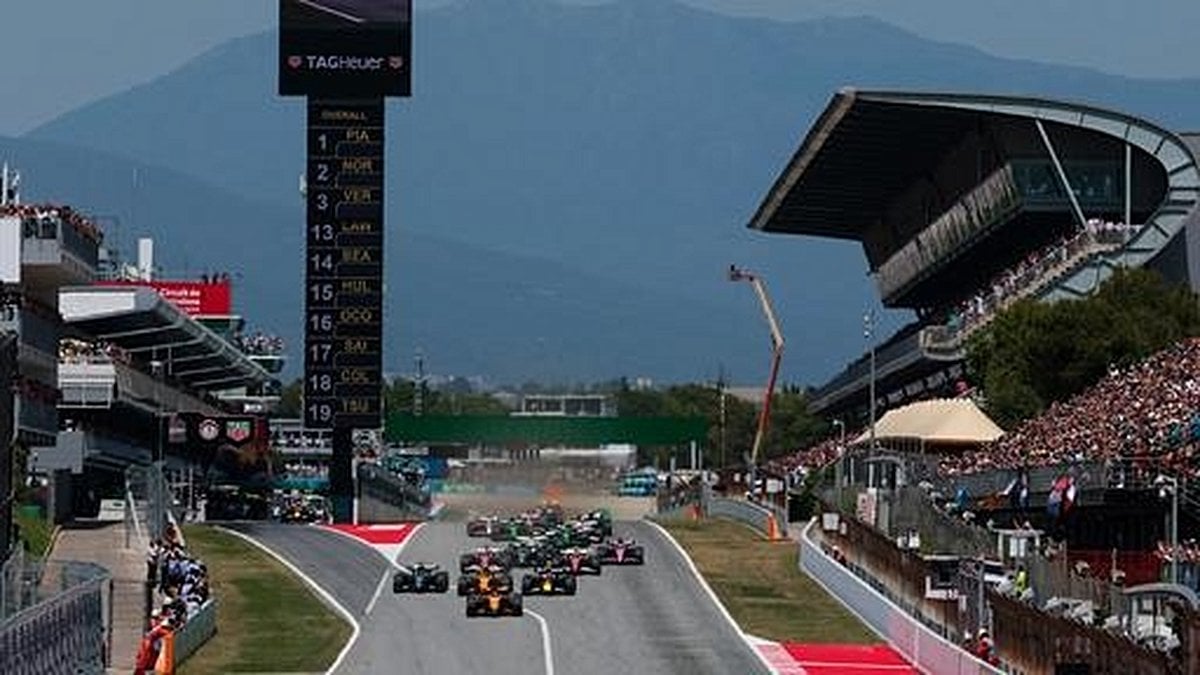
Formula 1 fans in Spain and across Europe can breathe a sigh of relief—Barcelona isn’t going anywhere, at least not for the next six years. In a move that blends tradition with innovation, Formula 1 announced on February 16, 2026, that the Circuit de Barcelona-Catalunya will remain on the calendar in a rotational agreement with Belgium’s famed Spa-Francorchamps through 2032. The news comes amid a flurry of changes to the F1 schedule, with new venues vying for a spot and long-standing circuits under pressure to modernize or risk being left out.
So, what does this mean for the passionate fans who’ve flocked to Barcelona since 1991? The city will continue to host top-tier racing, but not every year. Instead, the Barcelona-Catalunya Grand Prix will rotate with Spa, taking place in 2026, 2028, 2030, and 2032. Spa will fill in the alternating years—2026, 2027, 2029, and 2031—ensuring both legendary circuits remain part of the sport’s fabric, even as the calendar evolves. And yes, both tracks will feature in the 2026 season, giving fans a double treat before the rotation kicks in.
This rotational model isn’t entirely new to Formula 1. The sport previously alternated the German Grand Prix between Hockenheim and Nürburgring from 2008 to 2014, a solution born out of financial necessity. Now, as F1 expands globally and new host cities like Madrid and even potential newcomers such as Thailand and Rwanda line up, the rotation strategy helps balance heritage with growth. According to Formula One Management, the move allows F1 to keep classic European races while making room for lucrative new deals elsewhere.
Barcelona’s future looked uncertain when Madrid swooped in to claim the Spanish Grand Prix title starting this season. The capital’s new race, set for September each year under a deal running until 2035, raised eyebrows and questions: Would Barcelona be left out in the cold? Not so fast. Thanks to a new agreement, Barcelona will host its own event—the Barcelona-Catalunya Grand Prix—securing its place on the calendar and giving Spain two F1 races in 2026, 2028, 2030, and 2032. That’s a win for Spanish motorsport fans if there ever was one!
The announcement was met with enthusiasm from F1’s top brass. “Barcelona is an incredible city, and the Formula 1 fans there always welcome us with such passion, so I am delighted that we will continue to race at the Circuit de Barcelona-Catalunya for years to come,” said Stefano Domenicali, F1 President and CEO. He praised the circuit’s recent efforts, noting, “The team have invested heavily in the circuit and hosted fantastic fan festivals in recent years, so we look forward to seeing how they continue to develop the experience, both for attendees at the race and for the city as a whole.”
Those investments have been substantial. The circuit, originally built as part of the 1992 Barcelona Olympic Games development, has undergone significant upgrades in recent years. Among the highlights: a new hospitality space known as the Circuit Rooftop, perched over turns 9, 10, and 11 with a panoramic view of the main straight, and the installation of solar panels throughout the venue—a nod to sustainability and modern expectations. In 2024, the main road entrance was revamped and the paddock area received a facelift, all with the aim of keeping the fan experience fresh and exciting.
And fans have responded in kind. In 2025 alone, a staggering 300,000 people attended the race weekend, witnessing Oscar Piastri take the checkered flag ahead of teammate Lando Norris. The circuit has seen its share of history, too—Max Verstappen’s maiden F1 victory came here in 2016, while veterans like Lewis Hamilton and Fernando Alonso have also tasted glory on its challenging mix of high- and low-speed corners.
But it’s not just about the racing. Organizers have made a concerted effort to bring the community into the fold, hosting fan festivals in the iconic Plaça de Catalunya for the past two years—a tradition set to continue in 2026. These events have helped cement the circuit’s reputation as a hub of motorsport culture and a driver of economic impact. According to Pol Gibert, CEO of Circuits de Catalunya SL and General Secretary of the Department of Business and Employment, “Formula 1 generates an economic impact of more than €300 million per edition, but above all it is a strategic event that helps project Catalonia worldwide as a country capable of hosting top-level sporting competitions.”
Gibert added, “We would like to express our gratitude to Formula 1 for the trust placed in the Circuit de Barcelona-Catalunya and in the region over all these years. This renewal is the result of a strong relationship and close collaboration and represents a very important step in further consolidating Catalonia as a key fixture on the international calendar.”
The broader context is one of transformation for Formula 1 as a whole. With the previous Concorde Agreement capping the schedule at 25 races (though it’s never exceeded 24), and new venues like Portugal’s Portimao joining for 2027 and 2028, F1 has to juggle history, fan demand, and commercial opportunity. The Dutch Grand Prix at Zandvoort, despite its popularity, will drop off the calendar after 2026 due to financial challenges and the lack of government funding—a stark reminder that pedigree alone isn’t enough these days. As Domenicali put it back in 2022, “It’s not enough to have a pedigree anymore. You also have to demonstrate that you are keeping up.”
That message hasn’t been lost on Barcelona’s organizers, who have worked tirelessly to upgrade the circuit and the surrounding infrastructure. Their efforts have paid off, securing the track’s status as a mainstay of the F1 world, albeit in a new, rotational format. The coming years will see the city continue to host the world’s fastest cars and most passionate fans, while sharing the spotlight with Spa—another historic venue that’s faced its own battles to stay relevant in a changing landscape.
With the 2026 season set to kick off in Melbourne on March 8, anticipation is already building for what promises to be an exciting era of Formula 1. For Barcelona, the future is secure, the fans are ready, and the engines are primed. The Circuit de Barcelona-Catalunya remains a cornerstone of the sport, proving that with vision, investment, and a touch of Spanish flair, tradition and progress can go hand in hand.