
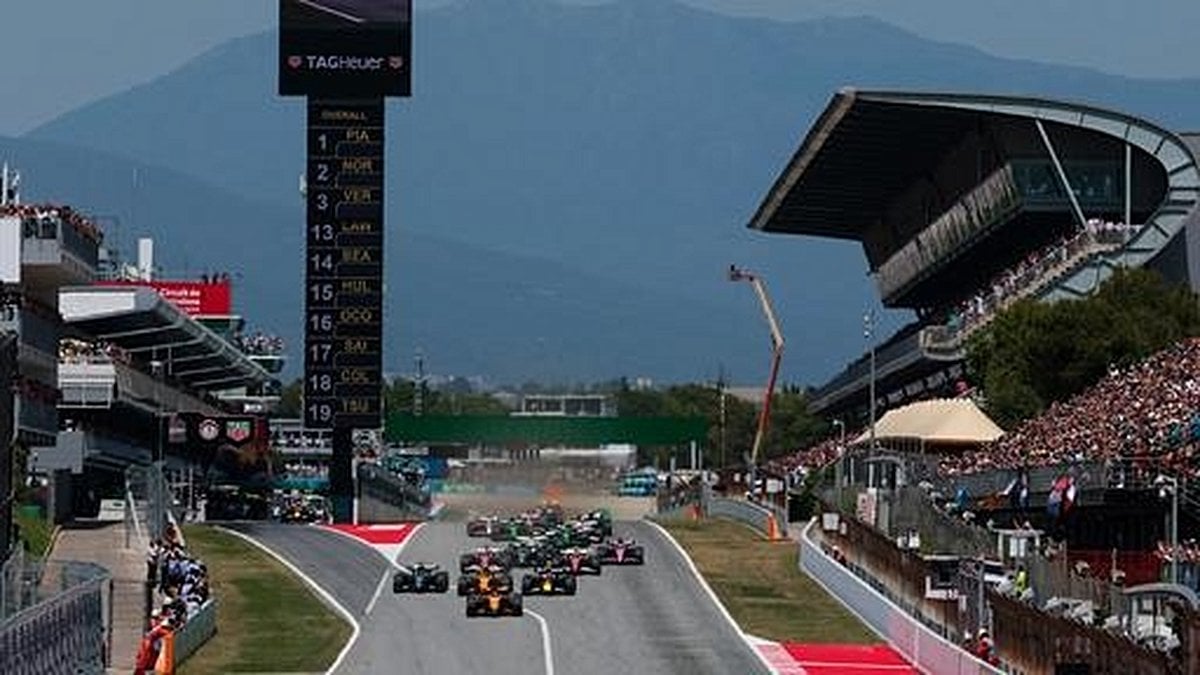
The future of Formula 1 in Barcelona has been secured through a groundbreaking agreement that will see the iconic Circuit de Barcelona-Catalunya remain on the F1 calendar in a rotational partnership with Belgium’s legendary Spa-Francorchamps circuit. Announced on February 16, 2026, this multi-year extension guarantees that Barcelona will continue to play host to top-tier motorsport action until at least 2032, albeit under a new banner and on a biennial basis.
For fans who have flocked to the sunny Catalonian circuit since its debut in 1991, the news comes as both a reassurance and a sign of changing times in Formula 1. The Spanish Grand Prix title, long associated with Barcelona, has officially moved to Madrid starting this season, with the Spanish capital taking over hosting duties in September under a contract running through 2035. But Barcelona isn’t bowing out quietly—starting this year, the event at the Circuit de Barcelona-Catalunya will be known as the Barcelona-Catalunya Grand Prix.
This move is part of Formula 1’s broader strategy to rotate certain historic European venues, balancing tradition with the sport’s growing global ambitions. Under the new agreement, Spa-Francorchamps will stage the Belgian Grand Prix in 2026, 2027, 2029, and 2031, while Barcelona will host the Barcelona-Catalunya Grand Prix in 2028, 2030, and 2032. Both circuits remain on the 2026 calendar, ensuring fans won’t have to wait long to experience the thrill at either location.
“Barcelona is an incredible city, and the Formula 1 fans there always welcome us with such passion, so I am delighted that we will continue to race at the Circuit de Barcelona-Catalunya for years to come,” said F1 president and CEO Stefano Domenicali. “The team have invested heavily in the circuit and hosted fantastic fan festivals in recent years, so we look forward to seeing how they continue to develop the experience, both for attendees at the race and for the city as a whole.”
The decision to rotate Barcelona and Spa is not without precedent. Formula 1 previously alternated the German Grand Prix between Hockenheim and Nürburgring from 2008 to 2014, a move driven by similar financial considerations. The current shift reflects the financial realities facing many European circuits, where government funding is often limited or absent—unlike newer venues in emerging markets that can offer higher hosting fees.
Barcelona’s place on the calendar was far from guaranteed. The circuit’s original contract was set to expire this year, and with Madrid’s arrival, questions swirled about whether Catalonia would lose its place in the F1 spotlight. However, a concerted effort by local officials and significant investments in infrastructure tipped the scales in Barcelona’s favor. The circuit underwent major renovations in 2024, including a revamped main road entrance, an upgraded paddock area, and the construction of the Circuit Rooftop—a new hospitality space with sweeping views of turns 9, 10, and 11 as well as the main straight. Solar panels have also been installed throughout the facility, underscoring a commitment to sustainability.
Pol Gibert, CEO of Circuits de Catalunya SL and General Secretary of the Department of Business and Employment, emphasized the importance of the renewal. “We welcome the renewal of the Formula 1 Grand Prix in Catalonia, at least until 2032. We would like to express our gratitude to Formula 1 for the trust placed in the Circuit de Barcelona-Catalunya and in the region over all these years. This renewal is the result of a strong relationship and close collaboration and represents a very important step in further consolidating Catalonia as a key fixture on the international calendar.”
Formula 1’s presence in Catalonia isn’t just about racing—it’s a major economic engine. The event generates more than €300 million per edition for the region, according to circuit officials. “Formula 1 generates an economic impact of more than €300 million per edition, but above all it is a strategic event that helps project Catalonia worldwide as a country capable of hosting top-level sporting competitions,” Gibert added.
The fan experience has also been a focal point of recent developments. In the past two years, organizers have hosted lively fan festivals in Barcelona’s iconic Plaça de Catalunya ahead of race weekends, and this tradition is set to continue in 2026. The 2025 race weekend saw a staggering 300,000 fans in attendance, with Oscar Piastri taking the checkered flag and teammate Lando Norris finishing second—an electrifying spectacle that cemented the event’s popularity.
Barcelona’s circuit, originally constructed as part of the 1992 Olympic Games development program, has witnessed countless memorable moments. From Lewis Hamilton and Fernando Alonso’s triumphs to Max Verstappen’s maiden Grand Prix victory in 2016, the track’s blend of high- and low-speed corners has consistently delivered drama and excitement. With the new agreement, more chapters are set to be written in its storied history.
The rotational model with Spa-Francorchamps is also a nod to the challenges facing European races. While Silverstone in the UK and Zandvoort in the Netherlands have faced similar financial pressures, only Barcelona and Spa have so far entered into a formal rotation. Notably, Zandvoort will drop off the calendar after 2026, while Portugal’s Algarve International Circuit at Portimão has secured a short-term deal for 2027 and 2028, replacing the Dutch event.
Formula One Management’s calendar strategy is also influenced by the Concorde Agreement, which limits the race schedule to 25 events per year—a cap that has never been exceeded, with 24 races being the current maximum. The rotation between Barcelona and Spa helps maintain this balance while allowing F1 to explore new markets, such as the proposed races in Thailand and Rwanda, both of which are still in the negotiation phase.
As the 2026 season approaches, with the Australian Grand Prix in Melbourne set to kick things off on March 8, anticipation is building for what promises to be a dynamic era in Formula 1. The blend of tradition and innovation, embodied by the continued presence of Barcelona and Spa, ensures that fans across Europe and beyond will have plenty to cheer about in the years ahead.
For now, the Circuit de Barcelona-Catalunya can look forward to welcoming the world’s fastest cars and most passionate fans for several more years. With fresh investment, a renewed sense of purpose, and a calendar spot secured through 2032, Barcelona remains firmly at the heart of Formula 1’s European legacy—even as the sport’s horizons continue to expand.