

Listen to this article
Estimated 5 minutes
The audio version of this article is generated by AI-based technology. Mispronunciations can occur. We are working with our partners to continually review and improve the results.
Nearly a month after Alberta’s hospitals minister said emergency room doctors would “immediately” be working in a new role to triage patients in overcrowded waiting rooms, the province and its health agencies will not say if any triage liaison physicians (TLP) are on the job.
“The work to recruit for the triage physician liaison role is ongoing,” reads a statement issued Monday by Kyle Warner, press secretary to Hospital and Surgical Health Services Minister Matt Jones.
“This role will provide much needed support to some of the busiest emergency departments in Edmonton and Calgary. Our focus is ensuring the role is filled as rapidly as possible to improve care for patients and families.”
He did not answer a follow-up question about whether that means no one is working as a TLP.
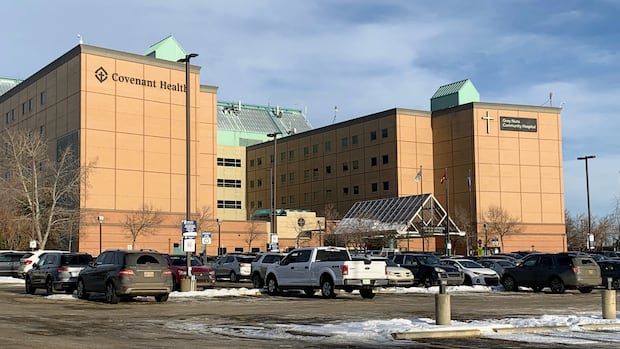
Jones’ announcement of an extra emergency doctor in some crowded ER waiting rooms came after the December death of 44-year-old Prashant Sreekumar in Edmonton’s Grey Nuns Community Hospital ER.
Sreekumar’s family said the father of three children died after waiting eight hours for help with chest pain.
Some doctors have said they often see cases of ER waits causing harm to patients — and sometimes even what they believe are preventable deaths. Some have called on the province to declare a state of emergency.
In addition to promising a fatality inquiry into Sreekumar’s death, on Jan. 15 Jones announced the reintroduction of TLPs at six urban hospitals starting on Feb. 1.
Described by the Alberta Medical Association as a “Band-Aid solution” in times of crisis, TLPs would work alongside triage nurses in emergency rooms, monitoring patients waiting for care for signs of deterioration and ordering some preliminary tests for patients.
Some North American studies and reviews have shown adding a TLP to an ER shortens patient wait times and can prevent some patients from leaving without being seen — but does not address the underlying problems of staff and space shortages.
Pledge for TLPs not in good faith, AMA president says
The AMA’s section of emergency medicine, which negotiates working conditions for ER doctors, hasn’t reached an agreement with the Alberta government about employment conditions for doctors working as TLPs, section president Dr. Warren Thirsk said. He said the parties have not met to negotiate.
Thirsk said the government is trying to sign up doctors individually under conditions that some believe could put physicians at legal risk while they see patients in a waiting room. He recommends that ER doctors not sign up to work as TLPs.
“The lack of consistent, real engagement has not made me feel confident that it was anything more than politics to announce something that would fix the problem,” Thirsk said on Tuesday.
He said the provincial government has dismissed those liability concerns.
AMA president Dr. Brian Wirzba said Wednesday that the government is introducing bureaucratic hurdles to make it harder to reach a deal on TLP working conditions, such as telling them to negotiate certain terms with two different health ministries. He called the hurdles “a slap in the face” to ER doctors who are already overworked.
“It’s just a frustration that we are working with a party to try and actually improve things for Alberta patients and we’re stymied at it,” Wirzba said.
The impasse comes as Alberta doctors’ four-year master agreement with physicians is set to expire on March 31.
Thirsk said Wednesday he’s concerned that the government’s approach to negotiating with doctors hasn’t improved since 2020, when Alberta’s United Conservative government tore up its agreement with doctors and imposed a new one many physicians opposed.
Last month, Warner said the provincial government had already signed contracts directly with some doctors in November to work in the TLP role at hospitals.
CBC News asked Warner and Acute Care Alberta seven times in the last two weeks how many doctors had signed contracts to work as TLPs, at what locations and when. Neither authority directly answered those questions.
Alberta Health Services, which runs most provincial hospitals, referred questions to Acute Care Alberta. Covenant Health did not respond to the questions this week.
Opposition says government ER response too slow
Alberta NDP MLA and hospital and surgical services critic Sarah Hoffman said the government’s response to the pressure on ERs is inadequate.
She said it’s been nearly two months since Sreekumar died in the Grey Nuns Hospital and the government is still talking about recruiting.
Hoffman repeated the Opposition’s call for the government to set up an emergency command centre, and to recall MLAs to the legislature to debate the government’s response.
Announcing the TLP doctors “feels like more of a communications exercise than an actual strategy around how to address the significant health and safety concerns that Albertans have about their emergency departments right now,” she said.
Thirsk, who works at Edmonton’s Royal Alexandra Hospital ER, said although a wave of influenza cases has subsided, there are still patients waiting in ER beds to be admitted. On his last shift, there were about 30 people in the waiting room at a time.
“There’s still patients in the hallway. There are still bad cases, and near misses happening every day,” he said.