
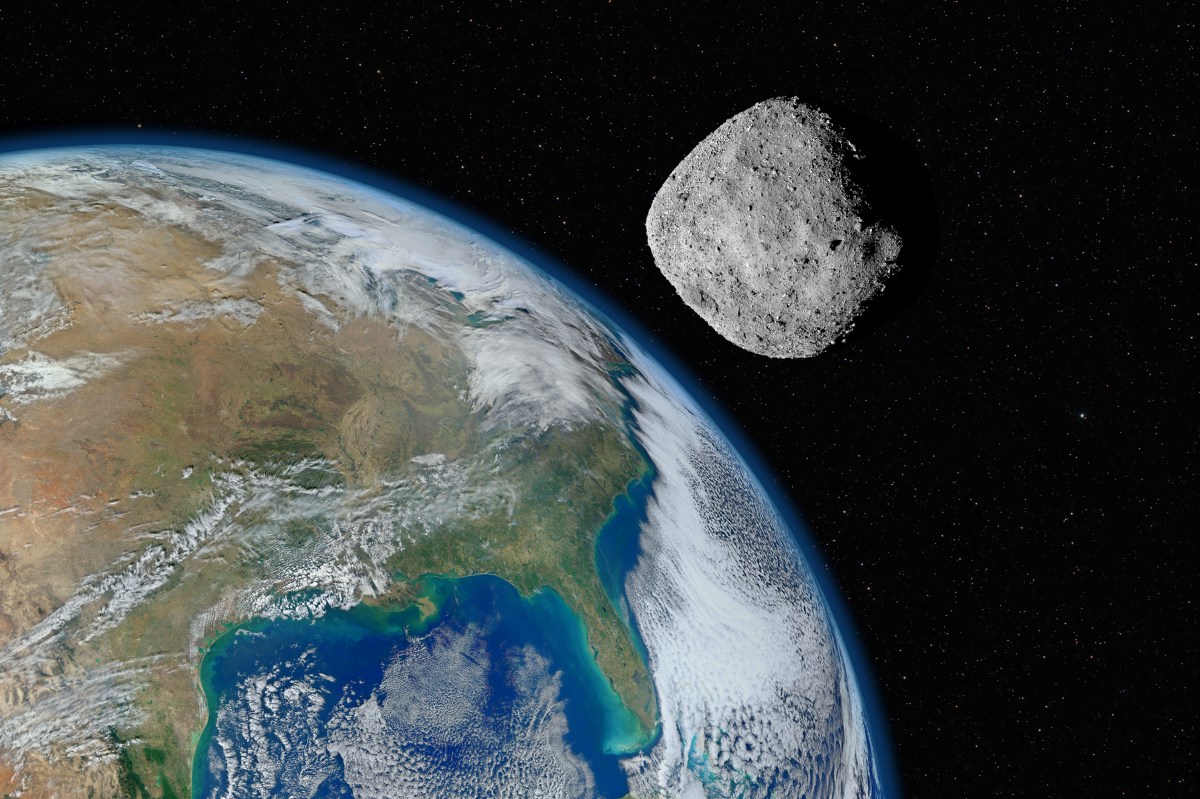
NASA is currently tracking a car-sized asteroid set to zip past the Earth tomorrow, February 17, at a whopping 12,616 miles per hour.
The space rock, 2026 CR2, is estimated to be about 9.7 feet across and will make its closest approach at a distance of 84,800 miles, according to NASA’s Jet Propulsion Laboratory (JPL).
More asteroids are expected to zoom past the Earth this week. Today, a stadium-sized asteroid known as 2026 BX4, will make its closest approach at a much larger distance of 1,830,000 miles.
On Tuesday, a second asteroid, this time airplane-sized, known as 2026 AJ17, will pass within 4,140,000 miles. Meanwhile on Wednesday, another plane-sized space rock, 2026 CU, will come as close as 1,290,000 miles distant.
On Thursday, a third plane-sized asteroid, 2026 CA2, 110 feet across, will get up to 2,630,000 miles from our planet.
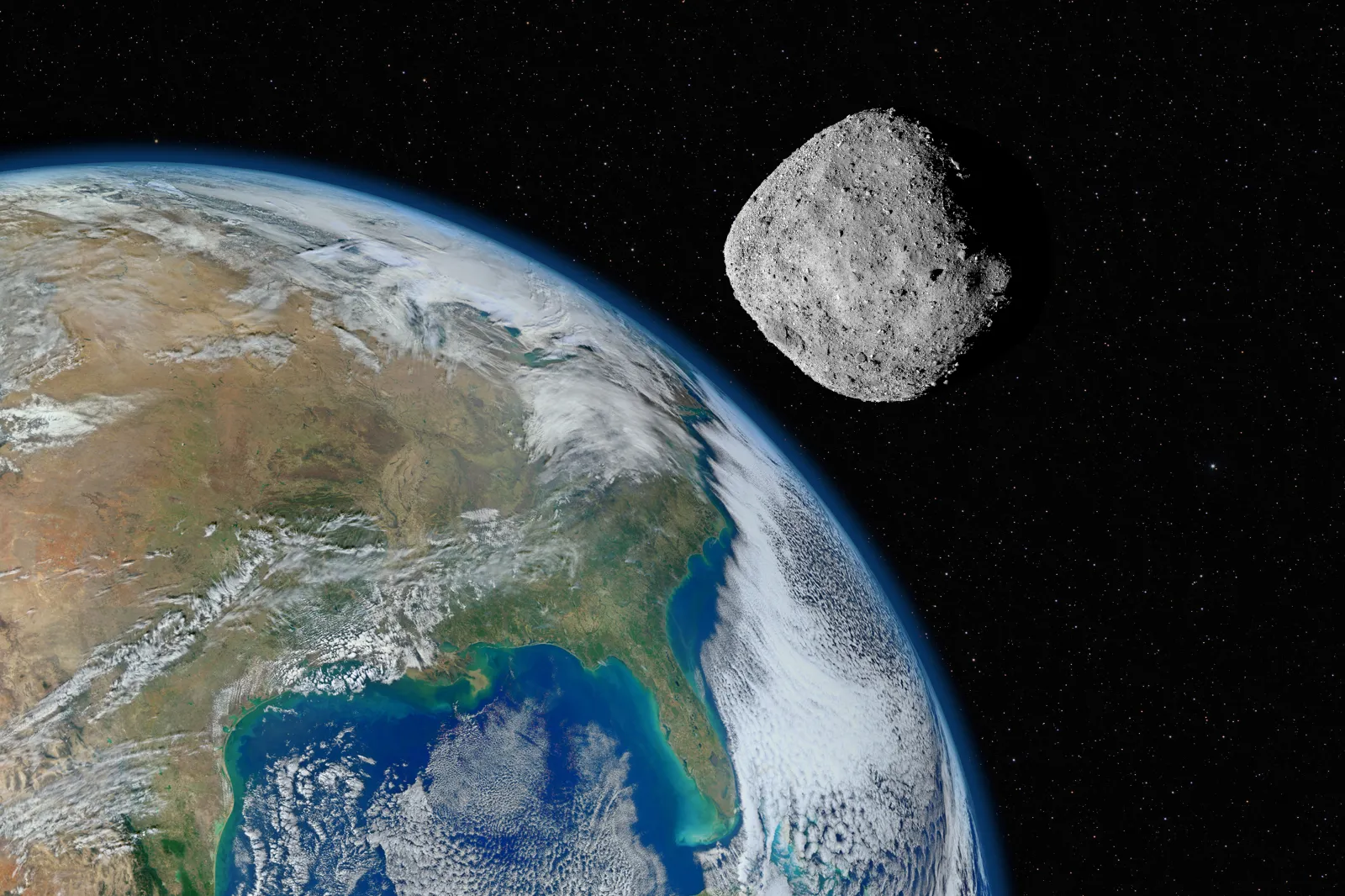
While small asteroids measuring up to 30 feet across impact the Earth roughly once every ten years, these collisions usually result in a bright fireball and a powerful sonic boom and may occasionally break a window, but they generally do not cause any significant damage.
In February 2025, an asteroid estimated to be between 174 and 220 feet in size—“2024 YR4”—was calculated to have a 3.1 percent chance of striking Earth in 2032, which was described as “the highest impact probability NASA has ever recorded for an object of this size or larger.”
An asteroid of this size could destroy an entire city if it impacted Earth. However, updated calculations indicate that an Earth impact is very unlikely, and some scientists now suggest that 2024 YR4 may instead be on its path to possibly collide with the Moon in December 2032.
“Asteroid 2024 YR4 is now too far away to observe with either space or ground-based telescopes. NASA expects to make further observations when the asteroid’s orbit around the Sun brings it back into the vicinity of Earth in 2028,” NASA said on their website.
Scientists and volunteers around the world work together to monitor asteroids that could pose a threat to Earth.
Any information received is then collected and verified by the Minor Planet Center, based at the Smithsonian Astrophysical Observatory in Cambridge, Massachusetts. These observations are made publicly available through NASA’s Small Bodies Node, ensuring open access to critical information.
When a newly discovered object appears to travel near Earth’s orbit, it is flagged for additional monitoring. Scientists track these near-Earth objects closely to determine their paths.
If an object’s trajectory raises concern, the Center for Near Earth Object Studies conducts detailed calculations and alerts NASA’s Planetary Defense Coordination Office to refine impact predictions with analysis and international collaboration.
Do you have a tip on a science story that Newsweek should be covering? Do you have a question about asteroids? Let us know via science@newsweek.com.