
Decision shows ‘how little our justice system thinks women matter,’ family spokesperson says
The police and court’s handling of the case of a Nunavik woman whose dead body was left inside a Montreal apartment for six months was “egregious” and unnecessarily stressful for her relatives, a family spokesperson said Monday.

Laura Aguilar speaks on behalf of Alasie Tukkiapik’s family, saying that criminal charges against two men since her death, havebeen difficult for the family, and that there is some respite now that the judicial process to be over. (Photo by Cedric Gallant, special to Nunatsiaq News)
“The next time an Indigenous family goes to report someone missing, is this going to just keep happening?” asked Laura Aguilar outside court in Montreal, after two brothers were sentenced in connection with the death in 2023 of Alasie Tukkiapik, 41, originally from Kangiqsujuaq.
In addition to acting as a spokesperson for Tukkiapik’s family, Aguilar is a researcher at the Canadian Femicide Observatory for Justice and Accountability, based in Guelph, Ont.
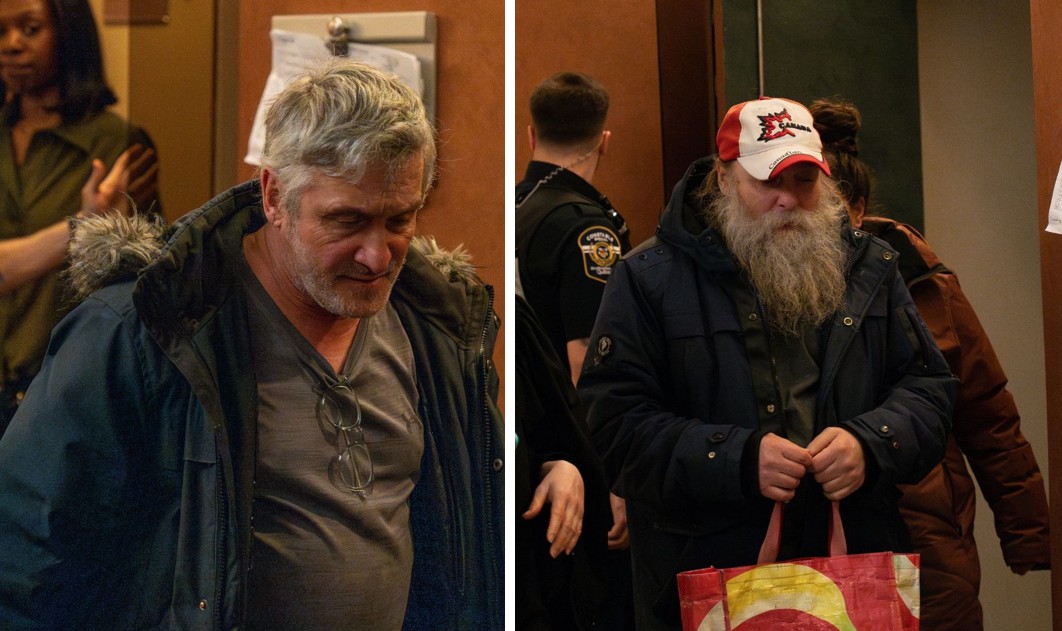
Judge Pierre Labelle read the circumstances of the case in court before sentencing brothers Nicodemo Sansalone and Francesco Sansalone for offering an indignity to human remains.
Tukkiapik had been in a relationship with Francesco Sansalone for 10 years and shared an apartment with the brothers. It’s not clear how long she had been living in Montreal.
In early 2023, her family became concerned for her welfare but when they visited the Montreal apartment they were told Tukkiapik was not there.

In September that year, her family filed a missing-person report with the Nunavik Police Service.
When Montreal police investigators went to the apartment, no one answered the door. But while they were interviewing neighbours, Nicodemo Sansalone was seen leaving the apartment.
The officers stopped him and spoke with him. He admitted Tukkiapik had died and that he and his brother had left her on a couch inside their apartment with a blanket over her.
Francesco Sansalone was arrested a month later and faced two charges.
He pleaded not guilty to a charge of neglect of human remains, but pleaded guilty to offering an indignity to human remains.
On Monday, he was sentenced to 10 months of house arrest, plus two years probation and was ordered to perform 100 hours of community service.

Nicodemo Sansalone also pleaded guilty to offering an indignity to human remains. He received a suspended sentence of 70 days’ incarceration — meaning he won’t serve jail time if he abides by the terms of the three-year probation, which was part of his sentence.
Labelle said Tukkiapik had been ill and neither she nor the Sansalone brothers wanted her to seek medical attention. When she died, the brothers panicked, fearing the reaction of her family and the police.
The judge said both brothers were suffering from mental health issues and that Francesco’s “capacity of introspection is limited.”
He noted Tukkiapik was living in a violent environment and that Francesco specifically targeted vulnerable women such as her to take in.
The judge said that because of the state of Tukkiapik’s body when it was discovered, a cause of death could not be determined. But there was no evidence that the brothers had caused her death.

On Monday, Labelle said Tukkiapik’s family — who were present for the brothers’ sentencing — showed a lot of courage in testifying about her positive character.

Alasie Tukkiapik’s family embrace outside the courtroom where brothers Nicodemo and Francesco Sansalone were sentenced in Montreal. The two men pleaded guilty to offering an indignity to human remains after leaving Tukkiapik’s dead body on a couch for six months in 2023. (Photo by Cedric Gallant, special to Nunatsiaq News)
“She was a sister, a daughter, and a member of the community,” Labelle said. “I can only hope you will find solace.”
Speaking to Nunatsiaq News afterward, Aguilar said, “The decision today speaks to how little our justice system thinks women matter.”
She said, “That matters so little that these brothers don’t even get a prison sentence.”
Aguilar said the experience has been hard on Tukkiapik’s family: “Today marks the closure of the legal process, it does not mark the end of the healing journey.
“All of us who were impacted by this case got the chance to know Alasie’s family, and it is very clear that her memory will live on.”