


Listen to this article
Estimated 4 minutes
The audio version of this article is generated by AI-based technology. Mispronunciations can occur. We are working with our partners to continually review and improve the results.
TikTok shut down two accounts last week that were promoting what appeared to be opium in Punjabi in Winnipeg, after CBC News brought the content to the attention of the social media platform.
An advocate for countering online crime said it’s a big problem across social media platforms.
While most platforms say they take down the vast majority of such content because their systems find it, Gretchen Peters said she finds the removal rate drops when the content isn’t in English, French or Spanish.
“So I’m not surprised that a Punjabi language account slipped under the radar,” Peters, the co-founder and executive director of the Alliance to Counter Crime Online, said in an interview from Washington, D.C.
The two accounts CBC asked about mentioned Winnipeg and showed videos and photos of a black substance with the word “feem” featured in several posts and in the names of the acounts.
That is a term used to label “raw opiate” in Punjabi, said Kal Dosanjh, a Punjabi speaker and veteran police officer in Vancouver.
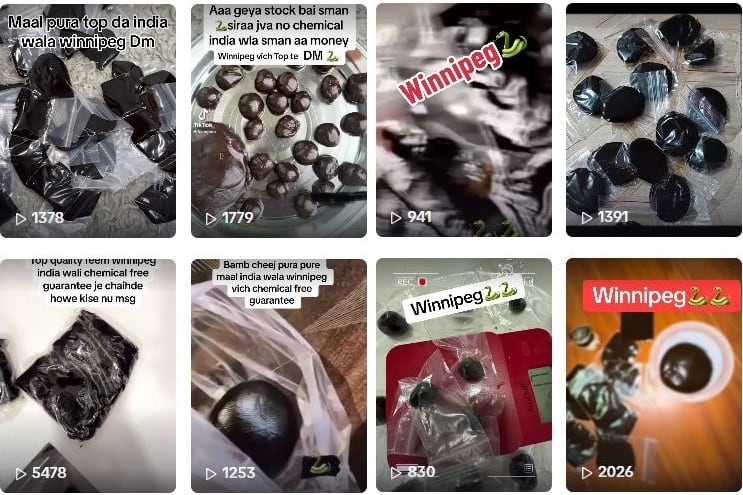 Screengrabs from last week show a selection of posts from two TikTok accounts, which have since been removed, promoting what appears to be opium. (TikTok)
Dosanjh, who co-founded an organization called Kids Play to keep youth away from crime, gangs and drugs, reviewed the content and called the social media posts “remarkably bold.”
“It’s disturbing,” he said in an interview from Vancouver, “that the audacity exists there to put out an advertisement” about something listed in the Controlled Drugs and Substances Act.
Opium is classified as a Schedule I substance under the CDSA and unauthorized possession and trafficking of it is illegal.
CBC News asked TikTok about the two accounts on Feb. 11. Both accounts showed posts dating back to 2024, with more recent posts in late 2025.
The CBC asked whether they were allowed to remain active because they weren’t in violation of the social media platform’s policies or whether TikTok had not yet identified them as problematic.
Within hours, the accounts were shut down, with a message popping up on both pages that TikTok “couldn’t find this account.”
Prohibited content
A TikTok spokesperson said the platform moderates content in more than 70 languages and removes content that violates its community guidelines.
Those guidelines say TikTok doesn’t allow “trading, marketing, or providing access to regulated, prohibited, or high-risk goods and services.”
“For the most harmful goods and services, we prohibit both promotion and showing their use.”
The platform aims to remove content or accounts that violate the rules before they are viewed or shared and says in enforcement reports available online that the vast majority are taken down before they’re reported.
The spokesperson said they can’t comment on specific accounts and declined an interview.
Peters said TikTok is responsive to narcotics issues when compared to other platforms, but users making the content often resurface using the exact same photos and videos under a different account.
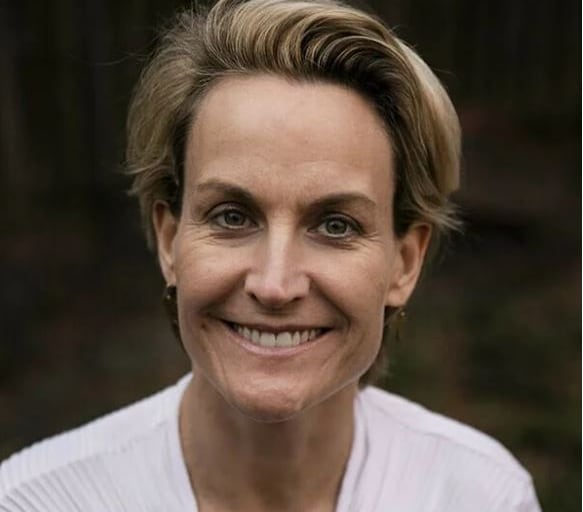 Gretchen Peters is co-founder and executive director of the Alliance to Counter Crime Online. (Alliance to Counter Crime Online)
“It does become a bit like a game of Whak-a-Mole for the platforms,” Peters said.
Social media platforms should be legally required to keep this kind of content off their sites, and fines may be needed to hold companies more accountable, she said.
CBC News reached out to both the Manitoba RCMP and the Winnipeg Police Service with questions about cracking down on the promotion of illegal drugs online.
Winnipeg police did not respond to the request by deadline.
A spokesperson for the Mounties said the “growing threat of online drug marketplaces” is a priority for officers.
“The RCMP monitors trends in the movement of substances and crime activity to stop organized crime from using the web, mail or any other means to participate in the illicit drug trade,” the spokesperson said.
The Mounties said they do not enforce advertising-related legislation.
The RCMP does have officers who are fluent in various languages who they can turn to during investigations, the Mounties said.
Police also caution people about ordering controlled substances online because in addition to being illegal, using them can have serious health consequences.
WATCH | TikTok removes accounts that appear to promote drugs in Winnipeg: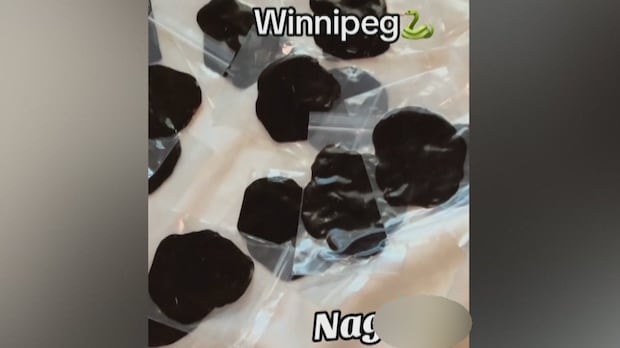
TikTok removes accounts that appear to promote drugs in Winnipeg
Social media companies are being urged to crack down on content featuring illegal drugs in foreign languages. Advocates are renewing calls after TikTok recently removed two accounts promoting what appeared to be opium in Punjabi within Winnipeg.