
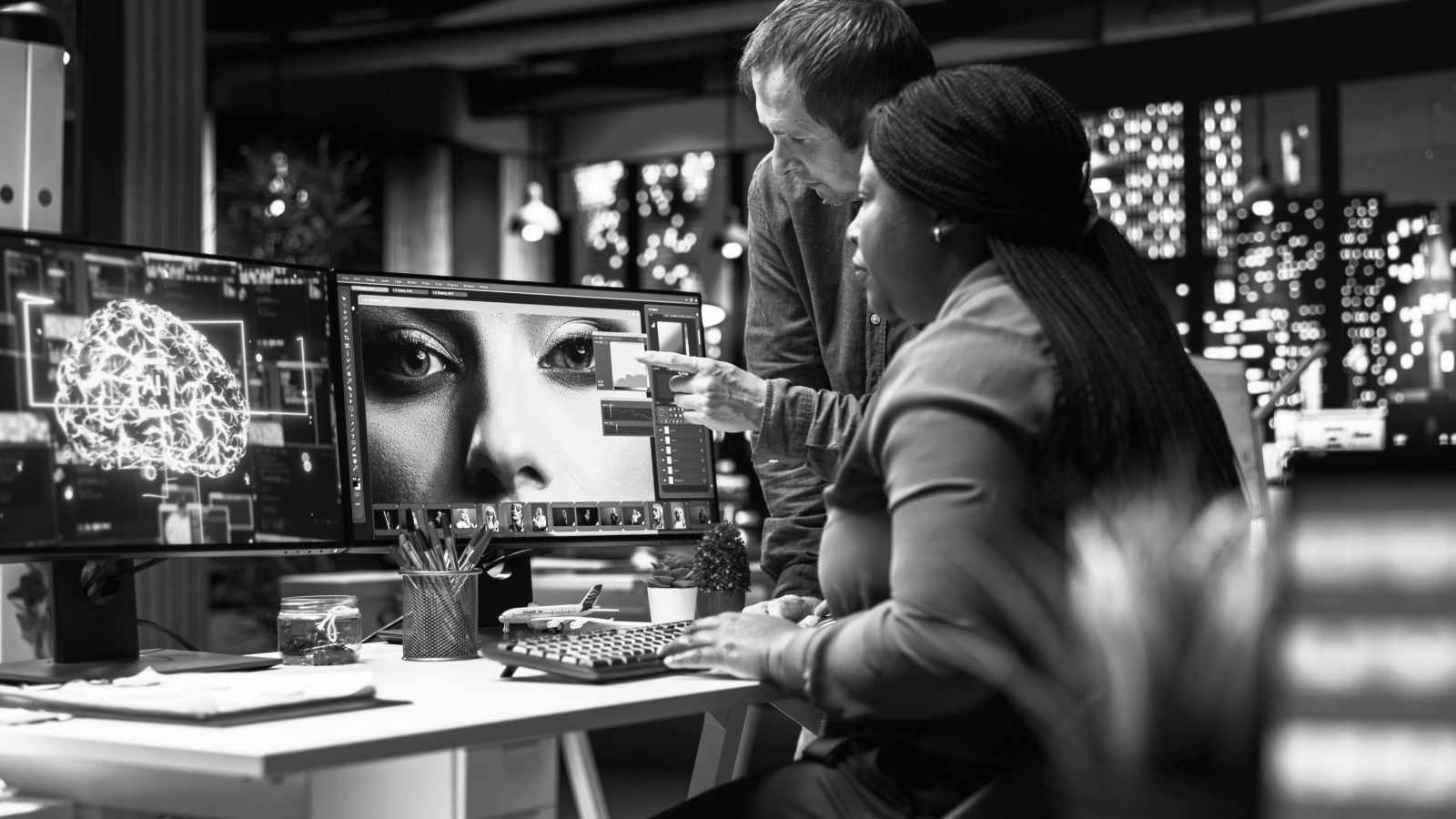
We are living through the Great Compression. What used to take a boutique agency in Soho three weeks, a $50,000 budget and a crew of 20 can now be spat out by a guy in his boxers at two in the morning using Midjourney and Sora. We have democratized genius. You do not need a photographer to capture the perfect sunset over Milan anymore; you just need to know how to talk to a machine. The speed is intoxicating. One person can now be the director, the editor, the copywriter and the lighting tech all at once. It is a level of productivity that is scary, efficient and undeniably powerful.
But let us talk about the price of admission.
What We Lose When Anyone Can Make ‘Art’ With a Machine
When you see a breathtaking landscape or a gut-wrenching portrait, your brain used to register the effort behind it. The cold mornings the photographer spent waiting for the light. The years of practice. Now, that emotional connection is being replaced by a nagging question: Is this even real? We are becoming cynical consumers, squinting at fingers and shadows, looking for the telltale signs of a hallucinating GPU.
We are entering an era of total ambiguity. We are losing the proof of humanity.
And then there is the elephant in the room: the Great Replacement. It is easy to say AI is a tool, but tell that to the junior illustrator whose job just vanished into a prompt. Where is the limit? If a machine can compose a hit record or decide who looks too ugly to be in a family photo, what exactly is left for us to do?
Harnessing AI To Expand, Not Dampen, Creativity
The potential is a tidal wave. If harnessed correctly, AI is a superpower. It can free us from the drudgery of the busy work and let us focus on the big tectonic ideas. It opens doors to creators who never had the capital to hire a film crew but have a vision that could change the world.
But as we sprint toward this promised land, we have to ask ourselves a few questions. Are we using the AI to expand our creativity, or are we just using it to hide our laziness? If the machine decides who is ugly based on the worst parts of our collective data, are we really building a better future? Or are we just building a faster way to repeat our oldest mistakes?
Editor’s picks
The Rolling Stone Culture Council is an invitation-only community for Influencers, Innovators and Creatives. Do I qualify?
Maintaining Humanity in an AI-Powered Creative Process
What does keeping the ghost on a leash actually look like in practice?
In my day-to-day work as a marketing director, I embed AI in the creative process, but it’s never the final authority. I use it first as a lens, not a crutch. Trend analysis, cultural signals, weak patterns before they become obvious, AI is exceptionally good at widening the field of vision. It helps me see more, faster. But seeing is not deciding. The responsibility of judgment, of taste, of relevance to this brand in this moment, stays human.
The second phase is ideation. Brainstorming with AI feels less like delegation and more like sparring. For example, I’ll generate dozens of rough visual directions. The results are sometimes obvious and other times genuinely surprising. Most of them will never see the light of day. That’s the point. AI gives me volume and speed; I bring the filter. A campaign’s tone, its emotional temperature and the strategic intent behind it are things no model understands without a human shaping the frame.
From there, refinement becomes the real work. When an idea moves forward, I deliberately slow the process down. I rework compositions, rewrite copy, strip away what feels generic and push what feels specific. Even when images are later animated using tools like Kling, Veo or Sora, the direction is intentional. We are not asking the machine what looks good, we are telling it what we are trying to say. That distinction matters more than the tool itself.
Related Content
And this extends to how I evaluate my team’s work. When a collaborator brings me something made entirely with AI, that alone is neither a flaw nor a virtue. I do not ask how it was made, but whether if it works. Is it original? Is it emotionally coherent? Does it move the needle for the objective we set? AI has changed how things are produced, but it has not changed what we are accountable for. Results, clarity, resonance, those standards have not compressed at all.
Trending Stories
Holding the Reins
In marketing and communication especially, AI has not killed creativity, it has exposed it.Vision becomes visible. The ghost in the machine does not need to be exorcised, but we do need to keep a firm hand on its reins. Otherwise, we are not expanding human creativity. We are just automating its absence.
The technology is not the problem. It never is. The problem is us and whether we are smart enough to keep the ghost in the machine on a leash, or if we are already halfway through being erased from our own picture.