
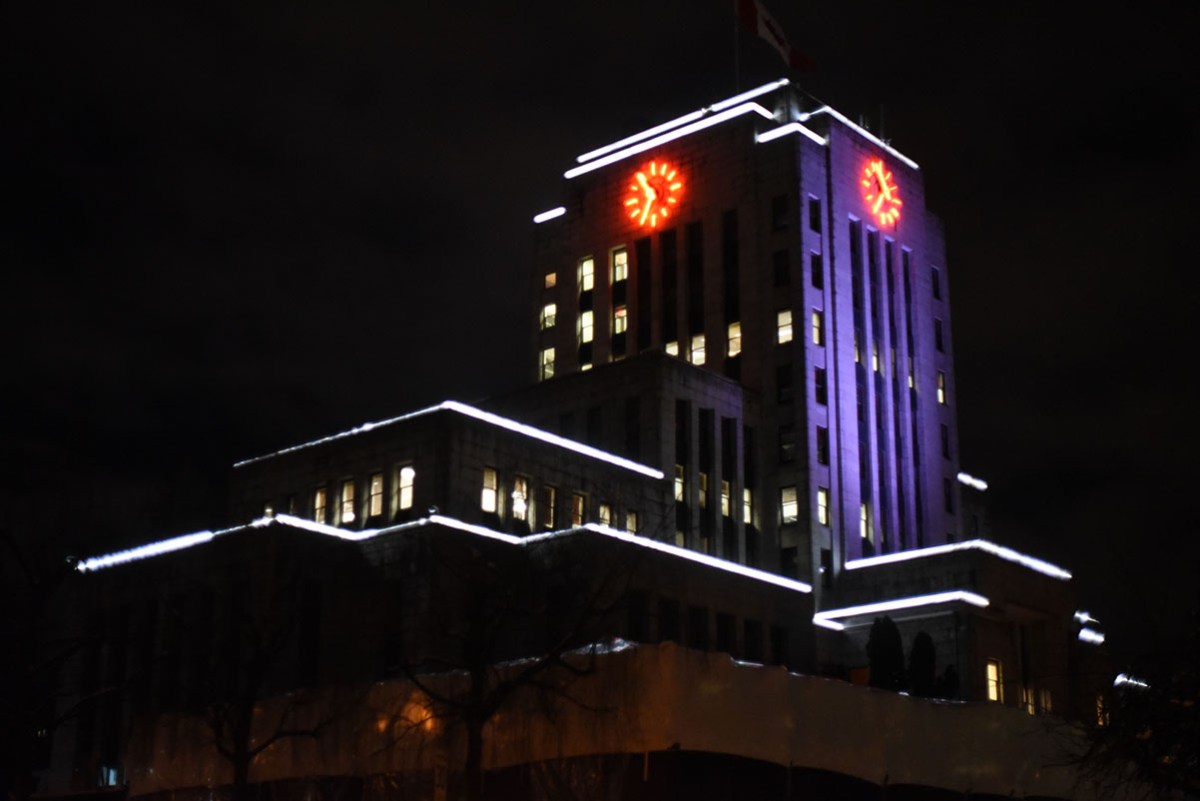

The curtain rises on the evening of Tuesday, March 10, 2026, at Vancouver City Hall, for what is billed as a public hearing.
But for those who have watched this play since the first act, it feels less like a consultation and more like a closing ceremony. This is the final act of a long-form drama where power and money have slowly, methodically, rewritten the city’s script.
Act I: The Closed Door (2011)
The prologue began on a Tuesday in October 2011 at the Fairmont Pacific Rim. The scene: a high-stakes civic election fundraiser for mayoral incumbent Gregor Robertson and Vision Vancouver, hosted by developer Ian Gillespie. In a moment of chilling symbolism, after the initial fanfare the media were ejected from the room.
The doors closed, leaving only the city’s political elite and its wealthiest donors to discuss the future in private. No public report of those deliberations ever surfaced. Yet, the following years saw the results play out in real time. The donor-funded election win handed Vision a council majority that continued until 2018. Experienced city staff – those who had guided the award-winning urban designs that put Vancouver on the global stage – were marginalized or pushed out. In their place, a “pro-growth” bureaucracy was installed, shifting the city’s DNA from community-led planning to developer-led delivery.
Act II: The Narrative Shift (2016)
As the second act unfolded in 2016, the “Condo King” Bob Rennie – sensing the impending end of the corporate-donation era (with the ban on corporate and union donations for the 2018 election) – urged the industry to “change the narrative.” The solution wasn’t just money; it was ideology. He signaled for the arrival of YIMBY dogma from California to provide a populist veneer for supply-side deregulation.
Under the guidance of industry-aligned figures, this movement pivoted from fringe activism to legislative architecture with implications not only for Vancouver, but for the entire province and beyond. Suddenly, political influencers with no background in urban planning were invited to sit at the same tables as policymakers, influencing provincial housing legislation behind the scenes. By 2022, the transition was complete. The “insurgents” had become the institution. Industry lobbyists and astroturf groups flipped provincial policy toward a “supply-at-all-costs” mandate, turning even local parties like OneCity into mouthpieces for deregulatory interests. Even though the housing market has changed significantly, and there is pushback as exemplified in a current initiative to seek a judicial review of the Province’s housing legislation, Vancouver is racing ahead full speed.
Act III: The Finale (2026)
Now, we reach the Finale. The March 10th hearing for Vancouver’s Official Development Plan (ODP) is the culmination of a suite of policies and legislation designed to “streamline” the city.
In plain English, this means the elimination of site-specific public hearings—the very mechanism that allowed citizens a seat at the table. While the “Vancouver Plan” used high-level “motherhood” concepts that few would oppose, the ODP is a legal document that enshrines land-use changes down to the parcel level. The owners of Vancouver’s 100,000 land parcels have not been properly notified, yet the City is moving forward to largely cut the public out in the future, on the premise that “adequate consultation” has occurred.
Under the current administration, the City has already:
Eviscerated protections of sky access and cherished mountain views.
Removed protections and incentives to retain heritage buildings.
Ignored options to manage the pace of demolition and displacement of renters in existing buildings.
Centralized decision-making power within the Mayor’s office and planning departments.
Weakened public transparency and accountability
Significantly rewritten existing zoning rules across the city, and in the process, shredded a century’s worth of community plans and guidelines.
The Final Gavel
The ODP is the legal seal on fifteen years of maneuvers. If approved, it will enshrine massive deregulation that favors institutional investors over residents. Already we are witnessing a wave of speculative land assemblies by numbered companies, repackaging our human neighborhoods as de-risked financial assets for global capital. If the ODP is enacted, this will accelerate.
As the Mayor and Council sit in the chambers this March, they aren’t just listening to speakers; they are presiding over the dissolution of the public’s right to determine how their city grows. When the gavel falls, the lights will dim on a century of local planning. The city will be left in the hands of the same interests that sat in that Fairmont ballroom fifteen years ago.
The play will be over. The house has been sold.
*****
Postscript: If you love this city, the days until March 10th, must be a time of maximum engagement. Stay tuned for further revelations and guides on how to sign up to speak.
To receive automatic updates when we publish, you’re welcome to subscribe to CityHallWatch for free (top right on your screen). We’re also on X, Facebook, and LinkedIn.
*****
For the City’s official information on the ODP, see this page – https://vancouver.ca/home-property-development/vancouver-official-development-plan.aspx
ShapeYourCity – https://www.shapeyourcity.ca/odp
The public hearing agenda will only be posted two weeks prior to March 10. At that point, residents can start writing letters and signing up to speak. https://app.vancouver.ca/CouncilMeetingPublic/CouncilMeetings
For more analysis, see our ODP portal page – https://cityhallwatch.wordpress.com/odp/

Above: Vancouver City Hall is going increasingly dark.