
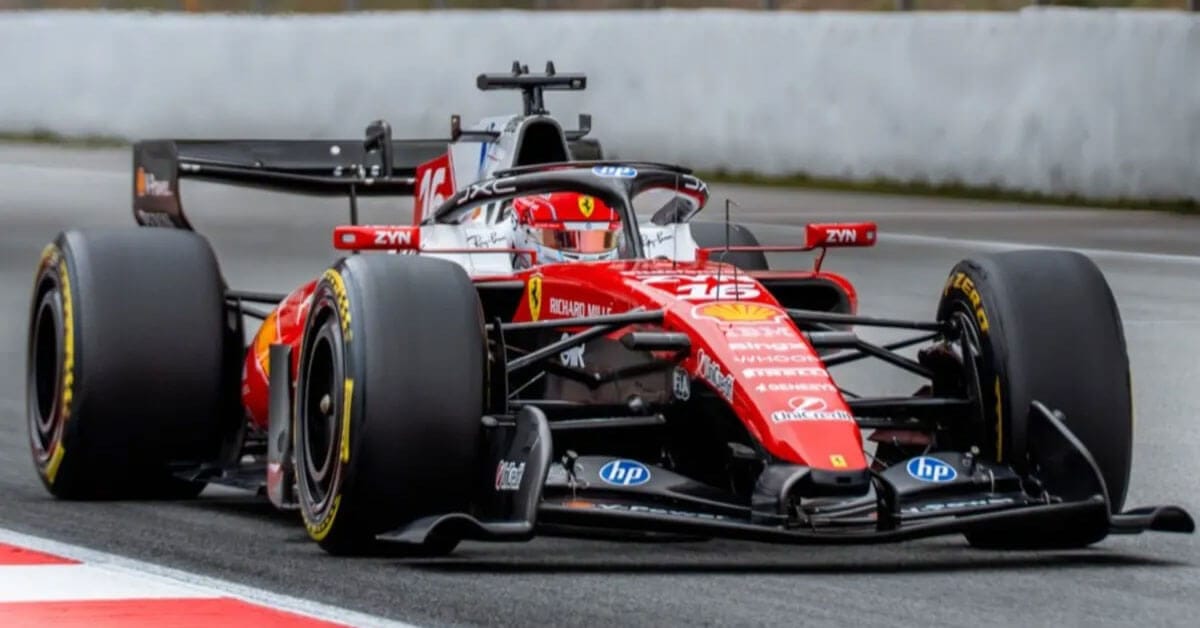
After a strong opening week of pre-season testing in Bahrain, Ferrari is preparing to roll out a fresh package of upgrades for the second session of the test at the Bahrain International Circuit.
The initial three-day test at Sakhir provided a clear picture of Ferrari’s current position: meticulous methodology, strong reliability, and steady progress. The SF-26 covered significant mileage without any major issues, confirming that the work carried out in Maranello over the winter had paid off.
From Day 1, the team focused on understanding the car in detail. Lewis Hamilton ran with aero rakes and experimental configurations, gathering precise data on airflow and car balance, while Charles Leclerc continued the programme in the afternoons, completing his runs smoothly. The outcomes were not only reflected in lap times but, more importantly, in the wealth of data collected for analysis.
Throughout the week, Ferrari demonstrated consistency between race simulations and outright pace. Charles Leclerc set the fastest lap of Day 2, while Lewis Hamilton concluded Day 3 with competitive long-run performance. Notably, a new chassis was introduced even during this first week of testing, compared to the one used at the Barcelona shakedown—an unmistakable signal of a car and project still evolving rapidly.
The first upgrades
Now Ferrari is taking another step forward. According to Autoracer.it, the Scuderia has received official FIA approval to introduce new components, which are set to debut on Wednesday, at the start of the second Bahrain testing week. This update had been highly anticipated, highlighting the team’s commitment to accelerating development before the 2026 season opener.
The FIA’s green light confirms that all new parts fully comply with regulations, allowing Ferrari to immediately work on correlating simulator data with the real-world behavior observed during the first week of testing.
Bahrain 2: a critical proving ground

The second week of testing in Bahrain now becomes a crucial benchmark. Ferrari is not simply gathering data; the team has already converted initial insights into tangible upgrades. Engineers will monitor whether these new components deliver measurable improvements, particularly in terms of car balance, tyre degradation management, and overall drivability for Lewis Hamilton and Charles Leclerc.
The atmosphere in Maranello is one of relentless progress. With FIA approval secured, the SF-26 is ready to demonstrate an even more evolved performance, offering fans and rivals a glimpse of what Ferrari hopes will be a competitive 2026 campaign right from the first race.
Ferrari’s proactive approach to the 2026 technical reset therefore demonstrates a team that has finally mastered the art of “in-situ” development. By securing FIA approval for new components even before the final pre-season test concludes, Maranello is signaling to rivals Mercedes and Red Bull that the SF-26 is far from its final form. This strategy of constant refinement, backed by the solid reliability shown by Lewis Hamilton and Charles Leclerc in the opening days, suggests that the Italian side is entering the new era with a level of technical agility they haven’t possessed in years. As the final Sakhir sessions begin, the focus will shift from simple data gathering to optimizing the “Evolution” package, potentially giving the Scuderia a vital head start in the 2026 arms race.