
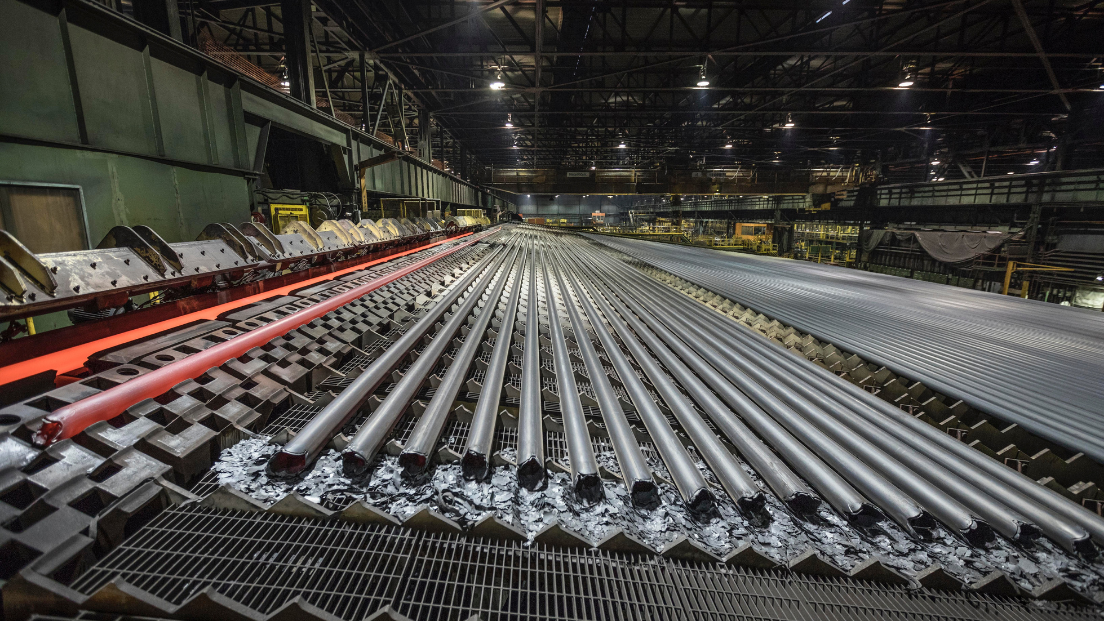
In the heart of the Canadian Shield, the Tenaris pipe mill in Sault Ste. Marie, Ont., has been running at record levels, thanks in large part to growing oil and gas production in Western Canada.
In 2025, the factory reached its highest-ever output of seamless pipe in its 25-year history.
And it’s on track to exceed that mark again in 2026, a milestone that reflects the company’s critical role in the steel town’s economy, as well as in Canada’s broader energy supply chain.
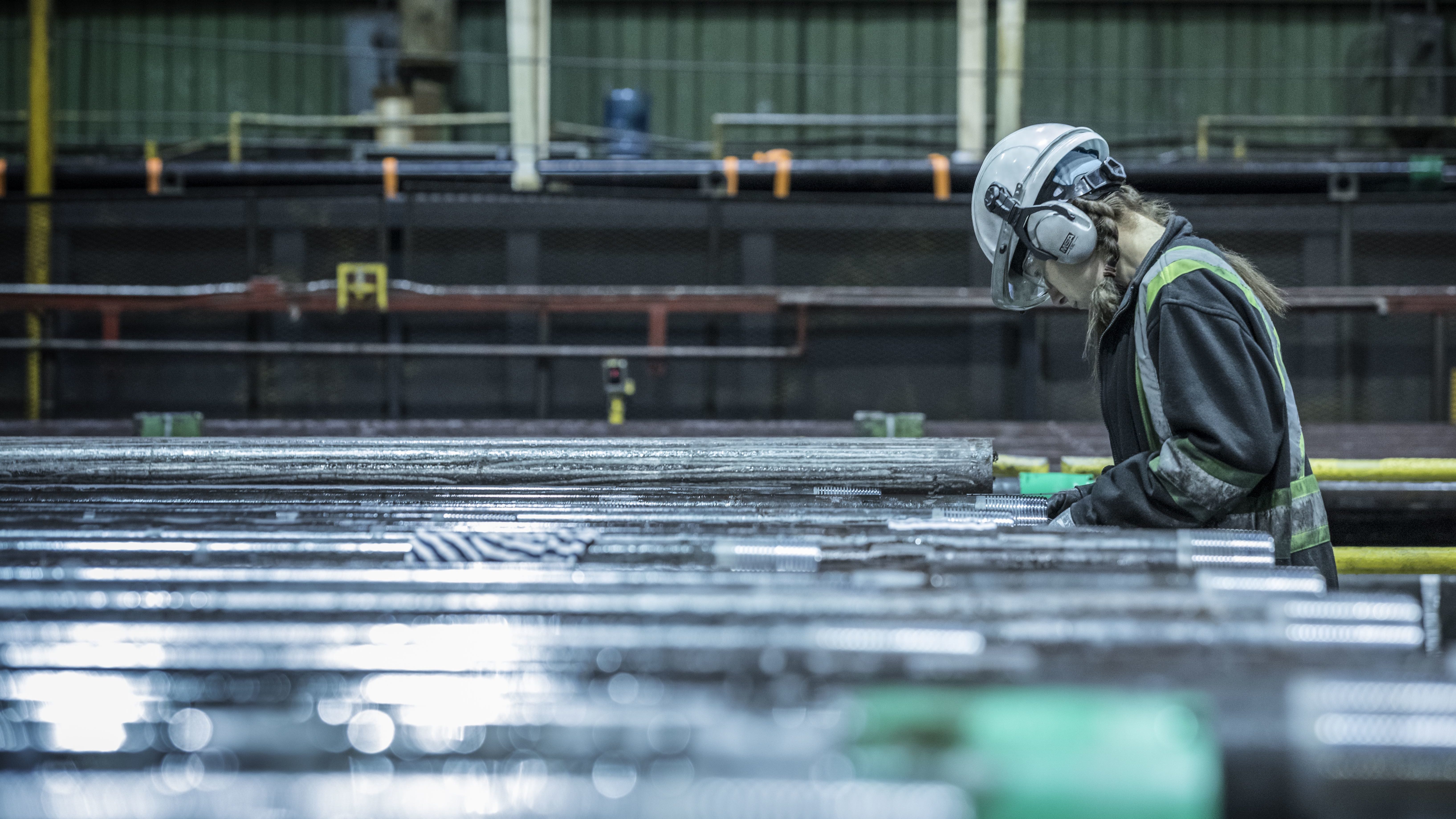
A worker checks steel pipe at the Tenaris manufacturing facility in Sault Ste. Marie, Ont. Photo courtesy Tenaris
Tenaris employs about 1,200 people nationwide, including roughly 800 in Sault Ste. Marie, manufacturing high-grade steel pipe that is shipped by rail to service centres in Alberta and British Columbia, where it supports oil and gas drilling and production.
“Our steel pipe manufacturing in the East allows oil and gas exploration to advance and flourish in the West,” says Jessica Tett, communications manager for Tenaris in Canada.
“As the country strengthens its position as a global energy superpower, we are committed to powering that growth through our manufacturing, industrial expertise and support for Canada’s energy industry.”
As momentum builds around discussions of a new oil pipeline to Canada’s west coast, the country’s steel producers are sounding a clear, unified message: this isn’t just a project about energy transport — it’s a chance to strengthen Canada’s industrial core, support jobs and build supply chains that ensure national resilience.
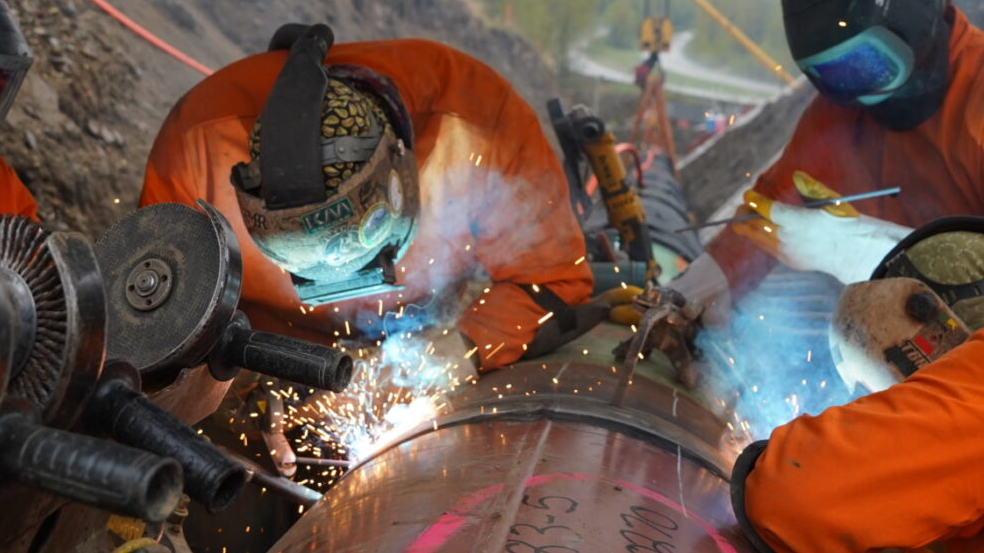
Workers complete the “golden weld” signifying mechanical completion of the Trans Mountain Expansion project on April 11, 2024 in the Fraser Valley between Hope and Chilliwack, B.C. Photo courtesy Trans Mountain Corporation
Among other things, the recent energy agreement between Alberta and Canada to pursue a major new export pipeline to reach Asian markets commits both governments to develop Canadian steel and pipe production supply chains.
For steelmakers and manufacturers, the agreement signals a potential shift toward nation-building projects that prioritize Canadian materials, Canadian labour and Canadian expertise.
A cornerstone of Canada’s industrial economy
Tenaris’s experience reflects the broader importance of Canada’s steel industry, which is a cornerstone of the national economy and a critical supplier to energy, construction, transportation and manufacturing sectors.
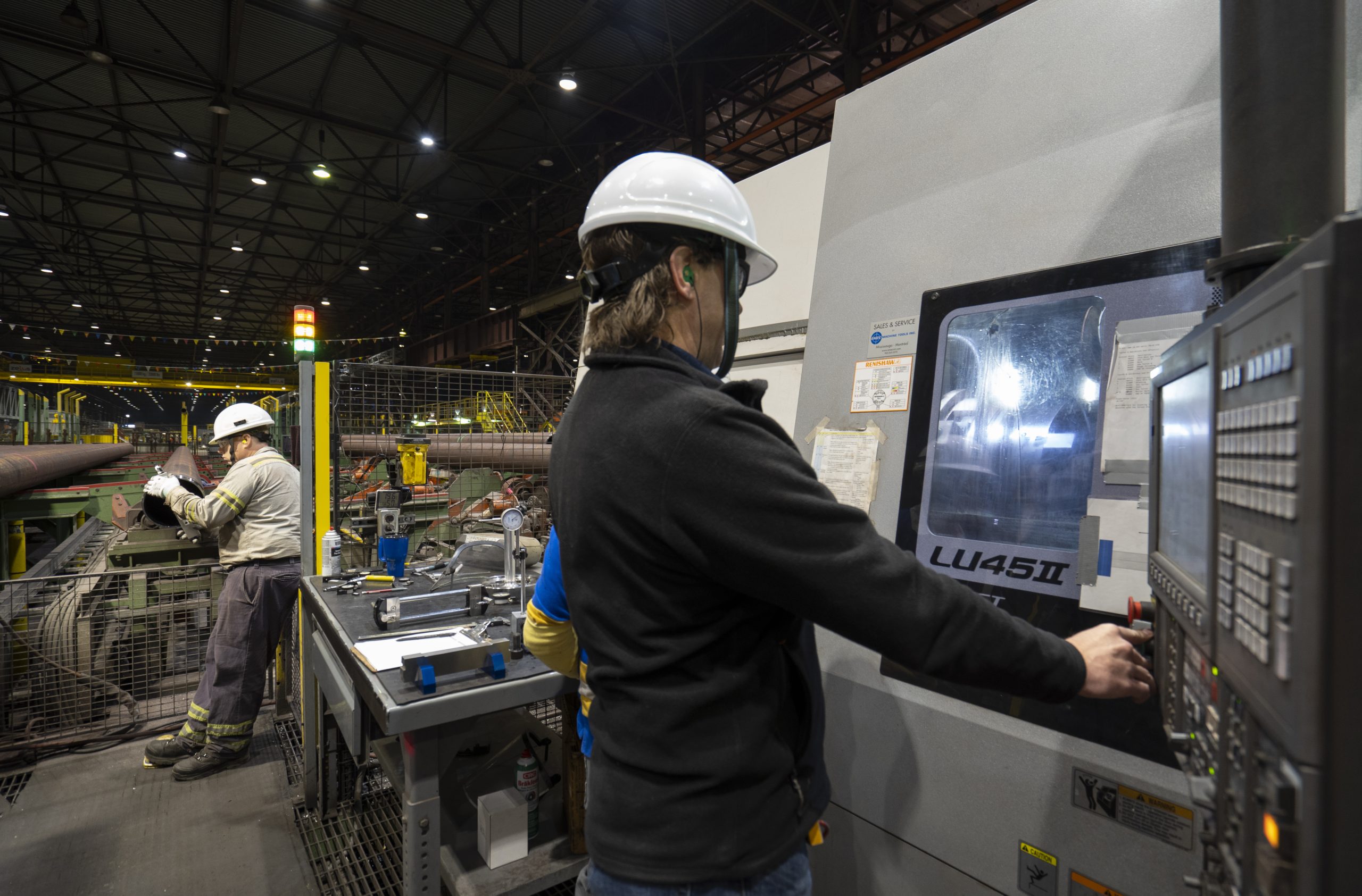
Tenaris employees work with pipe threading equipment at the company’s manufacturing facility in Sault Ste. Marie, Ont. Photo by Peter Power for the Canadian Energy Centre
Canada’s steel industry generates roughly $15 billion in annual output, directly employs about 23,000 people, and supports more than 100,000 additional jobs across related industries, according to the Canadian Steel Producers Association (CSPA).
Energy is one of the steel sector’s most important markets.
The CSPA estimates oil and gas, wind towers and power generation together account for roughly 30 per cent of steel demand in Canada.
“We’re excited about it,” said François Desmarais, vice-president of trade and industry affairs at the CSPA, referring to the agreement and the prospect of a major new pipeline.
“It’s a signal that we have an interest in the energy sector. It creates more certainty for our business.”
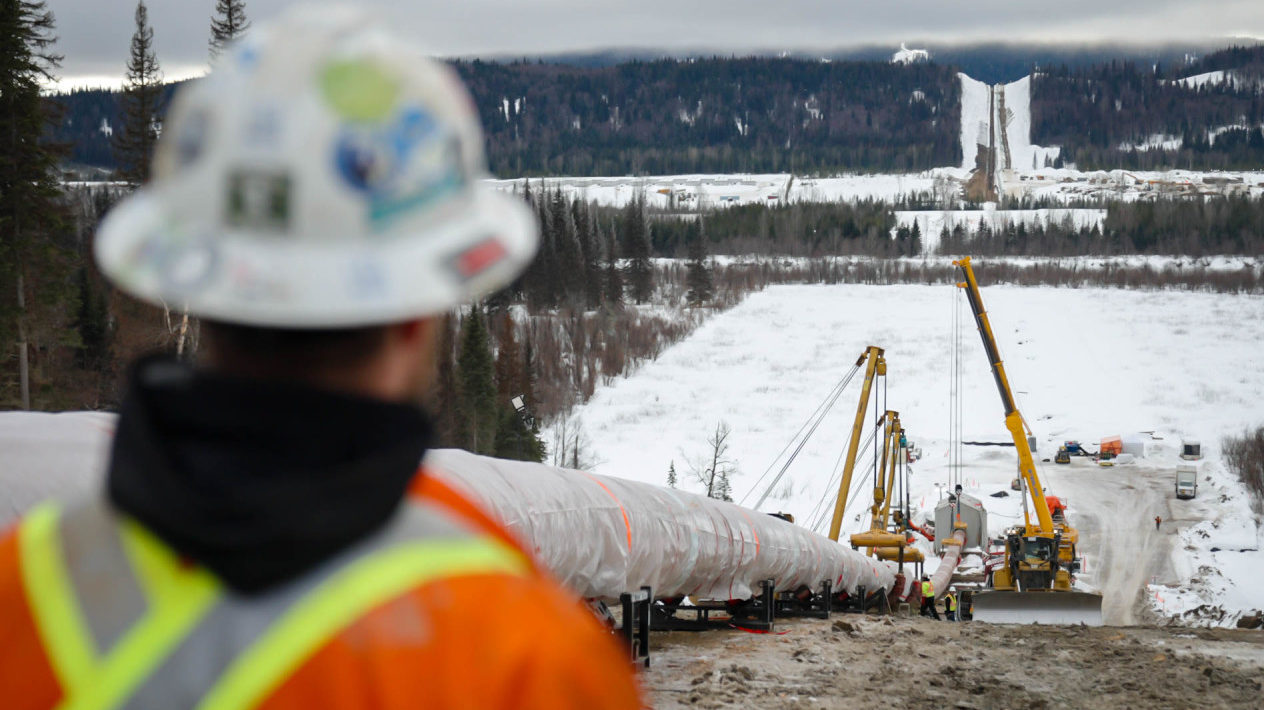
A worker looks on as crews build the Coastal GasLink pipeline in B.C. The project was completed in November 2023. Photo courtesy Coastal GasLink
Domestic supply in a volatile global market
Industry leaders say expanding Canadian energy infrastructure has become increasingly important as steel producers face mounting international trade pressures.
The U.S. now charges a 50 per cent tariff on the first tonne of steel imported from any country, sweeping Canada into a broader move to deal with global steel oversupply.
“The net was too wide, and we got caught in it,” Desmarais said.
“Many countries are trying to protect their national industries from surplus steel, particularly with China producing too much.”
Against that backdrop, building domestic demand through major energy projects could help offset lost export opportunities.
“We supply about 50 per cent of steel consumption in Canada,” Desmarais said.
“There’s no reason why we can’t supply more.”
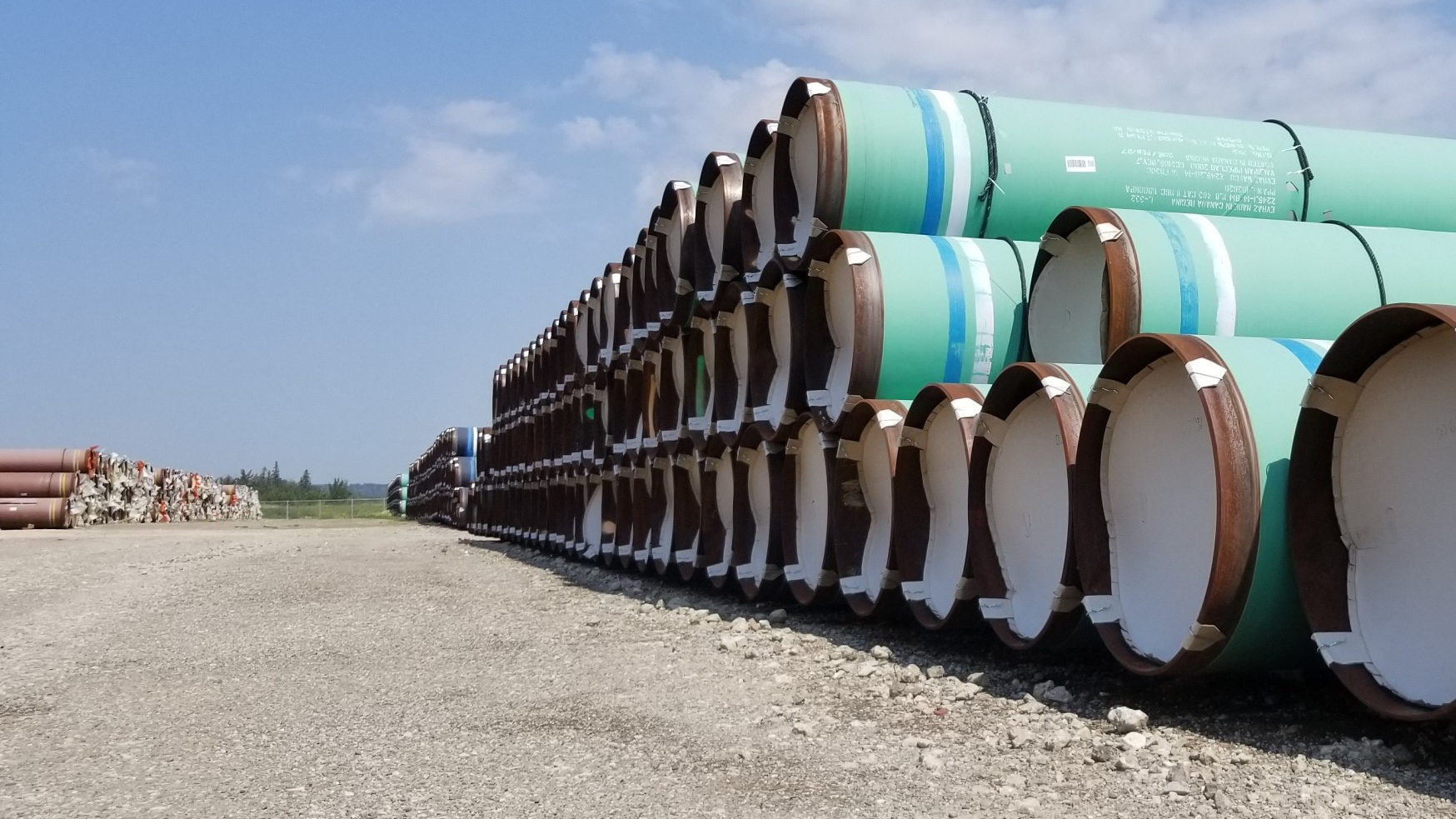
Steel pipe in storage for the Trans Mountain Expansion project in 2022. Photo courtesy Trans Mountain Corporation
Tenaris, which sells most of its Canadian-made production domestically, says it has less exposure to U.S. tariffs but strongly supports federal efforts to maintain a level playing field by countering unfairly traded imports.
“Made-in-Canada steel is critical to Canadian sovereignty in our energy supply chain,” Tett said.
Manufacturing ripple effects
The potential benefits of a west coast pipeline would extend well beyond steel mills.
Canadian Manufacturers & Exporters (CME) says the energy agreement reflects a positive shift in how governments view Canada’s energy and industrial potential.
“Energy policy is manufacturing policy,” said Ryan Greer, CME’s senior vice-president of public affairs and national policy.
“Canadian manufacturers will supply steel, fabricated metal, valves, pumps, electrical components, coatings, heavy equipment, control systems and more.”
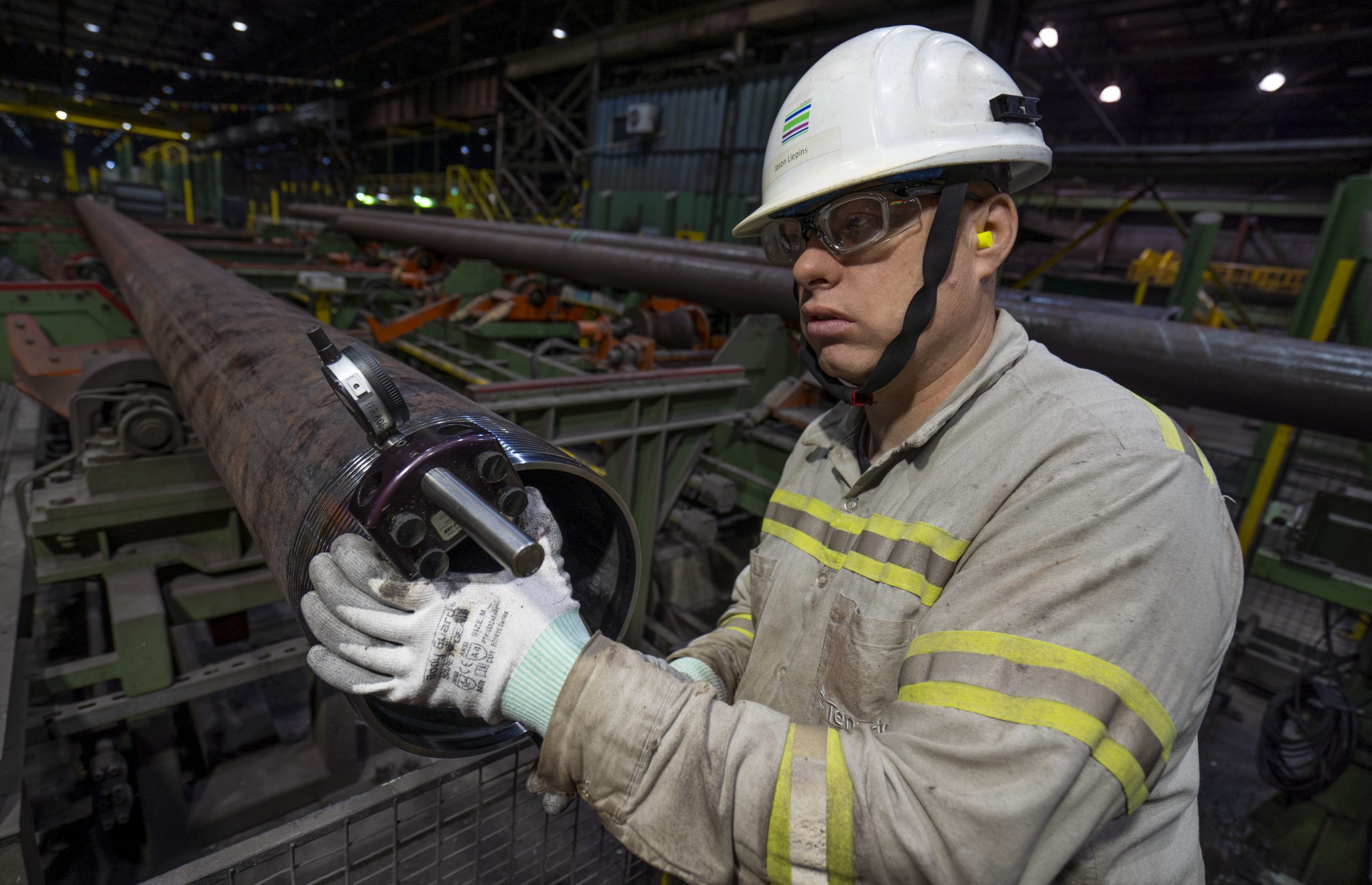
An employee applies final adjustments on a new premium line at the Tenaris pipe manufacturing hub in Sault Ste. Marie, Ontario on October 31, 2022. Photo by Peter Power for Canadian Energy Centre
Greer said megaprojects have become increasingly important as Canadian manufacturers navigate tariff uncertainty and volatile trade relationships.
“While we hope Canada and the U.S. can get North American trade back on a more predictable trajectory, it has become clear that Canada must assertively try to generate jobs, growth and prosperity in ways that aren’t reliant on U.S. decision-making,” he said.
Becoming Canada’s own best customer
Steel producers say governments can maximize the economic benefits of a major pipeline by clearly identifying material needs early and prioritizing domestic procurement.
“Map out what the needs are or will be,” Desmarais said. “That allows companies to make the business case to retool if necessary.”
With billions already invested in Canadian facilities — including $255 million Tenaris has invested in Sault Ste. Marie, since 2020 — industry leaders say Canada is well-positioned to deliver.
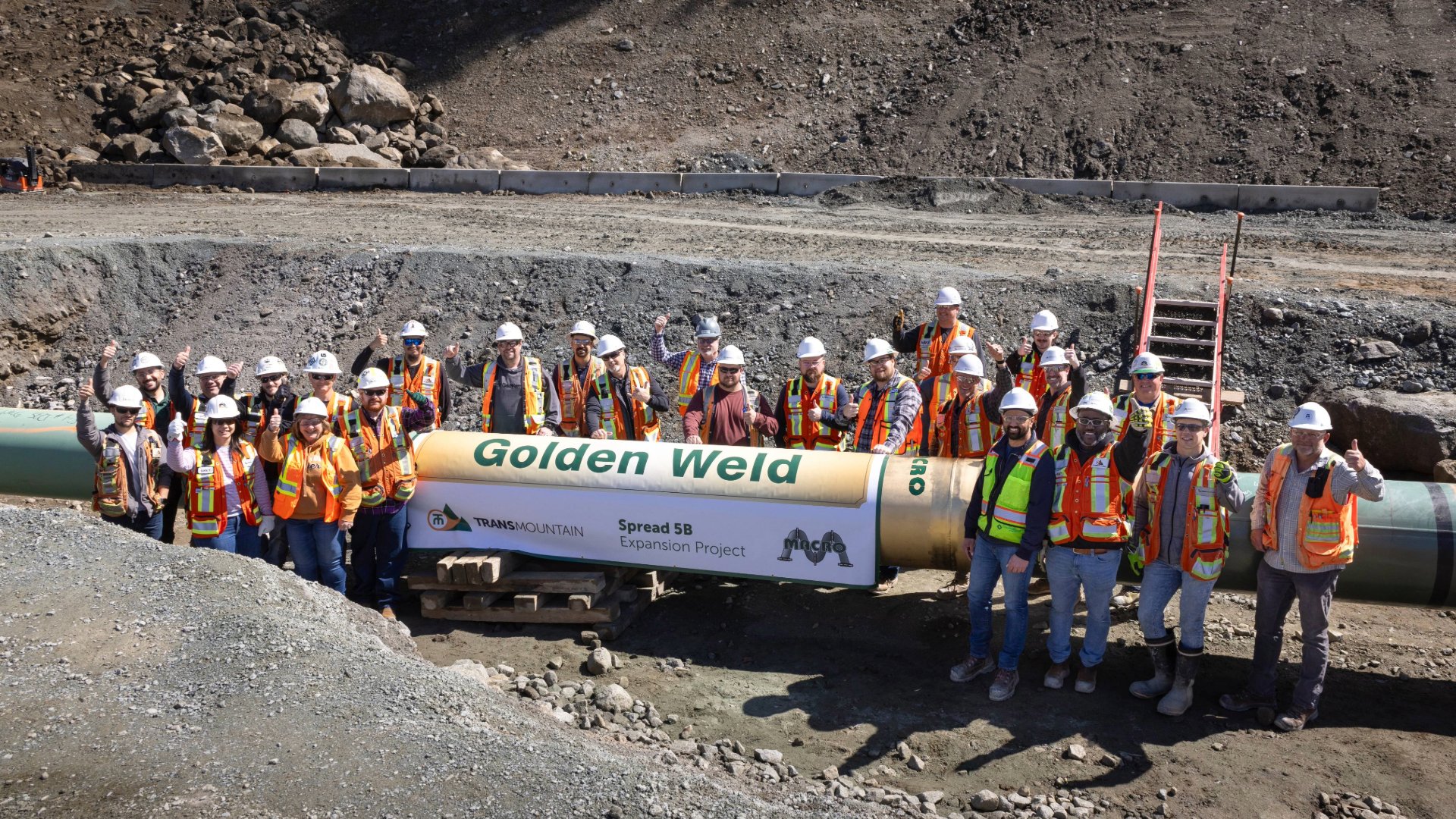
The “Golden Weld” marked mechanical completion of the Trans Mountain Expansion project on April 11, 2024. Photo courtesy Trans Mountain Corporation
“Everybody is doing it — the U.S., Europe and others are looking out for their own industries,” Desmarais said.
“Canada needs to do the same and become our own best customer.”
For companies like Tenaris, that approach would reinforce a truly national supply chain — one that starts in Ontario steel mills and ends at energy projects powering Canada’s economic future.
The unaltered reproduction of this content is free of charge with attribution to the Canadian Energy Centre.