
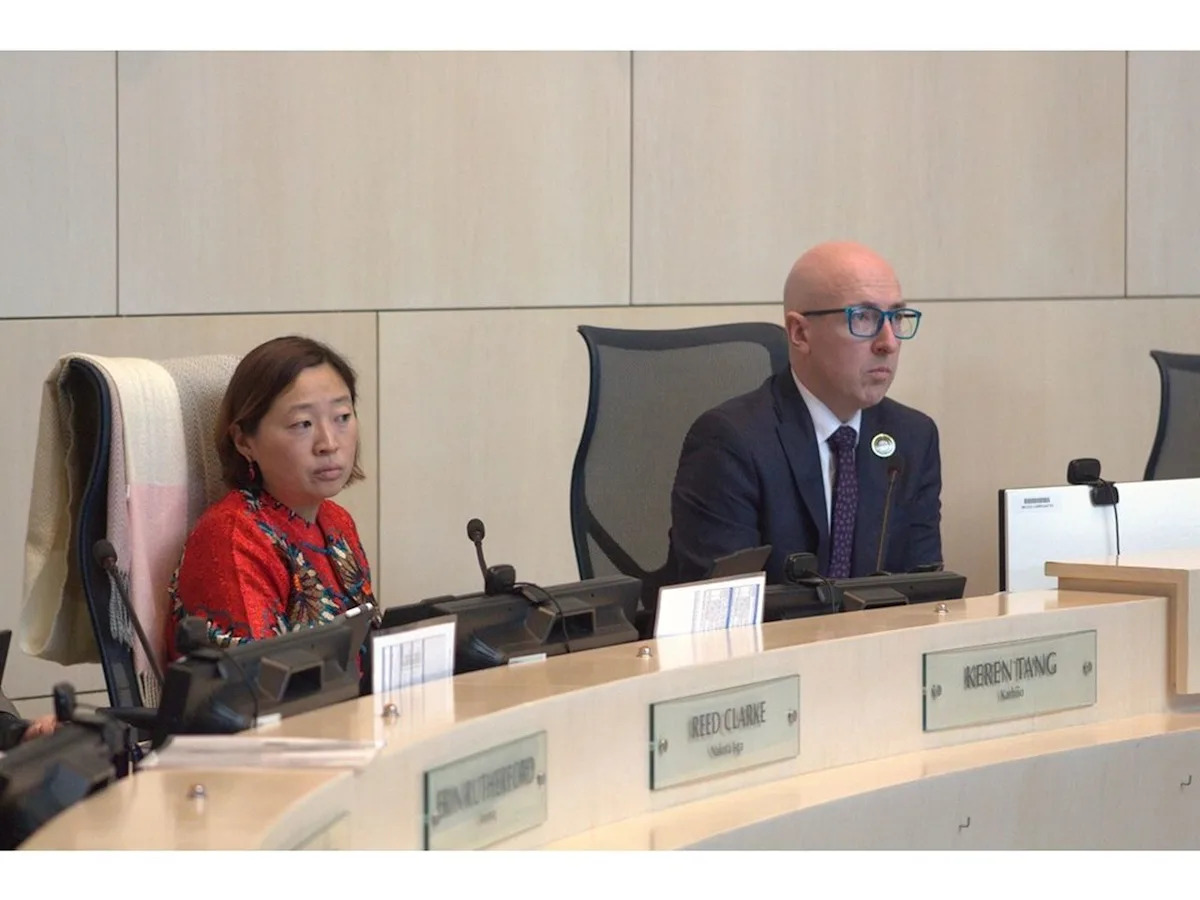
Edmonton city council has opted to leave the maximum number of units for new infill developments at eight dwellings and not touch the minimum floor space.
Following a feasibility study received on Tuesday from mddl — a policy planning and land development consultancy which administration contracted to complete the report in January — Council voted 8-4 to reject a motion from Ward tastawiyiniwak Coun. Karen Principe to implement the changes, which were recommended by administration following a November motion by Mayor Andrew Knack to bring forward potential changes to the city’s zoning bylaw.
Still on the decision table for councillors is whether to reduce the maximum height of a sidewall to 9.5 metres in small scale residential homes, and to begin work on a private tree bylaw to protect trees during development and redevelopment through the demolition permit process.
“What we’ve heard is building massing, from the vast majority, is an issue,” Knack said. “So now our job is how to we best address that? We haven’t seen any completed (construction) from the changes back in July, but the building length is going to be a significant change.
“I have seen a 10.5 metre-high rectangular box being built, and I don’t think that people like how tall that has gone. We’ve seen enough completed that I don’t want to wait. Building length alone is not going to address the concerns I heard from Edmontonians — it’s the overall massing, that is length and height together.”
If council approves the remaining motions, both will be brought to a public hearing at an April date to be determined.
Last week, nearly 75 people registered to speak for and against the city’s infill rules and to advocate for and against a private tree bylaw. Most voices against infill raised concerns of the “massing” of buildings — the overall size of the building compared to nearby homes. Knack noted that roughly 20 per cent of new builds were hitting the 10.5-metre limit.
But the mddl report, which administration received on Feb. 6, found in all cases the current rules are both more sustainable in tax revenue collected and provide a better return for developers.
Particularly, it noted reducing the amount of units to six would limit the revenue a property owner could collect from the building, which would reduce the viability of a project.
That being said, the report also notes sales of individual units or buildings are both underperforming under the current rules — which would not improve if the proposed changes went forward. New rentals projects were also underperforming in their return in areas, compared to the city average, where new infill was prominent. The report speculates the addition of new basement suites combined with high land values could be driving rental costs low — great news for renters, not so helpful for landlords. The report cautions it was limited in lot price data which could impact its findings.
Infill development had a minimal impact on the overall housing inventory of the city, notes the report. Edmonton has approximately 480,000 dwelling units, of which roughly 330,000 are in the redevelopment zone. Of those 330,000 homes, 292 were issued permits to be redeveloped into six-to-eight unit buildings, amounting to 0.5 per cent of the city’s housing inventory. Administration told council approximately 80,000-90,000 — or 37 per cent — of the 330,000 dwellings could be potentially redeveloped into eight-unit housing.
While housing prices generally only go in one direction, the report notes the benchmark housing price in Edmonton is still $350,000 — which is where it was in 2015. In spite of being one of the most affordable big cities to live in Canada, living in Edmonton is still not cheap. The report finds that none of the housing options are viable for households with incomes of $46,000 or less. The minimum household income to afford rental in the city is between $60,000 and $66,000. A household would need an income of $105,000 to be able to afford a semi-detached home or single family home.
If the stated goal is to reduce the cost for people to enter the housing market, the strategy appears to be working — the report notes Canada Mortgage and Housing Corporation is projecting more vacancies in rentals as the inventory of available suites expands and a marginal increase in the return of resales of properties as the construction market slows down.
Later Tuesday, council voted 10-3 to limit new infill to 9.5 metres in total height, as opposed to just the wall height. Council voted 11-2 to instruct administration to draft a private tree protection bylaw.
Related
Bookmark our website and support our journalism: Don’t miss the news you need to know — add EdmontonJournal.com and EdmontonSun.com to your bookmarks and sign up for our newsletters here.
You can also support our journalism by becoming a digital subscriber. Subscribers gain unlimited access to The Edmonton Journal, Edmonton Sun, National Post and 13 other Canadian news sites. Support us by subscribing today: The Edmonton Journal | The Edmonton Sun.