
The critical moral test for any community is the world it leaves for its children.
Without a doubt, Winnipeggers want all their city’s young people to have successful lives. Here are things we know make success possible: graduating from high school and avoiding disasters like addiction to drugs, teen pregnancy, sexually transmitted diseases and becoming involved with the criminal justice system.
Most citizens understand this. And if they were told there are proven ways to make it much more likely for our wishes for Winnipeg’s young people to come true, they would probably say “Hey, let’s do more of that!”
Tim Smith/The Brandon Sun
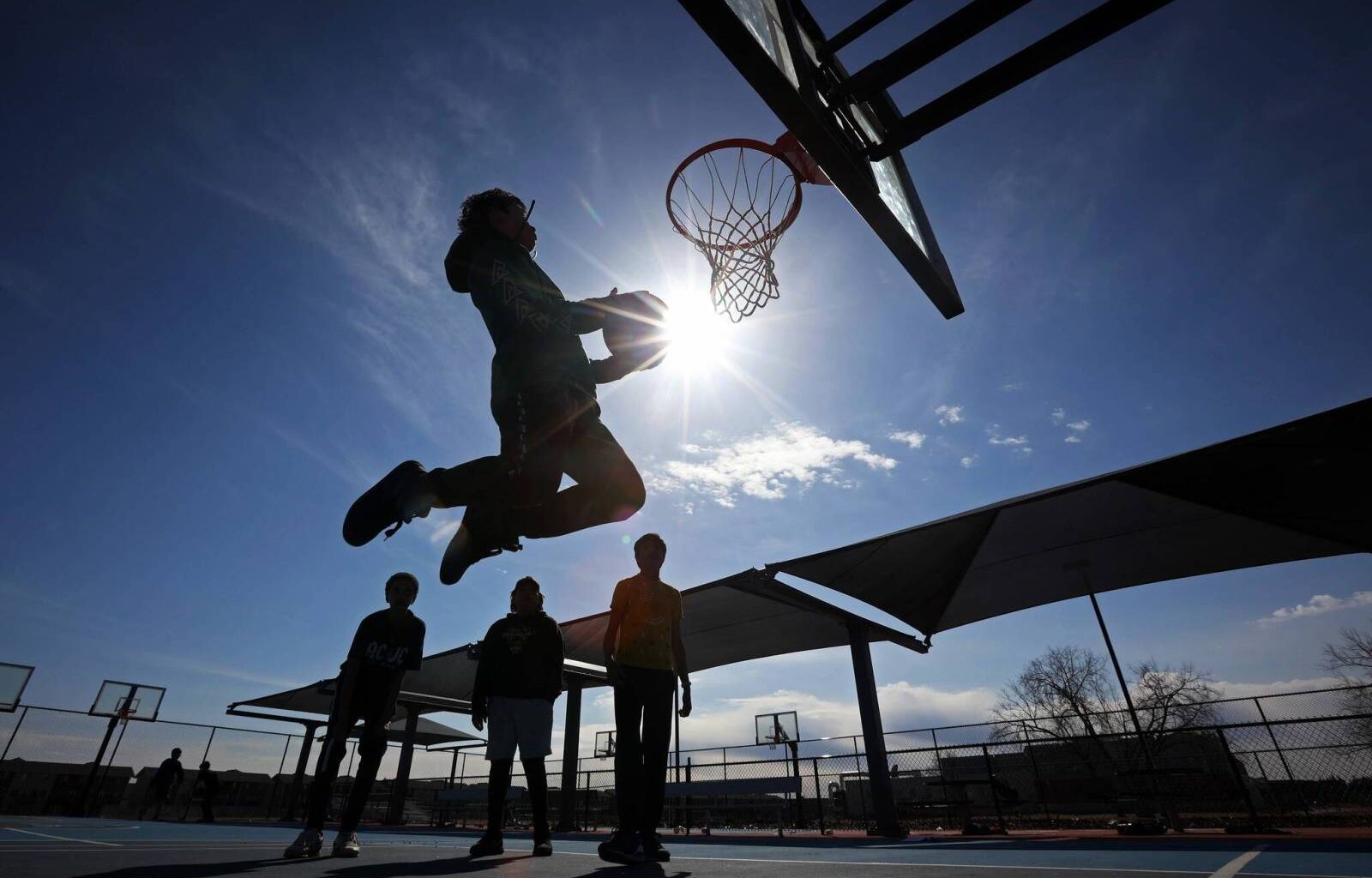
Public receational opportunities for kids build better adults.
But mostly, we don’t.
In Winnipeg, we significantly underinvest in the approximately 32,000 children of families challenged by poverty, wounded by family breakdown, and newcomers making the difficult adjustment to city life.
These families do not have the means to pay the hefty fees for after school programs. Without safe places to play and learn, young people can more easily make the big, sad mistakes that rumble through their adult lives. If we really want Winnipeg to be a safer, more prosperous and dynamic city, investing more in after-school programs for young people is one of the very best things we can do.
Compare the following two situations for a 13-year-old boy. In one case, mom is still away at work when he comes home after school to an apartment where his big brother is hanging out with a couple of friends, one of whom is in the business of selling drugs. The brother’s “friend” asks the 13-year-old if he would like to make $50 by delivering a package a few streets over.
In the other case, at the end of the school day, the 13-year-old goes to a club at his school where he gets a healthy snack, does some art or shoots some hoops with friends. There are a couple of responsible adult staffers at the club to give him a little support. At 5:30 he goes home to his apartment where his mom has returned from work.
Which kid is more likely to thrive? Imagine the story of that child’s life through his adult years. The difference between the likely outcomes in the first and second scenarios will be huge.
And when you add the stories of all the young people who might have had a better chance at success had there been a safe place to play and learn, the impacts on our city are enormous.
In 2019 The Manitoba Centre for Health Policy completed a rigorous study demonstrating that after-school programs offered by the Boys and Girls Club of Winnipeg had positive long-term impacts on the lives of youth who visited their clubs; these youth enjoyed better health, had less involvement in the criminal justice system and fewer teen pregnancies.
In 2025, the centre completed a study of the cost of not graduating from high school. It concluded that the annual public cost per early high school leaver in Manitoba is estimated to be between $3,812 and $7,149. The annual public cost for all early high school leavers in Manitoba is estimated to be between $70.5 million and $277.9 million. That is solely public costs, not total provincial economic impact foregone from the benefit of a more highly educated population.
The need and opportunity are apparent, and we know what it takes to give youth a better chance at success. After-school programs, especially when they can be hosted in the schools themselves, can make schools “stickier,” resulting in less absenteeism and better academic results.
But, despite the successes and increased community demand for youth serving programs, public investment has been basically flat lined at a low level for the last 10 years while salaries, food, facilities and other service costs have risen dramatically. This has been the case under several provincial and city administrations. A non-profit cannot run a deficit so, in recent years, many of the non-profit organizations that deliver these types of programs are cutting them back.
Winnipeg’s youth-centred non-profits operate efficiently and effectively. They are staffed by people who love what they do and do it well. They are governed by boards made up of responsible community members with the range of skills required to stay on mission.
They are often supported by organizations like the United Way who monitor and support their governance and programming. They connect with community stakeholders, private donors, schools, parents and funders to be transparent and trustworthy.
In short, non-profits are effective and accountable allies working with governments to accomplish important mutual goals. They are civil society at its best. We need to use this resource to its fullest.
You might think that our city leaders would place a higher priority on supporting programs for youth.
They are deeply concerned with economic growth, with reducing crime, with better community health. But year after year they hew to a traditional budget directed mainly to physical infrastructure — roads, transit, sewer and water, waste management and parks and community centres — and to public safety: police and fire.
Winnipeg’s budget for 2026 allocated about $2.5 million to non-profits providing youth programming, about .2 per cent of the total city budget. This amount was only made available after public outcry over a proposal in 2024 to cut spending on non-profit programs to about $1 million.
What were they thinking? That it’s someone else’s job?
It seems obvious that our community priorities are narrow and short-sighted.
If we did just a little less widening roads to get vehicles to a destination three minutes faster, we could do a whole lot more to help young people have safer, healthier more successful lives.
This might seem to lay blame on our city councillors. But they are doing, for the most part, what the voters in their wards are asking them to do.
So, don’t blame it on them, blame it on us.
Winnipeg Free Press | Newsletter

If we are serious about making Winnipeg safer, healthier, more dynamic and prosperous for all, we all need to elevate our thinking to include support for the social infrastructure essential for our future. We need to do more of the proven things that build a better world so all young people in our community can flourish.
Simply, that means more support to grow the non-profits that deliver life changing programs to youth. This should be a calling not only for city and provincial government, but for all citizens. Start where we are, donate more, volunteer more and get out to vote for this change.
Wouldn’t it be great for Winnipeg to be famed as a special city doing amazing work to create a better world for all its children?
It’s our biggest opportunity.
Ian Gillies is former board chair of The Link and current vice-chair of the Boys and Girls Club of Winnipeg.