
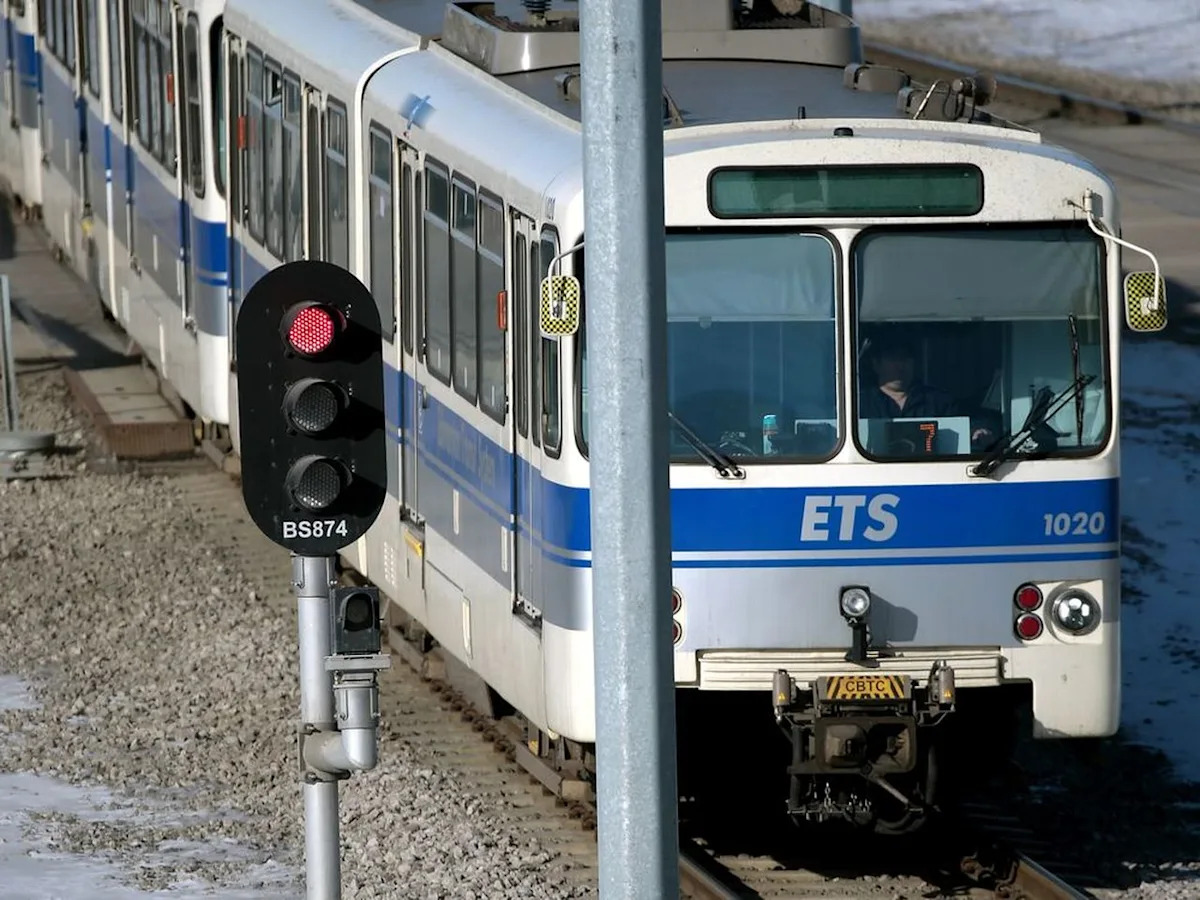
Most Edmontonians are likely unaware that the scale of the City of Edmonton’s infrastructure base has grown to such an extent that it now carries a replacement value of nearly $40 billion — $24 billion of which is devoted to transportation.
Replacement value is a telling way to express this, because it also turns out that a massive chunk of the city’s asset collection needs to be replaced or at least seriously rehabilitated.
Crumbling roads. Leaky arenas. Half-century-old LRT cars. Deteriorating bridges.
Due to a handful of pressures — most notably Edmonton’s growth over the years and the insatiable political demand for ribbon cuttings — the city has overemphasized the new and neglected the old. It’s a common practice in government that when finances get tight, maintenance budgets get light. And when it happens often enough for long enough, that’s when a real crisis emerges.
City council has been aware of this issue for awhile, and has even taken some initial steps to address it. But a sobering presentation by administrators last month really brought home the mounting scale of the problem.
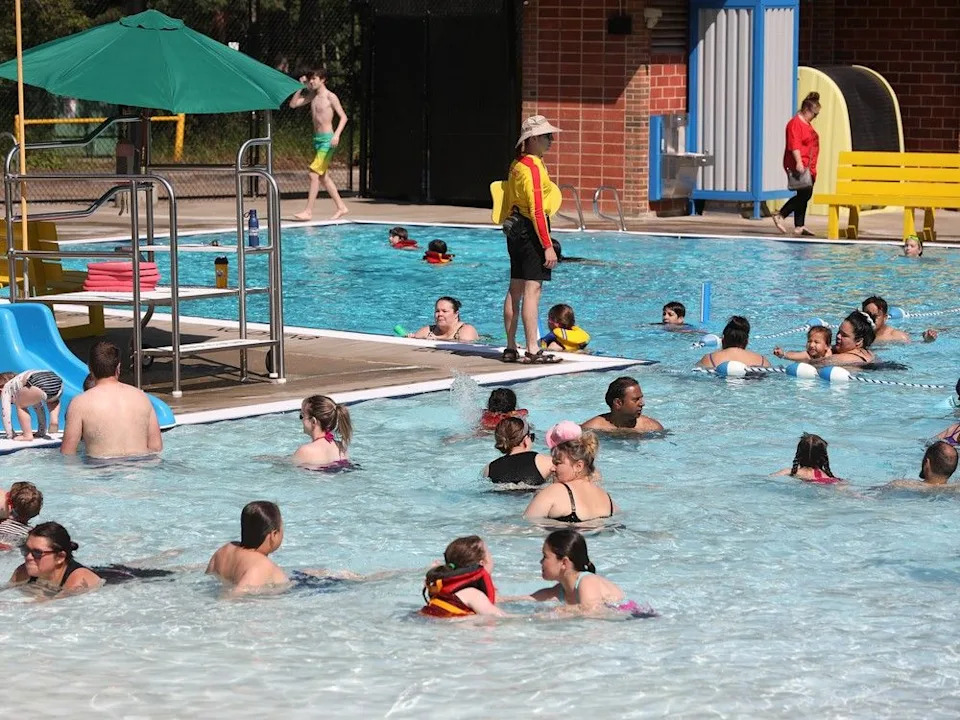
Families enjoy Edmonton’s Mill Creek Outdoor Pool in July 2024 after the pool officially reopened to the public following extensive renovations and repairs.
Deteriorating conditions
Over the next decade, the city forecasts that the gap between what it should ideally be spending on infrastructure renewal and what money it has available to spend will reach $10 billion. In other words, the city could put every unconstrained dollar it expects to have toward refurbishment — leaving little to nothing for other projects — and we would still be massively short of what’s needed.
When that scenario is projected out to 2046, again with all unconstrained funding going toward renewal, half of the city’s assets would fall into a “D” or “F” condition rating, city managers said.
The municipality can get a bit further ahead by building up a dedicated renewal fund over time through a series of 0.5 per cent tax hikes — and indeed, that is the current plan put in place by the previous council. However, even that scheme is insufficient to generate the needed revenue, managers said. Their forecast suggests that while a renewal fund at that level will help, 37 per cent of municipal assets will still drop down into the “D” or “F” categories by 2046.
There are a few things to take from this.
The most obvious point is that there needs to be a dramatic rebalancing of infrastructure spending between new and old, understanding that there is painfully little room to add to the city’s asset base.
Council will need to embrace the “small is beautiful” mantra — in which any new approved projects are modest in scope, or else of major critical importance. The “nice to have” proposals must be pushed down the road.
And even the most critical projects might need to be rejected or delayed.
Edmonton has typically borrowed money to pay for them, but that is a dicey proposition at the moment because the city is already carrying a high debt load. Debt repayment is the third biggest line item in the city’s annual budget, and is set to soar above $500 million a year for several years before it finally starts declining around 2033 (assuming no more debt is added).
Put another way, if the federal and/or provincial governments came to Edmonton and offered to pay a whopping 80 per cent the costs of a new LRT extension or road interchange, I’m not certain the city could responsibly come up with the remaining 20 per cent.
To its credit, the new council seems to agree with the general direction of renewal, or is at least saying the right things at the moment.
But from both political and logistical perspectives, this will be a tough exercise in long-term discipline, especially if the city continues to see rapid population growth. Politicians at all levels are often judged by the infrastructure they produce, but there usually aren’t any ribbon cuttings for the installation of a new roof or the replacement of a pool deck.
City-building is cool. City-fixing is a drag.
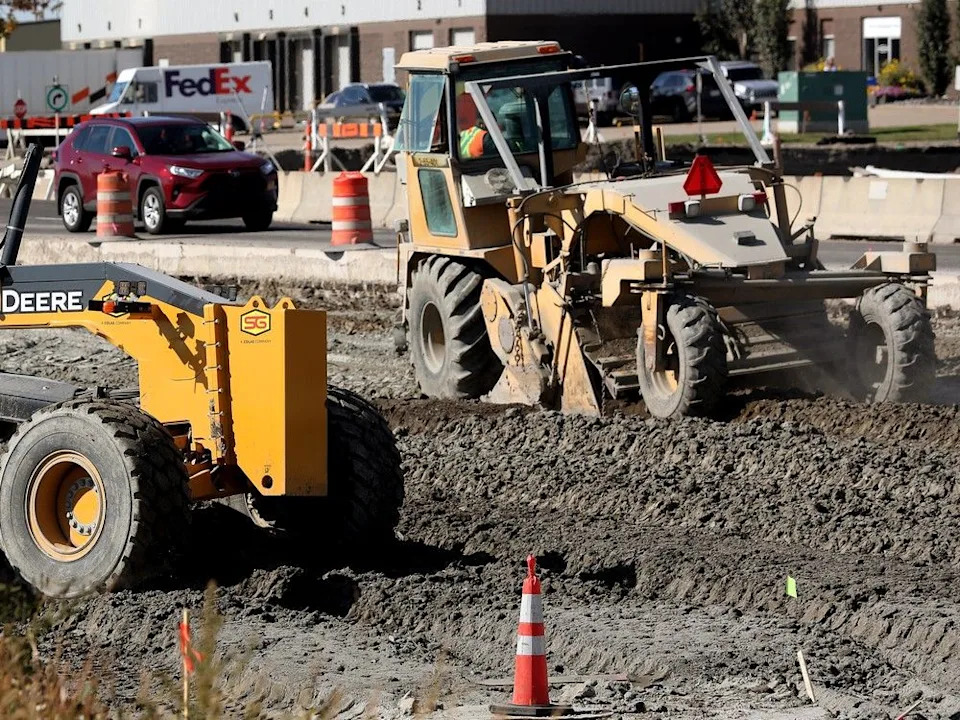
Construction crews work on Yellowhead Trail near 149 Street in Edmonton in September 2023.
Capital capacity
Beyond that, Edmonton must also look at other measures to improve its capital capacity.
For starters, a serious advocacy campaign is needed to get other governments to increase their funding grants, or to at least remove strings so that money earmarked for a new LRT line, for example, could instead be put toward refurbishing an existing one.
The Alberta government, in particular, should re-examine its primary infrastructure funding program to municipalities, called the Local Government Fiscal Framework. The framework has some good points, but also sets the base grant amounts at levels well below historical norms. Frankly, it’s nowhere near sufficient for growing cities and towns.
Whether that advocacy succeeds or not, Edmonton must also get both creative and unmerciful with its own budget.
For example, the city may need to divest some of its assets. The aging office towers Chancery Hall and Century Place are an obvious place to start — and the city has been trying — but other facilities could also be considered.
In addition, the selling of naming rights on some cultural or sports venue should be re-examined. Council has shot down some recent attempts at this, but the city is not in good enough financial shape to turn down revenue on principle, especially when I don’t think most people care about that principle. If we put advertising on city buses, what’s wrong with a corporate logo adorning a recreation centre?
And then consider every other tool in the toolbox, some of which probably seem distasteful.
Explore the province’s recent musings about opening more revenue options for municipalities. Find more savings in the budget that can be shifted to renewal. Look at hiking user fees, or perhaps even establishing higher fees for non-Edmontonians who use city infrastructure. Consider privatization of select services. Put a hard cap on sprawl to ensure Edmonton’s road network doesn’t get substantially bigger.
At the end of the day, however, a serious conversation is probably needed with taxpayers.
Everyone in the city is undoubtedly looking forward to a time when more normal, sustainable annual property tax hikes in the vicinity of four per cent are re-established. And in fact, the city’s projections for the next decade call for that — provided council restrains itself on adding major new capital projects.
But those projections do not include a real solution for the emerging renewal crisis. The city needs to fully explain the challenge, and then gauge residents’ appetite for a tax bump — perhaps another 0.5 per cent annually — to create an adequately sized renewal fund.
This is a mess that took years to create and it will take years to fix. But if Edmonton makes some tough, proactive decisions now, we give our roads, recreation centres and transit lines a fighting chance to still be around for the use of generations to come.
Related
Bookmark our website and support our journalism: Don’t miss the news you need to know — add EdmontonJournal.com and EdmontonSun.com to your bookmarks and sign up for our newsletters here.
You can also support our journalism by becoming a digital subscriber. Subscribers gain unlimited access to The Edmonton Journal, Edmonton Sun, National Post and 13 other Canadian news sites. Support us by subscribing today: The Edmonton Journal | The Edmonton Sun.