
Breadcrumb Trail Links
The allure for many is Calgary’s affordability and proximity to the mountains.
Published Feb 18, 2026 • Last updated 1 hour ago • 16 minute read
You can save this article by registering for free here. Or sign-in if you have an account.
 Michelle Gooneratne welcomes the move from Halifax to Calgary. Photo taken on Friday, Jan. 30, 2026. Darren Makowichuk/PostmediaArticle content
At 23, Muhammad Kakar dreamed of joining the foreign ministry in his home country of Afghanistan. Armed with a degree in international relations from Punjab University in India, he had returned home and was about to begin applying for work as a diplomat.
A month later, the Afghan government collapsed as the Taliban regained control of the country. The following year, Kakar and his family found themselves beginning anew in Calgary.
Article content
Article content
Advertisement 2
This advertisement has not loaded yet, but your article continues below.

THIS CONTENT IS RESERVED FOR SUBSCRIBERS ONLY
Subscribe now to read the latest news in your city and across Canada.
Unlimited online access to articles from across Canada with one account.Get exclusive access to the Calgary Herald ePaper, an electronic replica of the print edition that you can share, download and comment on.Enjoy insights and behind-the-scenes analysis from our award-winning journalists.Support local journalists and the next generation of journalists.Daily puzzles including the New York Times Crossword.
SUBSCRIBE TO UNLOCK MORE ARTICLES
Subscribe now to read the latest news in your city and across Canada.
Unlimited online access to articles from across Canada with one account.Get exclusive access to the Calgary Herald ePaper, an electronic replica of the print edition that you can share, download and comment on.Enjoy insights and behind-the-scenes analysis from our award-winning journalists.Support local journalists and the next generation of journalists.Daily puzzles including the New York Times Crossword.
REGISTER / SIGN IN TO UNLOCK MORE ARTICLES
Create an account or sign in to continue with your reading experience.
Access articles from across Canada with one account.Share your thoughts and join the conversation in the comments.Enjoy additional articles per month.Get email updates from your favourite authors.
THIS ARTICLE IS FREE TO READ REGISTER TO UNLOCK.
Create an account or sign in to continue with your reading experience.
Access articles from across Canada with one accountShare your thoughts and join the conversation in the commentsEnjoy additional articles per monthGet email updates from your favourite authorsSign In or Create an Account
or
Article content
“Leaving a place I called my homeland, a place that shaped my life . . . it was my whole identity,” Kakar, now 27, said. “Coming to Calgary as a newcomer, who had huge, big dreams back home, it was a bit of a problem — a struggle at the beginning.”

Noon News Roundup
Thanks for signing up!
Article content
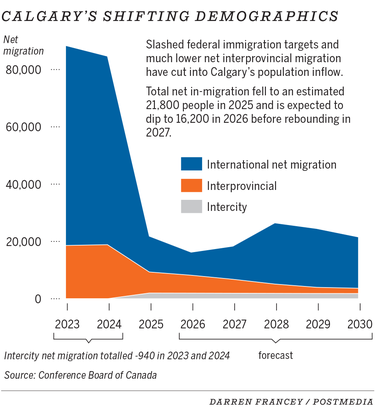
In 2022, Calgary welcomed thousands of refugees to the city, primarily from Afghanistan and Ukraine with a smattering from several other countries. The influx contributed to a then-historic high of 29,500 newcomers arriving in the city through international immigration.
For Kakar, Calgary wasn’t a “choice” but rather a refuge from the dangerous circumstances he and his family had found themselves in.
“We’re just thinking about somewhere safe,” he recalled.
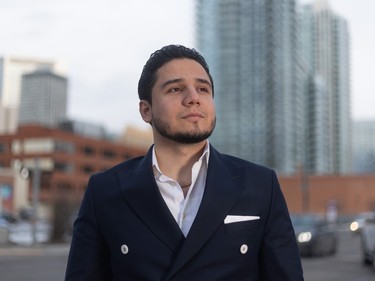 Muhammad Kakar, a former Afghan national, was photographed in Calgary on Wednesday, Jan. 28, 2026. Kakar left Afghanistan in 2022 when the Taliban took control of the country, and has called Calgary home ever since. Brent Calver/Postmedia
That same year, the UCP government launched the first phase of a multi-year talent recruitment program, dubbed Alberta Is Calling. The campaign was a resounding success in attracting newcomers. In 2023, the city saw record net migration of approximately 84,000 people. The following year, up to 92,000 migrants moved to Calgary, from abroad and elsewhere in the country.
Net migration has since slowed, as tighter federal policies limited the entry of foreign workers and international students and a cooling housing market nationally reduced the urgency for people to relocate.
But Calgary remains an increasingly popular choice for people wanting to relocate, thanks to its allure of a strong oil-and-gas economy, a growing tech hub and housing affordability, among other factors.
Article content
“It has this appeal of being a more dynamic city, a growing city,” said Pallavi Banerjee, who teaches sociology at the University of Calgary.
For Kakar, the idea of Calgary becoming more than just a safe refuge slowly materialized as he settled into his new life here.
“Everything began to make meaning again,” he said. “I started to dream again.”
The demographics
As Calgary has grown, so has its diaspora. Statistics Canada data published in 2021 — the most recent available — show almost one-third of the city’s population identified as a foreign-born immigrant, with the Philippines (15 per cent), India (13.3) and China (eight) the most common countries of origin. Twenty years earlier, that total figure was less than 15 per cent.
Nearly half of the immigrants who settle in Calgary are between 25 and 44 years of age, the data show, with the next significant age bracket between 15 and 24 years.
“They’re mostly families or young families who are coming to Calgary,” according to Sandeep Agrawal, who teaches Earth and Atmospheric Sciences at the University of Alberta.
The allure for many is Calgary’s affordability and proximity to the mountains.
“No matter what, Alberta and Calgary are still quite affordable for newcomers and for Canadians, housing affordability is key,” he said. “Then (there’s the) diversity of the economy, from blue-collar jobs all the way to white-collar. And the third is the location, right next to the mountains.”
Article content
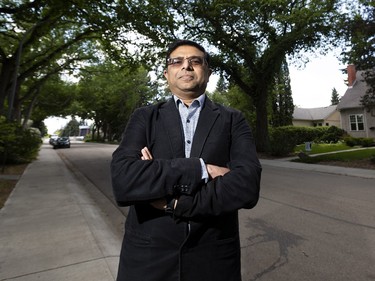 Sandeep Agrawal, a professor and head of the University of Alberta’s School of Urban and Regional Planning, talks about his research on how zoning rules around mature neighbourhoods affect equity. Photo taken on Wednesday, June 16, 2021, in Edmonton. Greg Southam/Postmedia
Affordability and the nearby Rockies are what attracted Robert Safiullin, 30, and his wife Lali Tavkhelidze, 29 to move here after living in Azerbaijan for two years.
Safiullin is Russian and his wife Ukrainian. The two dated while living close to the Russia-Ukraine border.
“I proposed in 2021 and we were planning to meet to decide which country we wanted to live in,” Safiullin said. In 2022, Tavkhelidze bought her plane tickets to visit him on Feb. 25. “And then the war broke out two days before her flight,” he said.
It meant a hurried evacuation to Poland and then to Azerbaijan, where the couple, along with Tazkhelidze’s mother and grandmother, lived for two years. The same year Russia invaded Ukraine, the Canadian government launched the Canadian-Ukrainian Authorization for Emergency Travel program. As of September 2025, about 33,000 Ukrainians have come to Calgary, although it’s unclear if all arrived through the same program.
“When we saw the program in Canada, we thought about it for a year and we finally decided to give it a try,” said Safiullin.
The couple had multiple Canadian cities on their list — Toronto, Vancouver, Edmonton and Calgary.
“I knew Calgary as the place where the Olympics were,” Safiullin said with a chuckle. With more research, the two determined Calgary to be a more “modern” city than Edmonton and with a more “balanced” lifestyle than found in Toronto and Vancouver.
“We really like to be active as well and the mountains are pretty close,” he said.
Article content
When Karla Fragoso-Schroeter first started dating her husband Cody in late 2017, all she knew about Calgary was that it hosted the Stampede and was close to Lake Louise. She lived in Mexico at the time.
For two years, the couple carried on a long-distance relationship, visiting each other periodically in their respective cities. Since Cody worked as a pipeline engineer, their only viable options were Calgary or Texas. They chose Calgary.
In March 2020, Fragoso-Schroeter landed in Calgary. “It was freezing cold,” she recalled. “I had jackets and stuff, but you just don’t know how to layer up because you’ve never dealt with the cold.”
She and her husband had been living for two months in Mexico before her move to Calgary, which meant coming home to a shuttered house, empty fridge and a car with a dead battery.
“We had to go Canadian Tire and get a battery urgently because we didn’t have food,” she said. “I was just like, ‘Oh my god. What did I get myself into?’”
Interprovincial migration
Calgary has also become a prime destination for Canadians living outside the province. Recent Statistics Canada data show Calgary and Edmonton are the top metropolitan regions in Canada for interprovincial migration, with Calgary seeing a net gain of 11,195 interprovincial migrants between July 2024 and July 2025.
“Most of the migration to Calgary is happening through interprovincial migration,” said the University of Alberta’s Agrawal, with many residents first settling in Toronto or Vancouver before deciding a second move to Calgary.
Article content
Toronto and Vancouver, he explained, are better known internationally and therefore tend to draw migrants from abroad. “They might find that those are not the cities for them to take root,” he said.
Employment and economic opportunities are often the drivers of interprovincial migration, he added.
Stefanni Brasil, 34, had lived in Vancouver for five years with her husband, Thiago Araujo, before they decided to make a change.
“We enjoyed Vancouver but in the winter, it was really depressing as it got dark for days,” she said. “Coming from Brazil, it was really hard to not see the sun.”
The other deciding factor was a more affordable living. “We wanted to move to a new place, but it would cost a minimum of $1,000 more per month,” she said.
They had visited Calgary once to see a friend and found the city pretty and the people friendly.
“We thought, okay we can try it out. If we don’t like it, we can move back,” she said.
For Michelle Gooneratne, 28, it was the lure of a “fresh start” and better opportunities that brought her to Calgary in April 2024 after she had lived in Halifax for seven years.
“I felt like it was time for me to get out of my comfort zone and meet new people and make new connections,” she said. “And I wanted to live in a big city but I didn’t want to go to Toronto.”
 Michelle Gooneratne welcomes the move from Halifax to Calgary. Photo taken on Friday, Jan. 30, 2026. Darren Makowichuk/Postmedia
Calgary had the “best of both worlds” to her — the big city life, better-paying jobs with a healthy dose of nature and outdoor adventure right next door.
The idea to move to Calgary came up during a girls’ trip to the city in 2023, a year before she moved.
Article content
“I was thinking about next steps in my career around November,” she said. “I was looking at Calgary and Toronto and I felt Toronto was too overwhelming. I felt like Calgary would be the second step.”
Support from immigration centre + jobs
Almost everyone interviewed by Postmedia agreed their first year in Calgary was the most difficult. When asked why, it came down to two concerns — the weather and finding employment.
“It (is) very challenging for newcomers to find jobs with the background and experience they have,” Kakar said.
Despite his experience in international relations, he took jobs in construction and retail, gradually working his way up the employment ladder.
“I kept applying for jobs,” Kakar said. “I didn’t stop. I tried to network with people.”
In Russia, Safiullin owned his own agency, working as a videographer and photographer. “We were doing TikToks and YouTube channels, helping medical clinics and private businesses with their social,” he said.
After landing in Calgary, he sent out thousands of applications.
“I only got like ten-ish replies,” he said. Having lived in multiple countries and large cities, the challenges of a job search in Calgary came as a shock.
“It was brutal,” he added. “It was the first country in my life where it was difficult to find a job.”
It made him depressed, for a bit, he said. “I told myself, ‘okay, maybe I don’t understand something.’ ”
Finally, he walked to the nearest construction site and asked if they needed any more hands for labour. He landed a job in minutes.
Article content
“We’re really missing out (on an opportunity) when we talk about newcomers coming here,” said Kelly Ernst, chief program officer at the city’s Centre for Newcomers.
“People are coming with incredible skills, abilities, qualifications and we’re not using it to the degree that we could be, even though the positions are out there, and there’s a cry for various positions to use those skills and abilities,” he said.
“Our society sort of vilifies newcomers to a certain degree and we put them in the box (and say), ‘Oh, well, they need Canadian experience.’”
It’s a common refrain. Newcomers arrive in Calgary with years of work experience, a bachelor’s and/or a master’s degree and are immediately relegated to working front-line counter at a fast food outlet, as a labourer or in retail.
In Mexico, Fragoso-Schroeter worked at some of the country’s top companies, but it still took her over a year to find a permanent job in her chosen field here. She started out working at a Little Caesar’s pizza outlet. “There were four of us (working there),” she said. “One had an MBA, another had an actuary degree with a master’s in data science. I also had a bachelor’s.
“It was (like that) wherever I went. It was overqualified people and we’re all doing these jobs because we don’t have Canadian experience.”
It has gotten more difficult for newcomers over the years, as the city’s unemployment rate has grown from six per cent in 2022 to eight per cent in 2026 as more people look for work.
Article content
“It’s hard, but it’s as hard as anywhere in Canada,” said Banerjee.
For Kakar, it has meant working his way up over the past three years into his current job at the Calgary Catholic Immigration Society as an employment communications workshop coordinator.
“The difficult part was having this passion to help newcomers and not being able to do anything about it (at first),” he said. “I had made a decision that I would give back to the community as much as I can.”
The weather was the easiest part for Kakar.
“I know everyone hates it, but I like it,” he said. “I do love the snow.”
But this isn’t the case for a lot of newcomers. “Weather really does make a difference,” Banerjee said. “During the winter months, I know families who don’t have winter clothes that would (make it) safe for them to go outside, so many women and girls would just stay inside.”
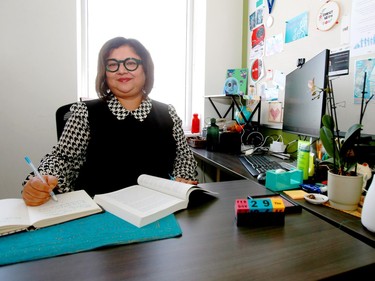 Pallavi Banerjee, University of Calgary Professor of Sociology, Research Excellence Chair poses in her office in Calgary on Tuesday, Feb. 3, 2026. Jim Wells/Postmedia
For Fragoso-Schroeter, it was a big worry. Living in Mexico city, she was used to a warm, tropical climate.
“One of the things I found really strange (in Calgary) was how much preparation you have to have,” she said. “For example, in winter I gotta make sure my tank is full because if I end up in a ditch, I don’t want to freeze to death.”
Or it may mean keeping a blanket and supplies in the car and keeping the vehicle on so the battery doesn’t die. Buying layered clothing to keep in tune with the fall and rise of temperatures in the winter.
“In Mexico, you just live you life very chill, you don’t need any maintenance,” she said. “You don’t have to worry about the winter.”
Article content
David Kazimiro moved to Canada from south Sudan in 2001 and had lived in London and Winnipeg before moving to Calgary.
“That first winter was brutal,” he said. “I remember telling myself, ‘how do people live here?’ ”
Twenty years later when he watched his newly arrived wife and three children gawk at the cold weather and snow outside the airport, he was reminded of his first time.
“I knew it was going to be difficult for them,” he said. “At the airport, everyone was saying, oh this is tough. Some of them was shivering.”
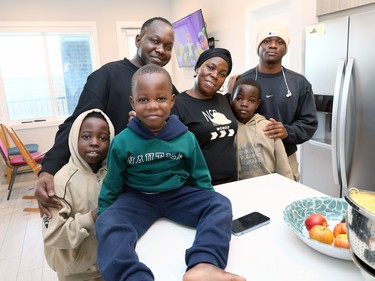 David Kazimiro with his wife Dora Ringasi and kids (L-R) Garcia, 8, Whanga, 5, Gele, 10, and Evan, 19, as it took five years to bring his family from Uganda to Calgary. Photo taken on Sunday, Jan. 18, 2026. Darren Makowichuk/PostmediaHelping immigrants adjust
At the Centre for Newcomers, Ernst and his team are long used to receiving and assisting recent arrivals to Calgary. Some come to the centre straight from the airport, he said.
“Generally speaking, what people will do is, they will be here for a few months and try to do everything they can to get settled,” said Ernst. “And then once they start getting settled and realize that, ‘Oh, I could really use some help, that’s when we see them.’ ”
The three key challenges they often need help with? Work, language and housing.
“Employment is the very first thing that that we generally get with respect to questions. The second one would be affordable housing,” he said. “Because newcomers are often in (low-income) jobs, they have to find places with really low rent, for example, for at least for the first while.”
To a lesser degree, they may also come to the centre looking for low-income passes, referrals to food banks and language training programs.
Article content
“People need to understand. Newcomers want to support themselves,” he said. “They’re not looking for government handouts.”
When Kakar first landed in Calgary, he and his family were taken under the wing of the CCIS. “We really needed someone to guide us with the procedures for housing, medical care, everything,” he said.
Now, as a staff member, he helps newcomers find professional jobs.
“I work with them on drafting, tailoring their resumes and cover letters. We practice and do mock interviews, working on LinkedIn,” he said. “So basically creating or adapting their careers into Canadian professional careers.”
YMCA Calgary runs YMAP, a free program for Calgary newcomers aged eight to 25 years that helps young adults integrate into society through mentorship, workshops and activities like camps, field trips, classes and volunteer outings. Rey Madridejo, general manager for youth manager at the YMCA said it’s an especially popular program for younger immigrants looking to integrate into Calgary life.
Many of the kids who sign up for the program may have never heard of some of these activities, like camps or volunteerism, Madridejo said. He recalled how when he first came to Calgary, the concept of a camp as a program was foreign to him.
“Camp to me was having a tent . . . and having a can of pork and beans and stuff,” he said. “You don’t realize that it’s more than that. It’s quite an experience to cherish and look forward to with your family.”
Article content
“Volunteering is a huge one,” he said. “It excites them because number one, it’s something new for them and they want to experience it. They also see a lot of their friends doing it. And then of course those who already know about volunteering, they grab the opportunity to fill up the resume.”
Fitting in
Madridejo has worked at the YMCA Calgary for 16 years. It’s been 20 years since he first moved to Calgary, yet he is reminded of his own first few years in the city through the conversations he has with clients.
“Back in your country, you would have had a different life, a different career,” he said. For Madridejo, moving to Calgary meant having to find himself all over again.
“I think that’s what it is. Finding yourself as a newcomer, trying to integrate yourself into a new community and a new life,” he said. “Adjusting to the weather alone is is quite a quite a challenge as well. Things that you don’t even consider before, like stepping out of your house and then it’s just navigating a new life in general.”
That’s what worried Fragoso-Schroeter the most about moving to Calgary.
“I was worried about the weather. I was worried about restarting my career in Canada when I had a job in Mexico,” she said. “It wasn’t the best job in the world, but I thought that I’d have to restart. And driving, to get a new license. I was anxious and stressed.”
It’s a common story to Madridejo, the combination of excitement and sadness.
“Anything new is exciting,” he said. “Coming from a different country, it gives you the opportunity to see different things but what also comes with that is leaving a different life behind at home. It’s harder whether you’re an older person or younger, leaving behind your friends is difficult.”
Article content
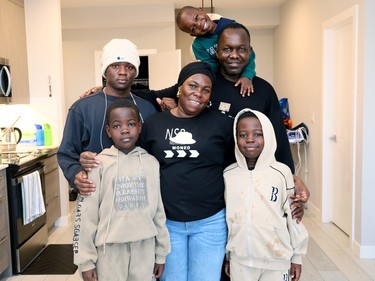 David Kazimiro with his wife Dora Ringasi and kids (L-R) Evan, 19, Gele, 10, Whanga, 5, and Garcia, 8, as it took five years to bring his family from Uganda to Calgary. Photo taken on Sunday, Jan. 18, 2026. Darren Makowichuk/Postmedia
After living in London, Ont., for a few months Kazimiro found Calgary a welcome change.
“London was small town and not a lot of South Sudanese people there. I was lonely,” he said. Finally moving to Calgary months later, he was able to lean on an already thriving South Sudanese community to help him adapt to the new culture and harsh weather.
“There was support, community events, gatherings, things like that,” he said. “And it helped me alot.”
And since then the community has only gotten bigger, he said. “When you see hundreds of people, you feel like you’re not lonely.”
One of the first friends Safiullin and his wife made, after their move, was with a woman who, by coincidence, had lived in the same village where Safiullin was from.
“There are only 10,000 people living there,” he said. “It was so interesting to meet someone there in another end of the world.”
She became a support for them with all the practicalities of life here. Safiullin had also posted about his experiences settling in Calgary on Instagram and received responses from other commenters, some of whom he would meet and become friends with.
Having moved during the pandemic, Fragoso-Schroeter was limited in ways to meet people and turned to Facebook groups to find Mexicans who had moved here.
“There would be Zoom calls where people would meet and talk,” she said. She also kept in touch with her friends who lived back home and would spend most of her time with her husband.
Article content
The struggle wasn’t about finding friends but rather reaching a sense of emotional and mental security to feel able to reach out of her comfort zone.
“I didn’t have a clear outlined path,” she said of her first few months in the city. “It made me feel insecure and stressed.” For days, her mind would churn with the list of things she needed to do — get a job with better stability, get a driving license, complete a program of study — “I didn’t have this mental space to be feeling safe where I was,” she said.
“Once I got a good job, I felt safer to do things,” she said.
Gooneratne already knew a couple of friends when she moved to Calgary, who in turned introduced her to their friend groups. But having to leave behind the community she had built in Halifax was heavy.
“The biggest thing that stopped me from moving to Halifax for the past few years was the community,” she said. “But slowly people started to move out of Halifax. And that’s when I thought, okay maybe it’s time for me to move.”
Life in Calgary today
Today, Fragoso-Schroeter works as a consultant with a flexible schedule that only requires her to be at the office two days a week. In her free time, she goes to the gym and swims at the YMCA centre close to her home. Pottery on Tuesdays. Movie nights with her husband and a girls’ night with her friends every so often.
“It took three years,” she said for Calgary to feel like home.
For Safiullin, it was when he realized he had more friends in Calgary than he did back home.
Article content
“I lived in Moscow for so long and now I feel like I know Calgary better,” he said. It took him two years to feel that way. Currently recovering from a physical injury, his days today consist of him dropping his wife to work, attending physiotherapy appointments, the occasional road trip to the mountains and volunteering.
“Now we are confident that we have jobs and if something happens we will be able to find jobs,” he said. “Now we know how it works here in Canada and we know that we’re not going to be broken.”
Coming from Canada’s east coast, Gooneratne said it took her only four month to feel at home.
“When I travelled, I was always excited to come back to Calgary,” she said.
By the end of his first year, Kakar said he felt “completely at home” in Calgary, so much so that he’s begun writing a book on his experiences.
“Now I have my dreams, my goals here and I’m very happy to be here because now I have safety. I have the means to complete my dreams.”

Article content
Share this article in your social network