
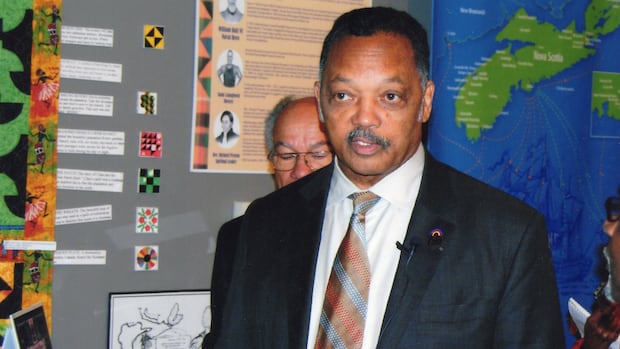
Rev. Jesse Jackson left a lasting impact on Nova Scotia, say leaders of the African Nova Scotian community, and was considered like an extended family member to those he met during a visit to the province in 2009.
Sherri Borden Colley, a longtime Halifax journalist, says getting to interview the prominent civil rights leader in person at the Black Cultural Centre for Nova Scotia in Cherry Brook, N.S., nearly 17 years ago was one of the most significant moments of her career.
“That connection that we feel, because he was here, I would say he was like an extended family member — especially for our Black clergy who would have met him, so today we are grieving and we are mourning,” Borden Colley said in an interview Tuesday.
Jackson, a protege of Rev. Martin Luther King Jr. and a two-time U.S. presidential candidate who led the civil rights movement for decades after the revered leader’s assassination, died Tuesday in Chicago at 84.
In June 2009, Jackson visited a high school in Cole Harbour, N.S., and spent time with Black community leaders at the Cherry Brook centre.
Borden Colley said she and Jackson spoke during the interview about the Black Loyalists — about 3,500 Black people who arrived in what is now Nova Scotia and New Brunswick at the end of the American Revolution after fighting for Britain in exchange for freedom. Once in the Maritimes, many were forced into physical labour to build roads and other infrastructure and were denied the equal status they had been promised by the British.
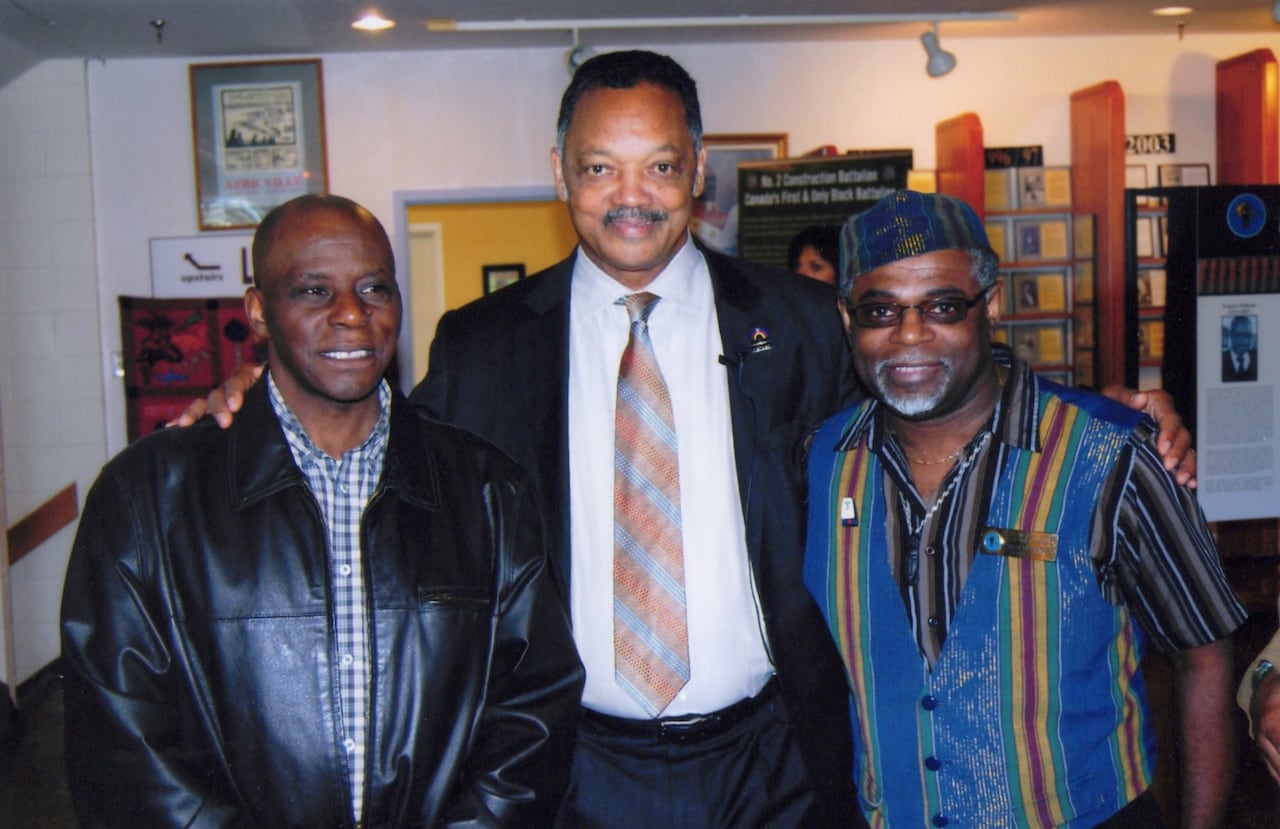 Rev. Jesse Jackson, centre, visits the Black Cultural Centre for Nova Scotia in Cherry Brook, N.S., on June 15, 2009, in this handout photo. ( Russell Grosse/Black Cultural Centre for Nova Scotia/The Canadian Press)
She said they also discussed the Black refugees who arrived in the province after the War of 1812, adding that she was struck by how much he knew about African Nova Scotian history.
“He spoke about Black people here and in the United States fighting the same battles when it comes to justice, marginalization, housing, access to jobs and health care,” she said.
“When I look at those issues that he speaks about, we’re fighting those same issues today. He spent decades of his life sacrificing everything, and he died with these same issues still impacting people.”
Rev. Lennett Anderson, the senior pastor of Emmanuel Baptist Church near Halifax, said the community is devastated by Jackson’s death, and he is being mourned by the congregation as well as communities across the province.
“He was a transformative leader who changed the nation and the world.… A giant has gone home and our spirits are broken, but he kept the dream alive and we’ll continue to honour his legacy as we continue to fight the good fight,” Anderson said in an interview Tuesday.
Anderson was not able to meet Jackson in 2009, but said the impact of that visit was evident. “I missed that defining moment in our African Nova Scotian history, but I’ll tell you the effects of it — there was talk in the town and in the street, there was real excitement.”
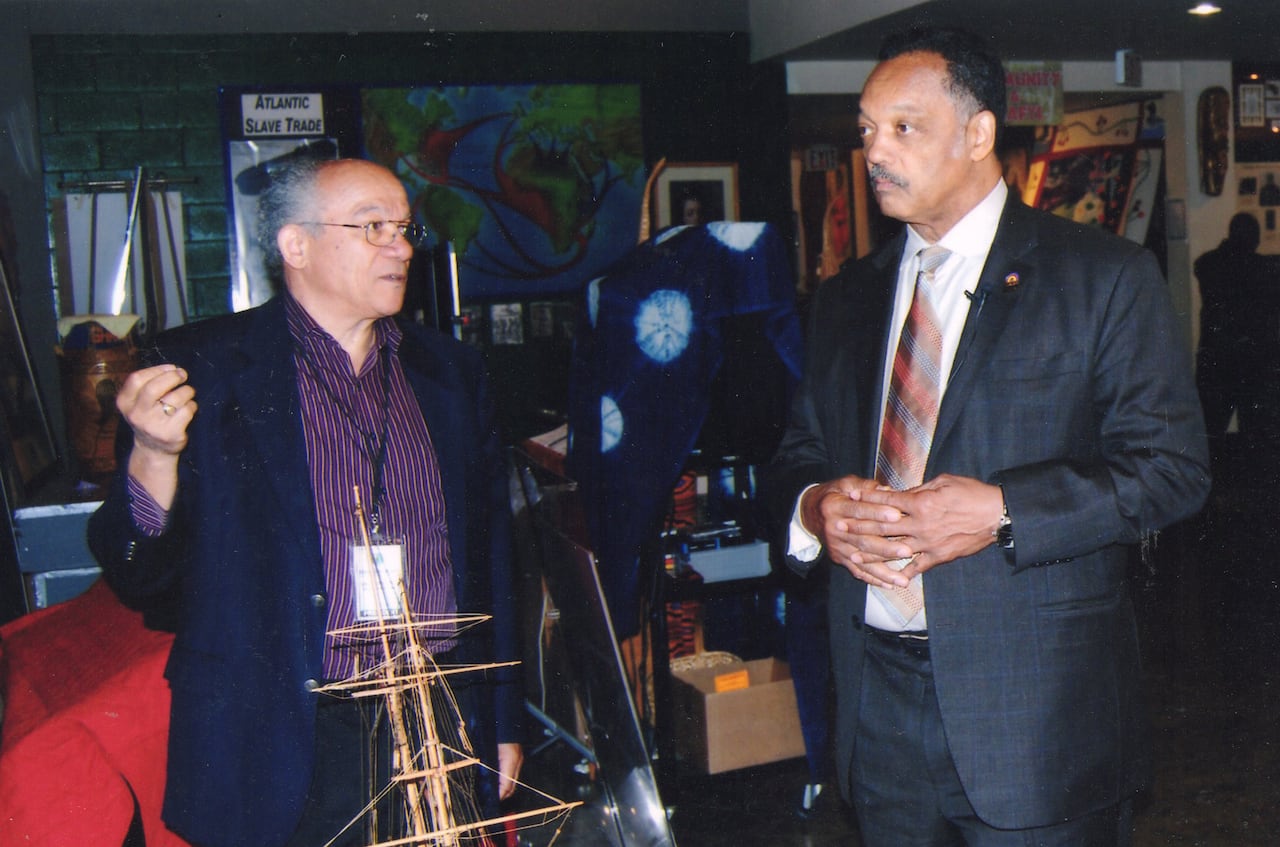 Rev. Jesse Jackson, right, visits the Black Cultural Centre for Nova Scotia in Cherry Brook, N.S., on June 15, 2009, in this handout photo. (Russell Grosse/Black Cultural Centre for Nova Scotia/The Canadian Press)
Russell Grosse, the CEO of the Black Cultural Centre for Nova Scotia, was its manager of operations when Jackson visited. “His work fuelled courage, community and change, and help ensure the Black experience is seen, valued, and passed on with pride,” Grosse said in an email.
Anderson said there’s always been a closeness between the experience of African Nova Scotians and African Americans, and Jackson’s visit highlighted that for many. “There are so many similarities between our plight here in Canada and in the United States. We’re more alike than not,” he said.
Borden Colley agreed, saying there’s a strong connection between Black people in both countries “because we’re all fighting the same fight.”
“It makes me sad that many things have not really improved. I have to say that, as an African Nova Scotian, we’re facing all the same issues. Whether it’s racism in the health-care system, the education system, policing,” she said.
Rev. Mark Jefferson, an associate professor at the Acadia Divinity College in Wolfville, N.S., moved this summer from his home in Virginia to teach and preach in the province. He said he expects to reflect on Jackson’s legacy with his congregation this weekend.
“It will be an opportunity for us to have a moment of silence and be appreciative of a life lived towards the betterment of all people,” he said in an interview Tuesday.
 Rev. Jesse Jackson gives Jamira Berry a peck on her forehead as he jokes with her during a visit to Cole Harbour District High School in Cole Harbour, N.S., on Monday, June 15, 2009. Jackson urged the students to have dignity and to take responsibility for their actions. (Andrew Vaughan/The Canadian Press)
Jefferson said that as he researched the history of Black people in Nova Scotia, he felt called to work in the province “because the ties from the Chesapeake Bay where I’m from and Nova Scotia are strong.”
“Teaching at Acadia and connecting with the Black community here in Nova Scotia, preaching in the churches, has really been a rich experience,” Jefferson said Tuesday.
Between 1813 and 1814, about 1,200 Black refugees from the Chesapeake Bay area of Virginia and from Georgia arrived in Nova Scotia aboard British ships.
Jefferson said he’s heard many similarities between the struggles of Black communities in the United States and Nova Scotia. He mentioned hearing about Africville, a Black Nova Scotian community in north-end Halifax that was demolished in the 1960s.
“As I go around and preach, the stories they tell about Africville, when they talk about their neighbourhoods and they talk about their fight for water, these are the same conversations I had when I was in Atlanta, Detroit, when I was in Kansas City, in Los Angeles. Although there are national divides and cultural differences, many of the same ills touch us all,” he said.
Jefferson said it’s his hope that Jackson’s death inspires continued action in fighting for equality.
“Hopefully we see his passing as a passing of the baton, and hopefully we’re able to receive that and run our race that leads to a more equitable and just world. Hopefully our memory will match our momentum.”
MORE TOP STORIES