

Listen to this article
Estimated 4 minutes
The audio version of this article is generated by AI-based technology. Mispronunciations can occur. We are working with our partners to continually review and improve the results.
The City of Winnipeg had to go to court in Arizona to get a Manitoba judgment for damages against its former chief administrative officer recognized there, the inquiry into the city’s police headquarters project heard on Wednesday.
That step was taken because Phil Sheegl didn’t have any assets in Manitoba, City of Winnipeg lawyer Michael Finlayson told the inquiry.
In 2022, a judge found Sheegl accepted a bribe from Armik Babakhanians of Caspian Construction, the contractor responsible for the troubled headquarters project, and ordered Sheegl to pay the city roughly $1.1 million Cdn.
While Sheegl contested the petition over whether the city should be allowed to have a judgment against him in Arizona, a superior court judge there signed a judgment against him in 2024 for over $800,000 US, the inquiry heard.
Current Winnipeg chief administrative officer Joseph Dunford said in January Sheegl had followed through on the order to pay the city the money ordered by the court.
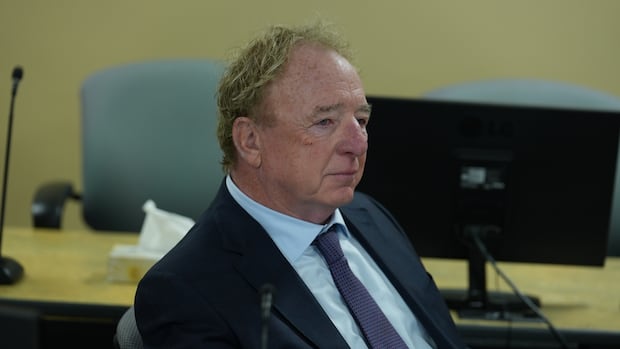
The details about the order against Sheegl in Arizona were revealed Wednesday during cross-examination by Finlayson, on Sheegl’s second day of testimony before the inquiry.
Sheegl previously testified the money he received from Babakhanians was related to a land deal in Tartesso, Ariz., involving the two of them and former Winnipeg mayor Sam Katz.
The original judgment against Sheegl in Manitoba stemmed from a 2022 Court of King’s Bench decision, where Chief Justice Glenn Joyal found on the facts of a lawsuit involving the headquarters project that the Tartesso deal “was a concocted story,” made up in 2017 after an RCMP investigation uncovered $327,200 in payment from Babakhanians.
The following year, Manitoba Court of Appeal Justice Christopher Mainella said “by his own admission, due to the payments from Armik, Sheegl received an almost 700 per cent return on the investment in Tartesso in less than seven years despite the Arizona real estate market crashing in 2007-08.”
Katz “received precisely half the money” paid to Sheegl by Babakhanians, Mainella said.
Sheegl denied Finlayson’s suggestion Wednesday that the money had nothing to do with property in Arizona. He also denied it “was money which was an incentive to Mr. Katz to help Mr. Babakhanians” on the headquarters project.
The inquiry previously heard a company Sheegl controlled received a $200,000 cheque from a Babakhanians-controlled company on July 22, 2011 — two days after city council granted Sheegl the authority to award the police headquarters construction contract. Another payment for the remaining amount was made later, the inquiry heard.
Cost ballooned to $214M
The inquiry previously heard Sheegl was with the city from 2008 to 2013, which included the period when the city planned and started renovating a former downtown Canada Post complex into a new headquarters for the Winnipeg Police Service.
The project was subject to delays, cost overruns, audits, an RCMP investigation that resulted in no charges, and two lawsuits from the city — including the one that determined Sheegl accepted a bribe.
Babakhanians has settled a separate lawsuit and has paid $500,000 toward a settlement that could total $28 million.
Earlier in the inquiry, former mayor Katz maintained the Tartesso land deal was real. He also testified he was “extremely disappointed and offended” that anybody would think that deal “would be anything but what it was — a sale of an interest in a piece of property.”
City council approved the purchase and renovation project for the new police headquarters in 2009, at a budget of $135 million. By the time the police service moved into the building in 2016, the cost had ballooned to $214 million due to construction delays, change orders and flood damage.
The inquiry at the downtown Winnipeg offices of the Public Utilities Board is scheduled to hear from more than 30 witnesses and continue until June, examining the circumstances surrounding the project and determining which measures are needed to restore public confidence in the city’s ability to build large, publicly funded projects.
Sheegl is expected to continue being cross-examined later Wednesday. Babakhanians is also expected to address the inquiry this week.