
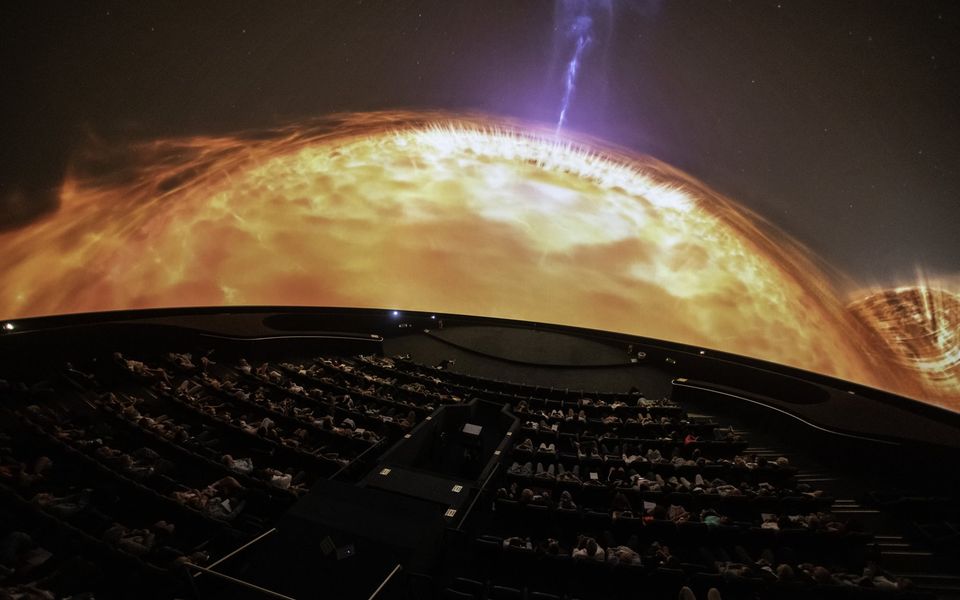
At 11 a.m., the foyer of the New Digital Planetarium filled with middle school students, arriving at the day’s peak hour for school visits. Many had grown up on science fiction and a torrent of online images where space travel seems effortless, one click away. “The first thing they ask about is aliens and space travel,” said Manos Kitsonas, director of the planetarium at the Eugenides Foundation. They are startled to learn that a round trip to the Moon takes a week, to Mars three years and to Saturn 30. Kitsonas laments the removal of astronomy from schools, calling it “a huge mistake.” Basic knowledge of our world and humanity’s place in it, he argues, “helps us become better people and citizens.” Without a sense of scale, children grow up thinking, as in “Star Wars,” “you can just go wherever you want in the universe.” Humanity, he tells them, is “a fraction of a fraction” in space and time. From afar, Earth’s thin atmosphere reveals life’s fragility – and our shared home. [Lefteris Partsalis]