
Don Nesbitt, portfolio manager at Emerald Advisers, joins BNN Bloomberg to share his Hot Picks in large caps with dividends.
Three large-cap dividend payers are drawing attention as investors assess AI monetization, pharmaceutical innovation and U.S. banking expansion. The names span technology, healthcare and financials, with a focus on cash flow durability and dividend growth.
BNN Bloomberg spoke with Don Nesbitt, portfolio manager at Emerald Advisers, about why he sees Microsoft, AbbVie and PNC Financial as positioned to benefit from AI-driven efficiencies, product cycles and disciplined capital returns.
Key TakeawaysAI spending must translate into earnings growth, with cloud monetization and operating leverage central to sustaining premium software valuations.Market pullbacks in large-cap tech can be driven by small expectation misses, underscoring sensitivity to growth metrics such as cloud revenue.In pharmaceuticals, loss of exclusivity on blockbuster drugs can be offset by pipeline execution and next-generation therapies, supporting earnings visibility.AI adoption in healthcare is expected to improve research productivity, regulatory processing and cost efficiencies across drug development.Large U.S. banks are pairing dividend growth with efficiency gains from technology investment, while dividend increases are often viewed as stronger signals than buybacks.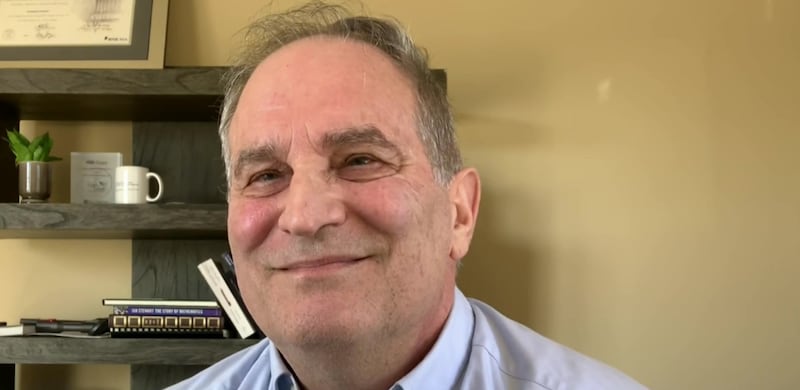 Don Nesbitt, portfolio manager at Emerald Advisers Don Nesbitt, portfolio manager at Emerald Advisers
Read the full transcript below:
ANDREW: On Hot Picks today, we’re drilling into software as part of a broader look at three large caps with dividends. Let’s start with Microsoft. It’s a top selection of our guest, Don Nesbitt, portfolio manager at Emerald Advisers. Thanks very much for joining us, Don.
DON: Hi, thanks for having me. I heard your previous guest talking about software and Microsoft. We’ve talked about how the whole software sector has been decimated by concerns over AI, but we think Microsoft will actually be a benefactor of the AI movement. It should enhance its products. Externally, it’s a strong selling point, and internally it’s helping the company, like many others, become more efficient. As your previous guest mentioned, there will be winners and losers in software, and because of Microsoft’s size, dominance and large customer base, we think it will be a winner.
ANDREW: Why has Microsoft dropped so much this year? It’s down more than 15 per cent.
DON: It began about two quarters ago when they announced earnings. They had a strong earnings beat and a strong revenue beat, which is what we look for in stocks. However, expectations had built up, and investors were disappointed. It centred on Azure cloud growth coming in at 39 per cent instead of the 40 per cent the Street was looking for. That seemed to kick off the downward move we’ve seen over the last six months or so.
ANDREW: So a marginal slip in Azure growth was a crucial reason for the drop?
DON: That seemed to be the case, because otherwise they had a stellar report. The same thing happened in the most recent quarter — another good quarter. But once momentum gets going, it can build on itself. We’ve seen that across the software sector, which has been in a bear market. Microsoft itself is more than 25 per cent off its highs.
ANDREW: You’ve said it’s not guaranteed investors will pay the current or a higher multiple for the stock. One question is whether cloud monetization will come through. Do you mean actual profits from cloud hosting?
DON: Correct. All of these AI innovations and technology investments have to show up in the bottom line. Microsoft is trading at roughly 25 times forward earnings. Where it’s particularly strong is price to cash flow, at about 18 times. Microsoft is a very strong cash-flow generator. Compare that with a recent market darling like Nvidia, which trades at roughly 55 times cash flow.
ANDREW: Let’s move to pharma and AbbVie. One of its biggest products has been Humira, used to treat autoimmune conditions, but it has other medications. What do you like about AbbVie?
DON: Humira has lost exclusivity, but they’ve been replacing it with other products and have a strong pipeline. Continuing the AI theme, the healthcare sector should benefit greatly from AI. Unlike some areas that were beaten up over AI concerns, AI should be a positive for pharmaceuticals. It can help streamline research and development, and the FDA is also using AI tools to help process regulatory approvals. The industry overall should benefit.
ANDREW: It will be interesting to see whether AI helps identify side effects or correlations with lifestyle or genetics.
DON: Exactly. It’s a very data-intensive industry, and AI can be a major contributor — not only in product development but also in operating efficiencies.
ANDREW: They’ve also been a steady dividend grower over the past few years, with a yield around three per cent.
DON: Exactly. This is the kind of stock we call a dividend grower. Microsoft would also fit that description. It has a lower yield, around 90 basis points, but it’s growing. AbbVie has been a strong performer for us in our dividend portfolio strategy.
ANDREW: Finally, PNC Financial — we’re tight for time — a large U.S. lender.
DON: Yes, a super-regional bank that continues to grow and is expanding nationally. They’re also benefiting from AI. In fourth-quarter earnings, they said AI added about 30 basis points to profit margins, and they expect that to continue as they use it to operate more efficiently.
ANDREW: Investors often like banks for dividends.
DON: Yes, the banking sector has been a strong dividend-growing area of the market.
ANDREW: Where do you stand on the dividend versus share buyback debate?
DON: Theoretically, they’re equal. But when a company raises its dividend, that’s a signal of quality because it’s expected to be maintained. Buybacks can happen at any time and are more flexible. Companies are reluctant to cut dividends because it’s viewed negatively, so a dividend increase signals confidence to us.
ANDREW: Thank you very much. We appreciate it.
DISCLOSUREPERSONALFAMILYPORTFOLIO/FUNDMSFT NASDAQYNNABBV NYSENNNPNC NYSEYNN
—
This BNN Bloomberg summary and transcript of the Feb. 18, 2026 interview with Don Nesbitt are published with the assistance of AI. Original research, interview questions and added context was created by BNN Bloomberg journalists. An editor also reviewed this material before it was published to ensure its accuracy and adherence with BNN Bloomberg editorial policies and standards.