
image:
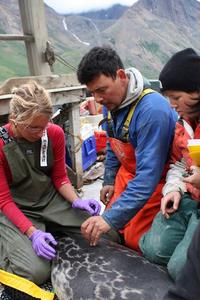
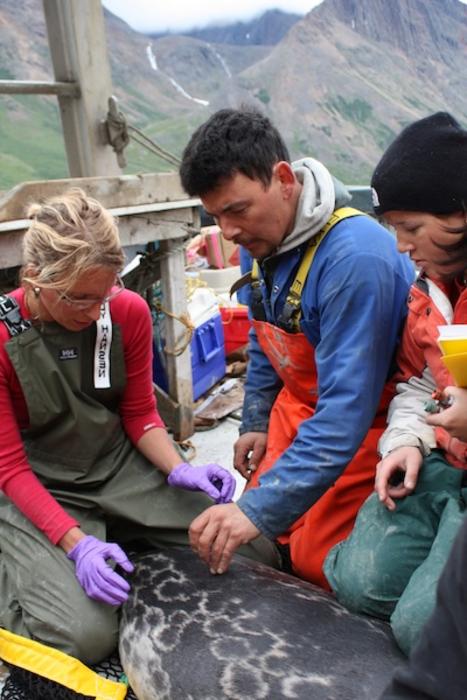
SFU researchers take a blood sample from an Arctic ringed seal in Northern Labrador. Photo: Samuel Bentley
Credit: Samuel Bentley
The SFU study found Arctic ringed seals are struggling to clear persistent contaminants and banned pesticides from their bodies — a long‑term health risk made worse when climate‑driven changes to sea ice and temperatures limit their access to nutrient-rich food.
“Ringed seals are a crucial link between invertebrates, fish and apex predators, and they are a cornerstone of northern food systems,” says Tanya Brown, marine mammal ecotoxicologist and senior study author. “We’ve found that warmer conditions can change what they feed on, which changes their contaminant exposure, and that can affect their overall health and survival.”
Key findings
Blood, blubber and liver samples from 38 Arctic ringed seals were collected in Northern Labrador from 2009 to 2011.
In 2010, when sea surface temperatures were +5.5 C above normal, seals showed depleted omega‑3 and omega‑6 fatty acids, increased saturated fats and thinner blubber layers – all signs of malnutrition.
Liver samples showed increased methionine sulfoxide, a biomarker of oxidative stress linked to inflammation, reduced immunity, metabolic disorders and reproductive impacts.
Arctic ringed seals are vital to Inuit food security and a key prey species for predators such as polar bears; their condition reflects the broader health of Arctic ecosystems.
The study, published in Environmental Research, analyzed samples from 38 Arctic ringed seals in Labrador’s Saglek Bay and adjacent fjords from 2009 to 2011. Saglek Bay is a known hotspot for polychlorinated biphenyls (PCBs), contamination left over from a Cold War-era military radar station.
Researchers also measured mercury, DDTs (synthetic insecticides), and chlordane, used in an old termite pesticide.
Liver samples showed consistently high levels of PCBs, mercury, DDTs and chlordane across all three years. These long‑lasting contaminants — several of which are banned internationally — are known to cause oxidative stress, a form of cellular damage linked to inflammation, chronic disease, tissue injury and reduced reproductive health.
Researchers also found that blood and blubber samples taken in 2010, an abnormally warm year with low Arctic sea ice, showed signs of malnutrition including a thinner blubber layer and depleted fatty acids.
“We saw that just one year of unusually warm temperatures and reduced ice is enough to change what these seals are eating and how their bodies process nutrients,” says Anaïs Remili, postdoctoral fellow and lead author of the study.
Climate change may worsen contaminant risks
Persistent contaminants such as PCBs, DDTs and chlordane remain in Arctic ecosystems for decades because they break down slowly and travel long distances by air and water. They are also lipophilic — or “fat‑loving” — meaning marine mammals like seals store them in their blubber.
“Thinner, nutritionally stressed seals redistribute the contaminants they had stored in their blubber back into the bloodstream, which then circulates through their entire system,” Remili explains. “Even though our 2011 samples showed the seals generally rebounded from the malnutrition, we know that any future nutritional stress may compound the impacts of longer-term damage from oxidative stress.”
Rapid sea‑ice loss and shifting marine food webs are already reshaping what and where seals eat; climate‑driven changes in ocean currents could flush more global pollutants into Arctic regions, she says.
Communities along the Labrador coast have long raised questions about how contaminants and warming conditions affect both the animals and the people who rely on them, Brown adds. “Healthy seal populations are essential for food security and cultural continuity.”
Journal
Environmental Research
Subject of Research
Animals
Article Title
Climate variations and a local PCB hotspot have altered metabolomic profiles in ringed seals
Article Publication Date
1-Dec-2025
COI Statement
The authors declare that they have no known competing financial interests or personal relationships that could have appeared to influence the work reported in this paper.
Disclaimer: AAAS and EurekAlert! are not responsible for the accuracy of news releases posted to EurekAlert! by contributing institutions or for the use of any information through the EurekAlert system.