
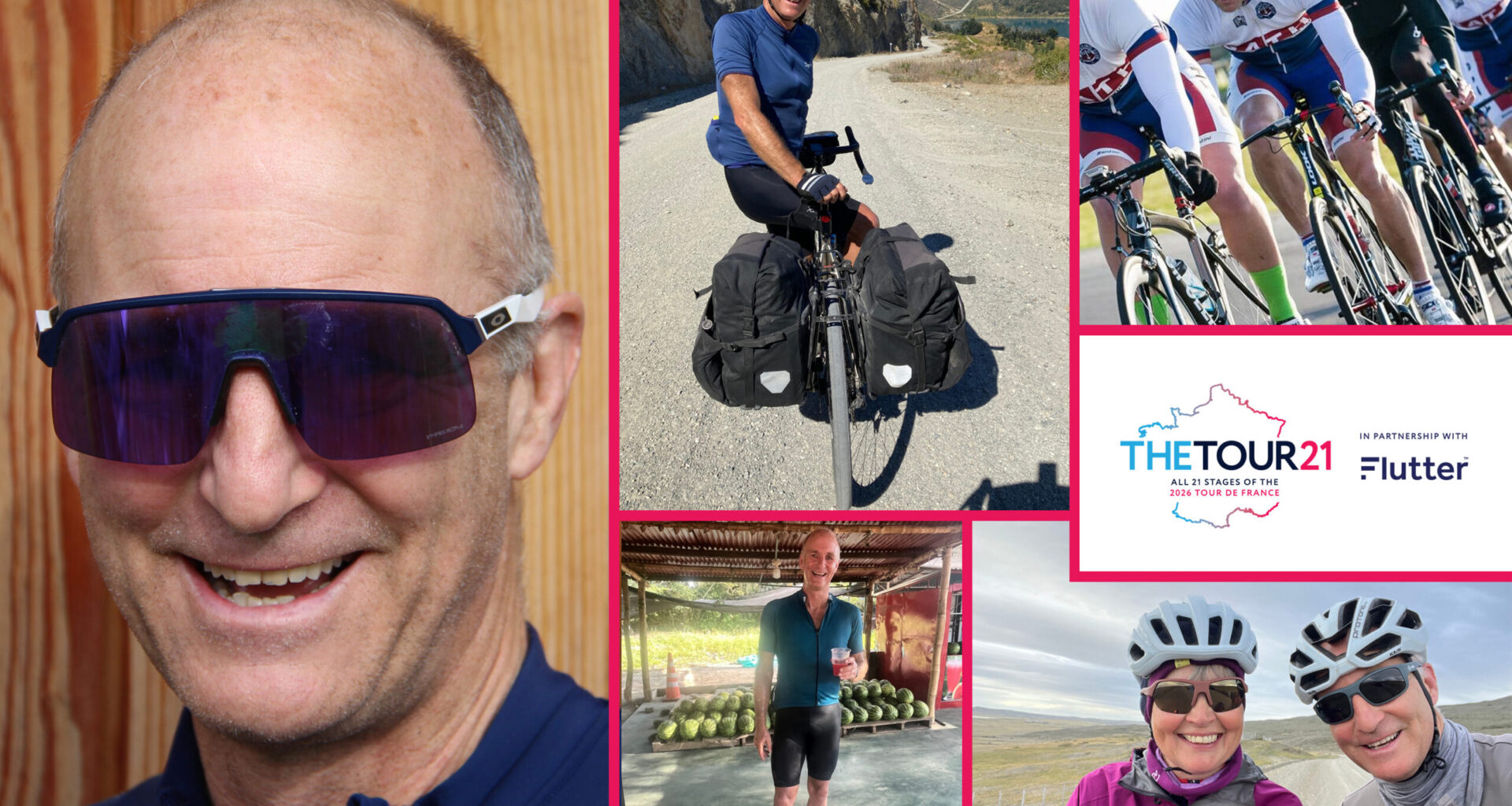
There are plenty of folks out there who are pushing themselves to their limits with a big goal in mind, and one of those folks is David Stoyle. Not only is David planning, at the age of 60, to ride every stage of the Tour de France this year a week ahead of the pros, but he’s doing it after a hip replacement and with a chronic leukaemia diagnosis. He’ll be part of The Tour 21 that will raise £1m for Cure Leukaemia in France this year, and if you feel inspired there’s still time to get involved. More on that below.
I met up with David to chat about both his long life as a cyclist, racing and touring both here and abroad, and his upcoming challenge.
road.cc Dave First off, let’s talk about your cycling roots. You’ve been cycling a long time, but did you grow up as a cyclist?
DS I was very much a touring cyclist as a teenager. Just to get around: it was the cheapest way to travel, and I couldn’t really afford anything else.
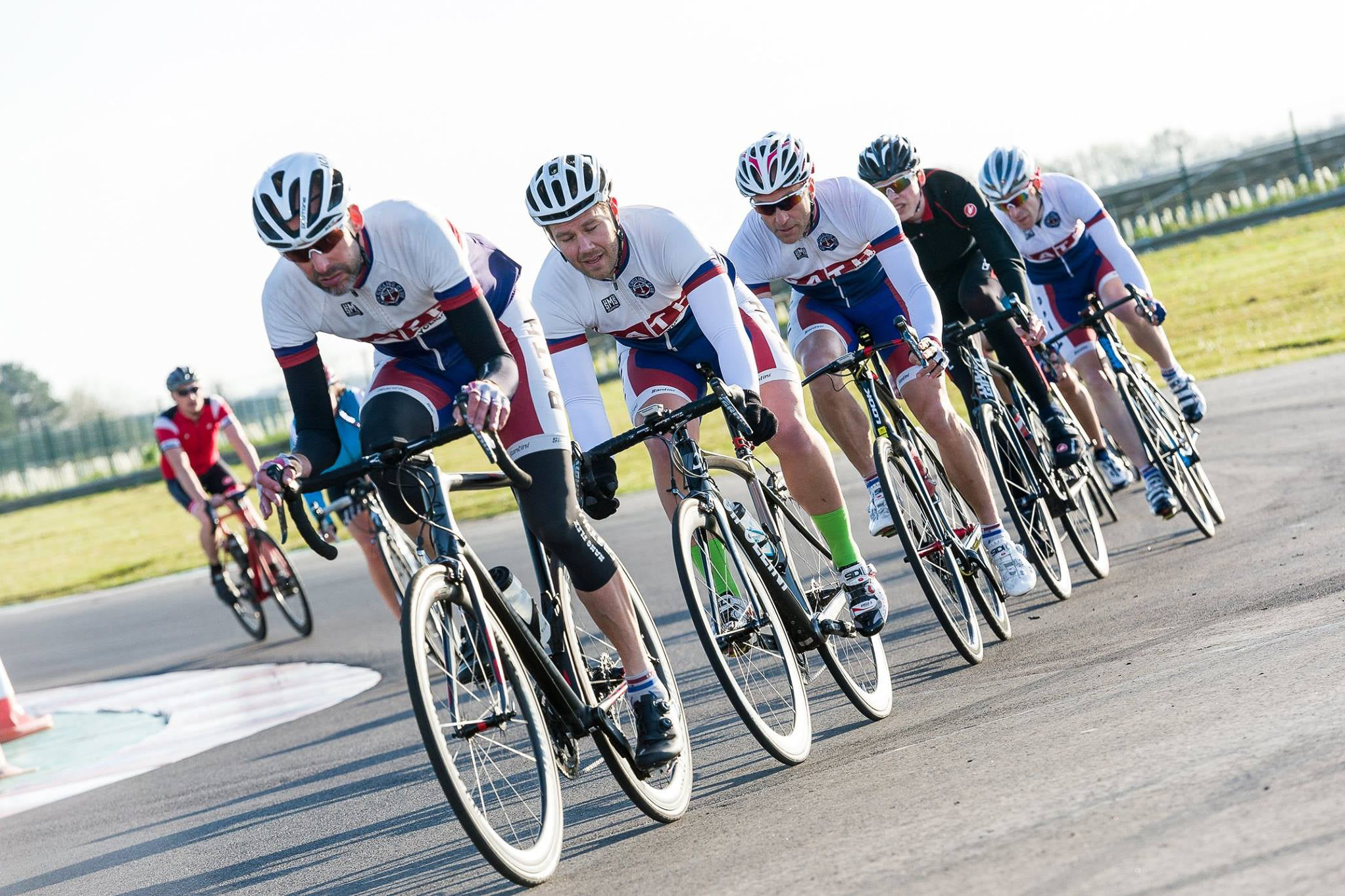 David Stoyle – Racing with Bath CC (Image Credit: David Stoyle)
road.cc Dave But I know you as a racing cyclist, that’s how we met. So how did that transition come about?
DS: I started cycling more seriously in Colombia. I was lucky enough to be posted there by by an oil company in in the 90s, and although security was strict and tight, one of the freedoms was actually to go get out on a bike, because all Colombians love cycling, and you could sort of blend in a bit to the background and not stand out so much. So I took cycling a bit more seriously then, and entered a few races and even won a couple.
road.cc Dave So were you posted at the bottom of one of the amazing climbs that they have in Colombia?
DS I was indeed. I lived in Bogota, which is at 2600 meters, so pretty good for altitude training, and lived at the bottom of Patios, which is a 400m climb out of Bogota. It was actually the most ridden climb on Strava last year; I hadn’t heard much about it in the intervening 30 years, but it popped up as Strava’s most popular climb. Up to a point I have fond memories of it; I was normally riding it at six o’clock in the morning before the traffic got too bad because it was a commuting route into Bogota.
road.cc Dave Did you continue racing when you returned to the UK?
DS No. Unfortunately, work took over, and then kids, family, all the rest of it, and time just wasn’t available. So I went down the usual mid-life slippery slope, eating, drinking and stress at work and not having enough time to get out on the bike. And I peaked out at somewhere around 105kg, I think that was my heaviest.
road.cc Dave What changed for you that brought you back to cycling?
DS I was very lucky: I managed to sell a business in 2011 which gave me a few months off. And at the same time, I bumped into a couple of people who had stayed fit for the previous 15 or 20 years. One of them persuaded me to cycle down to Land’s End from Cheddar, which was only four days. I wasn’t very fast. In fact, I had to push my bike up many of the hills once I got to Cornwall! But having not ridden a bike for probably 10–12 years, just the freedom of it inspired me to get back into cycling. Since then I don’t think I’ve had more than a week off the bike in the last 15 years, and I’ve covered about 240,000km. I’ve been very fortunate that I’ve been able to do that.
road.cc Dave We’ll talk about Tour 21 in a minute, but it’s fair to say that this won’t be the first big multi-day ride you’ve done. Tell me about your experience of riding long distances since you got back into cycling.
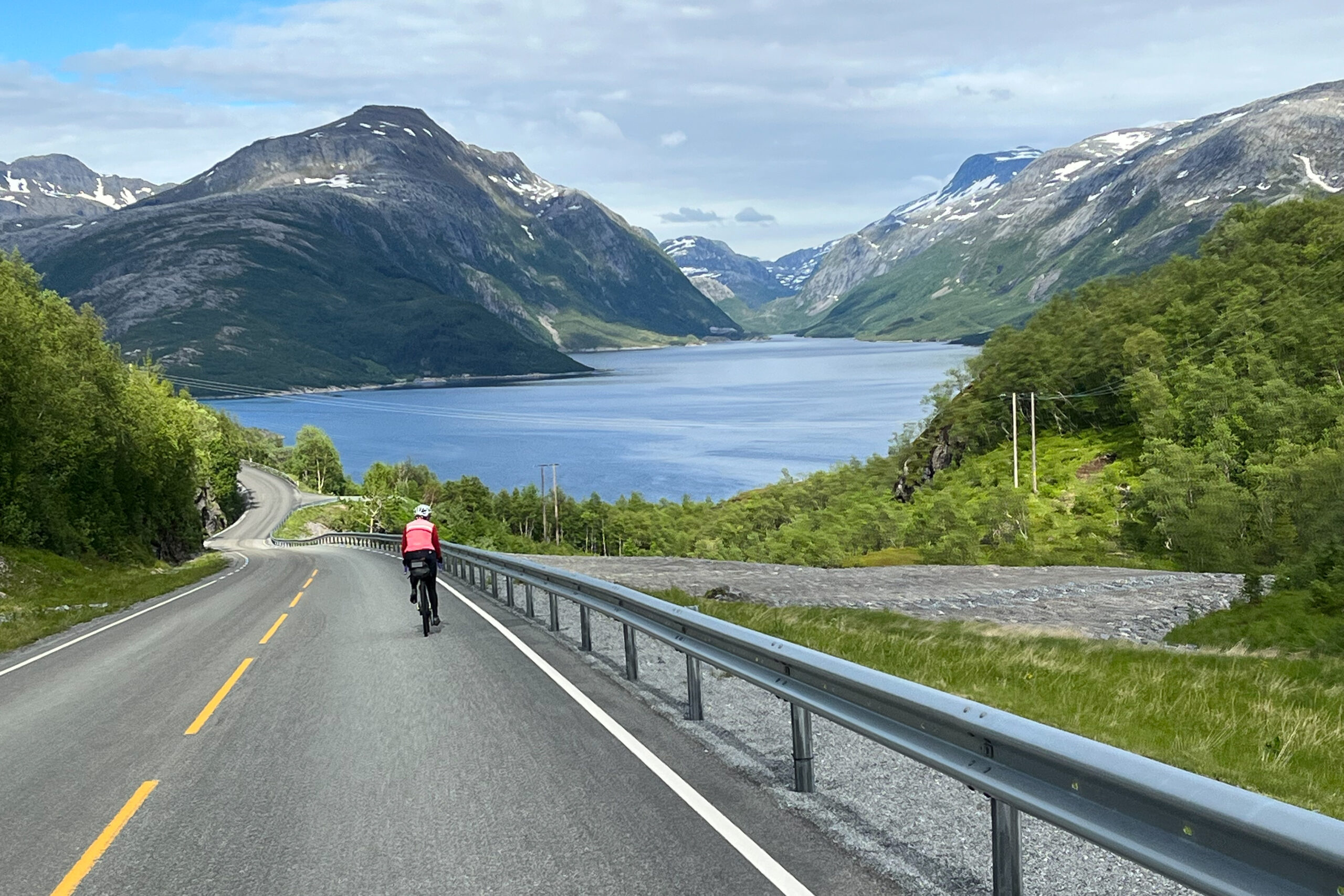 David Stoyle – Arctic Circle (Image Credit: David Stoyle)
DS I’m very fortunate that Julia, my wife, also enjoys cycling, and we started touring on our 25th wedding anniversary: we cycled to Pickwick in in the Cotswolds with our little backpacks, and thought we were being unbelievably adventurous and were going an awfully long way on a bike without any support. We got there and back, and enjoyed it, and the tours have just built from there. The next one was five or six days around Brittany. Then we built up to riding across France, and since then we’ve gone worldwide. We’ve been to Patagonia, to the end of the world, down to Ushuaia. And we’ve been the other way, up to the Arctic Circle in Norway.
And we’ve been back to Colombia, which was amazing, because the security was very tight in the ’90s. It was the era of Pablo Escobar when we were there. He was actually killed when I’d been there for 10 months. And if you’ve watched Narcos, one of the major bombs went off about 200 yards away from our apartment after I was there for two weeks. Now it’s a very different country, and we cycled from north to south, visiting many of the places that we weren’t allowed to go to in the 90s. The most amazing was when we cycled past one of the oil fields that Julia worked on. In the 90s she was taken down under security, flown in on a charter flight. She was there for an hour and then flown back out again. 30 years later, two grey-haired people on a bike can cycle right past without a care in the world, and then sit in the village, and chat to the local bullfighter. It’s just completely different: a very, very friendly country.
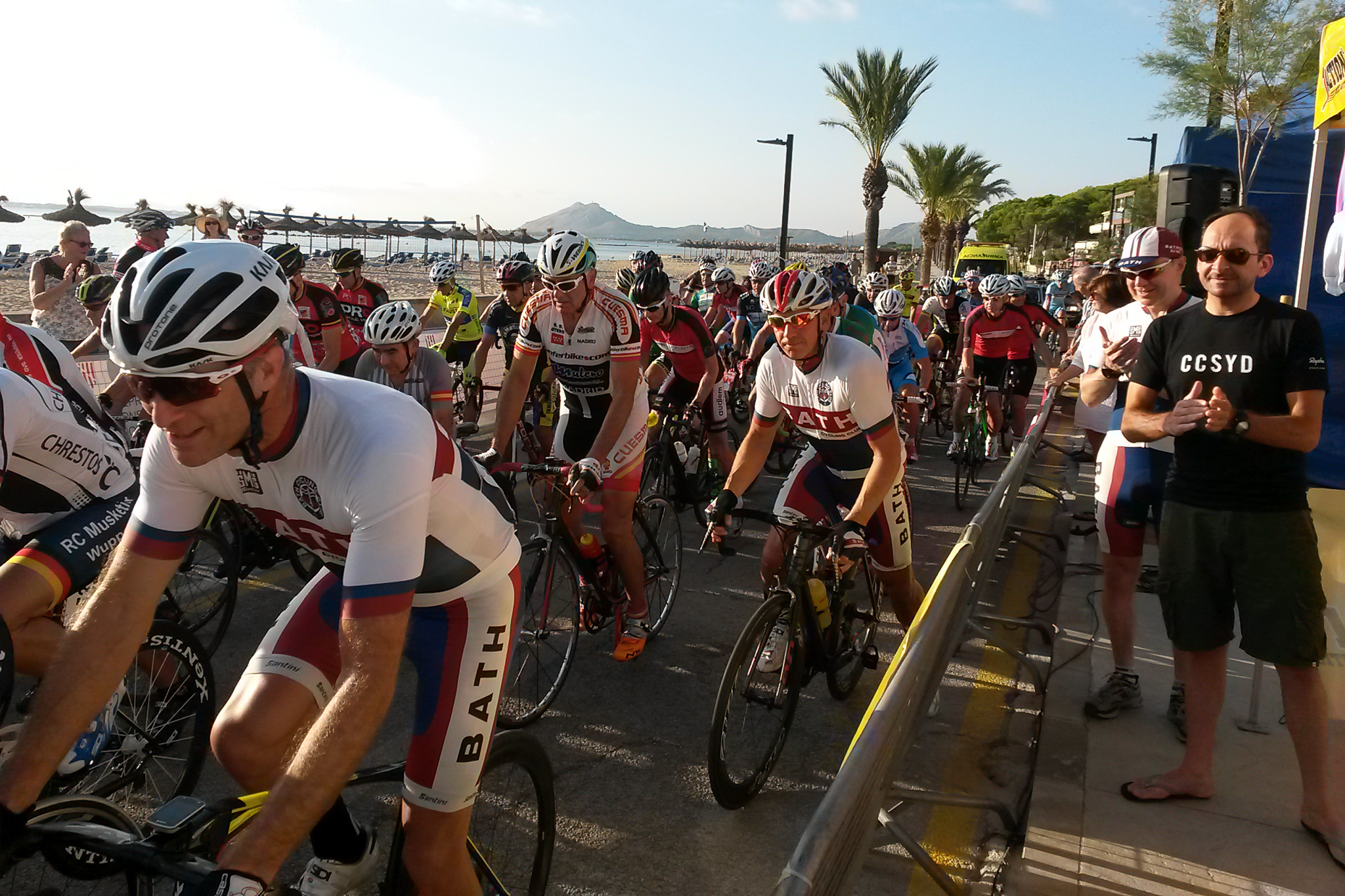 David Stoyle at the Mallorca Masters (Image Credit: David Stoyle)
I’ve also ridden down to Mallorca three times to race the Mallorca Masters. The first time was from Santander, which is still a 700km trip. The second time was from Normandy, straight down, and then the third time was via Switzerland, Tuscany and Corsica. The first time the touring legs didn’t seem to affect my racing: the race started on a five-minute climb and I hit my best five-minute power! But since then, I think the touring has started to take its toll on the racing. Whether it’s that, or the age, or the diagnosis of leukaemia, I don’t know, but the speed has definitely come out of the legs over the last year, 18 months.
road.cc Dave Let’s talk about that diagnosis, because that’s obviously one of the main reasons you’ve decided to take up this challenge. How did you find out that you had leukaemia?
DS A year ago I came back from Mallorca and the cycling hadn’t been going so well. My hip was playing up due to arthritis. I went in for a hip replacement, and after a routine blood test, they phoned me up and said: sorry, Mr. Stoyle, we can’t operate on you. I had high white blood cells and high lymphocytes. I thought I had an infection and asked if I could have another blood test in a couple of weeks, but the doctor said: it might be more serious than that. Then you get on Doctor Google and you find out about the 100 different types of leukaemia, which is what the diagnosis pointed towards. So I had a fairly nervous week before I managed to see the consultant. He reassured me that the type of blood cancer that I’ve got is a chronic type – the first time I’ve ever been relieved to hear the word chronic! – so it’s one that gurgles away in the background. The levels of my white blood cells and lymphocytes are about four times what they should be, and the symptoms are tiredness, fatigue, a bit of anaemia. And your immune system is slightly compromised, but as long as you’re not suffering too much from those symptoms, then they don’t treat it. So it’s not curable, and it will get worse. But at the moment, it’s okay, and obviously the best thing to do is to cycle the Tour de France!
road.cc Dave You feel fit enough in yourself to do that?
DS I do. Over the summer my haemoglobin got quite low, and I was anaemic, and I was on iron. But I think you just have to keep pushing your body: if you can do it, you can do it. If you can’t, you can’t.
road.cc Dave Let’s dive right into the Tour 21 challenge. You’re riding every stage of the Tour de France, one week ahead of the pros, same number of rest days…
DS And the same time trial days, which historically are rest days in the event, because I won’t be going hard! This year, it starts with a team time trial so we all get there excited on the Friday in Barcelona, and the next day we have 24km to cycle, which is a bit of a waste of a rest day.
road.cc Dave But it’s fair to say it ramps up pretty quickly after that!
DS Yes. It’s most probably one of the hardest first weeks of the Tour de France. We start in Barcelona and head up to the Pyrenees, I think even day two is 170km/3000m climbing type day. So it’s a tough one, and by the time we get to day five, we’re up the Tourmalet and a proper mountain stage.
road.cc Dave Of all the stages that you’re going to be riding, which are the ones that excite you the most?
DS I’ve never cycled in the French Alps. My heat map goes all around the world, but not there, so everything’s going to be new. I’m really looking forward to those last three days and just doing every climb for the first time, and the history – who’s been before you – and then being able to watch the pros just one week later. We’ll finish in Paris on the Sunday, and then I’ll get back down to the Alps and watch the racing on the roads that I was on just a week before. It’ll be an amazing experience
road.cc Dave What’s going to be the biggest challenge of the ride for you?
DS It’s the unknown. We’ve done some long tours but I tend not to ride much more than five, six hours a day when touring. Occasionally you have to do an eight, nine hour day, because that’s what you need to get to. So it’s going to be the back-to-back long days, and the impact on your body. My body has got older, I’m not quite as well and not quite as fit as I used to be.
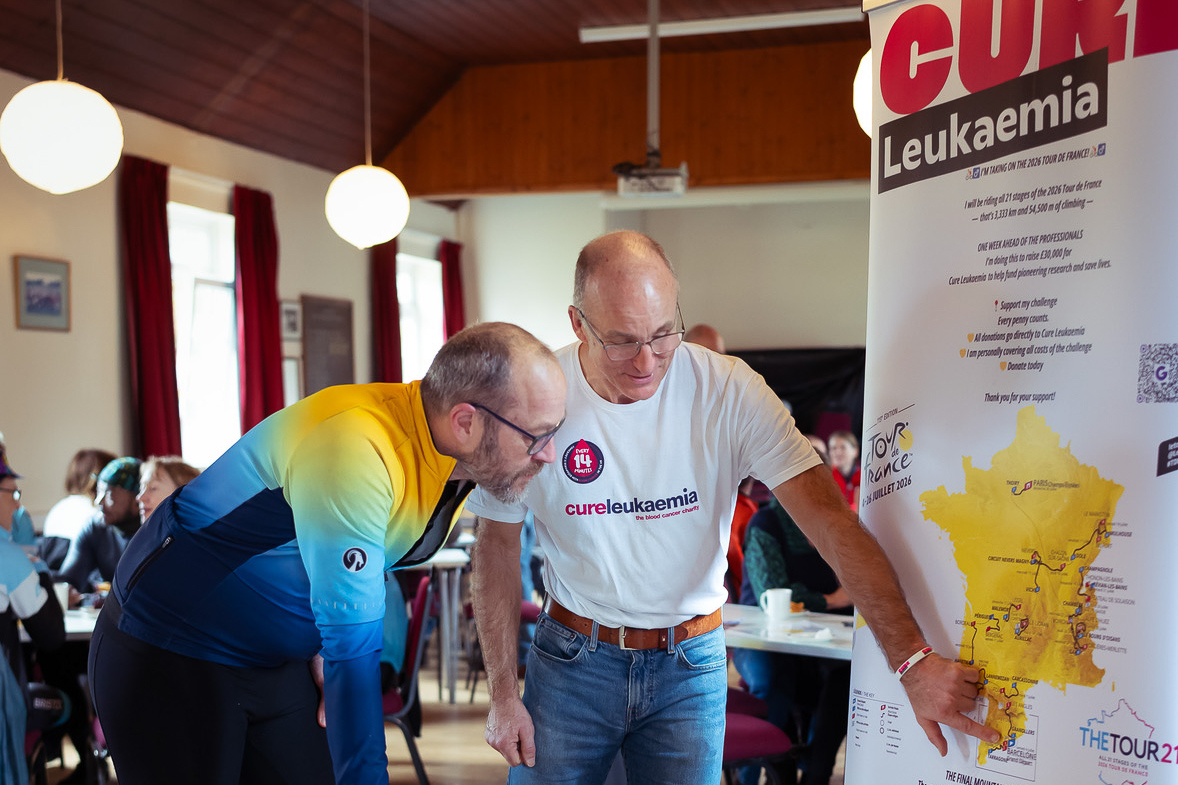 David Stoyle – Fundraising coffee morning (Image Credit: David Stoyle)
The fundraising is also a challenge The Tour 21 will raise a million pounds for Cure Leukaemia amongst the 20 participants and the corporate sponsorship, and every rider has to raise £30,000 personally. It’s a big target for me but it’s a bit of a family affair as well. Julia has done a fantastic job in baking and doing three coffee mornings that have been attended by all the local cycling clubs. My son, who’s a chef, is going to do a charity dinner using all local ingredients. And my daughter is doing a show garden at RHS Badminton in July, which will be sponsored by Cure Leukaemia as well. There’s lots in the pipeline. Julia and I are also giving a talk on 4 March about our travels around the world by bike down at Bath Cricket Club, and the pentathlete Heather Fell has offered to join us on the sofa and be our interviewer. It’s all new to me, but it’s a bit like training, isn’t it? You don’t get fit in a day. Each session helps: just break it down into little amounts, and hopefully we’ll get close to the £30,000 pounds come the 13th of July when we arrive in Paris.
Feeling inspired?
If you’re impressed by David’s commitment to the ride then you can always chuck him a few quid on his Justgiving page: every little bit helps. And if you’re wondering if this is the challenge for you, then there are still places available for A Taste of the Tour which gives you the opportunity to ride four stages of the Tour fully supported, alongside all the Tour 21 riders. In 2026, A Taste of the Tour comprises stages 16-19 of the Tour de France Route including the iconic Alpe D’Huez. And if that’s a bit too near to commit, remember that in 2027 there’s a UK Grand Départ and three stages through Scotland, England and Wales.