
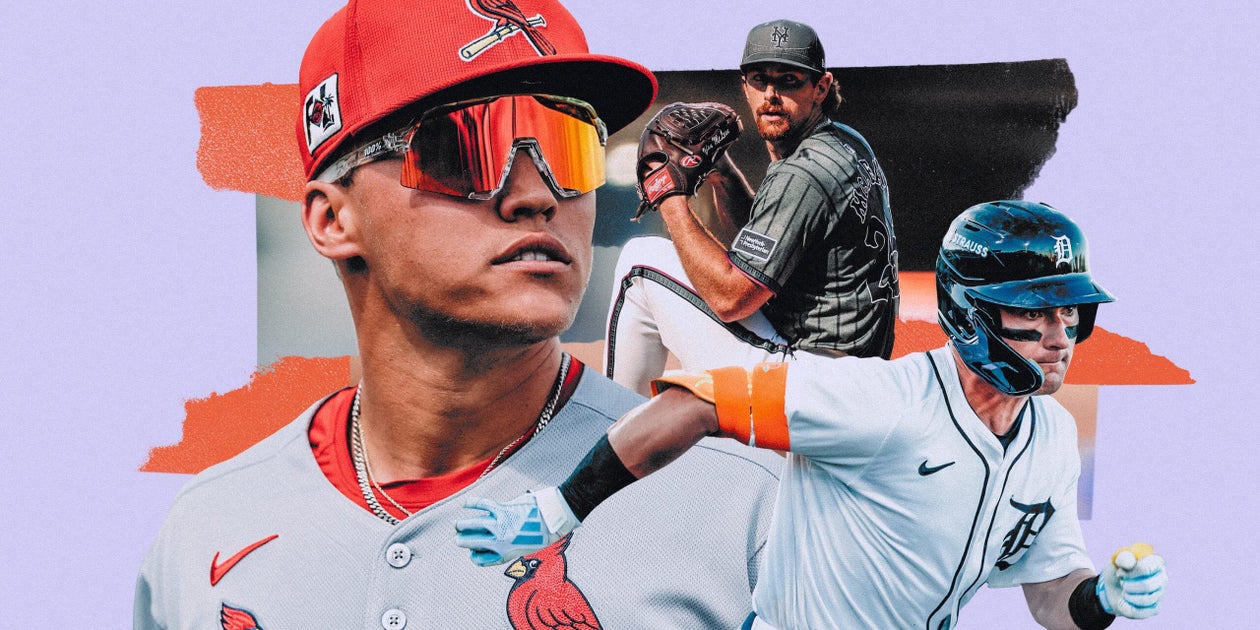
As I’ve mentioned previously, this year’s MLB rookie class has the potential to be special. There are numerous potential impact talents who could not only compete for their leagues’ Rookie of the Year awards but also could be significant factors in the race for the postseason.
There are a lot of great, young talents in major-league camps this spring, but there are 20 I’m particularly excited to scout the next two months. Seventeen of them either played in the minor leagues last year or were selected in the MLB Draft, and three are making their MLB debuts after careers in Japan. It’s an impressive group, and I’m excited to see which players will make their teams’ opening-day rosters and which ones will be promoted during the regular season.
Making a team’s roster out of spring training carries particular meaning because it can result in a team earning an extra draft pick. Last season, under the Prospect Promotion Incentive (PPI) rule, the Atlanta Braves were awarded a draft pick (No. 26, right after the first round) in the 2026 draft because NL Rookie of the Year award winner Drake Baldwin was on their roster on Opening Day.
On the flip side, the Athletics’ Nick Kurtz won the AL Rookie of the Year, but because he didn’t debut with the A’s until April 23, the team didn’t earn an additional draft pick. Though it should be noted in the case of Kurtz and the A’s, he had played only 12 professional games going into last spring training, it is a lesson learned for all GMs about the benefits of not being afraid to let a rookie make the team out of spring.
With the PPI in mind, if a candidate for Rookie of the Year is on the bubble of making a major-league team out of spring training, most clubs will now take a chance and carry him on the roster. If they find he’s over-matched, they’ll just option him out in a few weeks or the following month with the hope it won’t hurt the player’s development. It’s a gamble worth taking with the potential draft pick as a reward if the decision is close enough.
Given that backdrop, we could see a lot of rookies on Opening Day rosters. Here is a look at 20 of the best potential rookies in this year’s class, with scouting notes and quotes from members of their organizations on their potential. If I missed any, give me your recommendations in the comment section below.
Jim Bowden’s scouting grades are based on the 20-80 scouting scale, in which 20-30 is well below average, 40 is below average, 50 is average, 60 is above average, equivalent to All-Star, Gold Glover and Silver Slugger, and 70-80 is well above average, like an MVP or Hall of Famer. PWR denotes Power; FLD: Fielding; FB: Fastball; CT: Cutter; CB: Curveball; CH: Changeup; SLI: Slider; SF: Split Finger; CTL: Control; CMND: Command.
1. Nolan McLean, RHP, New York Mets
Scouting grades: FB: 60 SLI: 75 CB: 60 CT: 50 CH: 50 CTL: 55 Cmnd: 50
McLean, 24, looked like a future ace during his eight-start MLB debut with the Mets last season, posting an impressive 2.08 ERA with 57 strikeouts in 48 innings. His fastball sits in the mid-90s with tremendous sink and arm-side life, resulting in a high ground-ball rate and generating weak contact.
His breaking pitches are wipeout offerings and his aggressiveness early in counts shows his competitiveness, confidence and poise. He is a good athlete who was a two-way player in college and at the start of his pro career. His potential and ceiling are so high that I won’t be surprised if, come the postseason, he’s the Mets’ Game 1 starter, with Freddy Peralta slotting behind him. That’s how much I love his potential.
Carlos Mendoza, Mets manager: “What excites me is the impact tools Nolan provides. He has the swing-and-miss breaking balls and the presence on the mound plus a very good fastball. He attacks the zone and competes on every pitch.”
2. Kevin McGonigle, SS, Detroit Tigers
Scouting grades: Hit: 70 Pwr: 55 Run: 55 Arm: 50 FLD: 50
Last season, McGonigle, 21, dominated the Arizona Fall League, slashing .362/.500/.710 with six homers and 19 RBIs, winning the league’s MVP award. That performance came after he hit .305/.408/.583 with 19 homers and 80 RBIs in 88 games split between Low A, High A and Double A during the regular season. He projects as a future batting title winner with 20-25 home run power. He’s selectively aggressive at the plate, is very quick on inside pitches and goes the other way extremely well on tough pitches down and away. He’s also solid defensively and is a good base-runner. If the Tigers give him a legitimate shot to make the roster this spring, he should, given his polish and talent.
A.J. Hinch, Tigers manager: “Kevin has been fun to watch work his way to major-league camp. The best compliment is that he is really talented on the field — everywhere from the batter’s box to the field to the base paths. He can do a lot of things well.”
3. JJ Wetherholt, 2B, St. Louis Cardinals
Scouting grades: Hit: 65 Pwr: 55 Run: 55 Arm: 55 Fld: 50
Like Kurtz, Wetherholt, 23, was a top-10 pick in the 2024 MLB Draft (No. 7 selection). Wetherholt came into spring training last year polished enough to make the Cardinals’ roster, but with Brendan Donovan ahead of him on the depth chart, it made it a little bit easier for the Cardinals to give Wetherholt a full year of minor-league development time and, in the process, save his service time towards arbitration and add another year of free agency protection. Splitting the 2025 season between Double A and Triple A, Wetherholt hit .306/.421/.510 with 28 doubles and 17 homers with 82 runs scored and 23 stolen bases in 26 attempts in 109 games. He’s a table-setter who is a strong candidate to be an All-Star as early as this season.
Chaim Bloom, Cardinals President of Baseball Operations: “JJ is an outstanding natural hitter whose poise and maturity has impressed all of us throughout his time here. He’s a learner who loves to be challenged. JJ impacts all of those around him positively and it’s going to be fun to see him do that as he takes on a bigger role in our camp this spring. As we start spring training, we’ll continue to pay attention to how he’s preparing physically to put his body in position to excel defensively throughout the long season.”
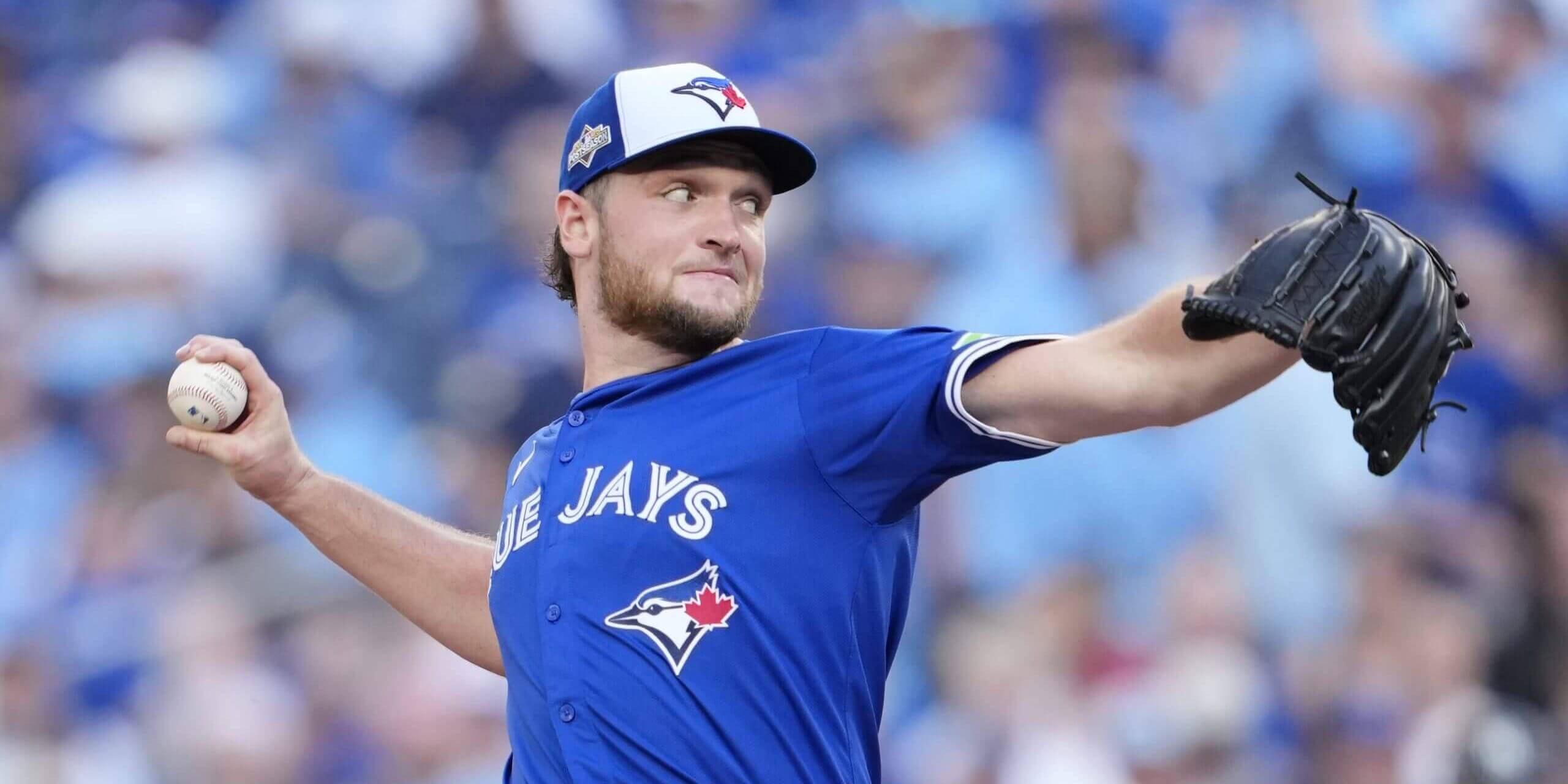
Trey Yesavage started the 2025 season in Low A and finished it as a key member of the Blue Jays’ postseason staff. (Mark Blinch / Getty Images)
4. Trey Yesavage, RHP, Toronto Blue Jays
Scouting grades: FB: 65 SF: 70 SLI: 60 CTL: 50 Cmnd: 50
Another 2024 first-round pick, Yesavage, 22, burst onto the scene last year, shooting up four minor-league levels before landing in the majors in September. He made three regular-season starts for Toronto and then became a star for the Jays in the postseason, making five starts and one relief appearance in the playoffs with a whopping 39 strikeouts in 27 2/3 innings, allowing 18 hits and 11 walks. His high-90s fastball and straight over-the-top release point give him a unique downward plane, which he pairs with a legitimate wipeout splitter and a plus slider. His high ground-ball rate and ability to get hitters to chase is special. He has the ceiling of an ace if he can tighten up his command.
Ross Atkins, Blue Jays GM: “Trey progressed through the minor leagues at an impressive pace, and his ability to handle each transition really stood out. The quality of his arsenal and his competitiveness made the decision to call him up one that we felt would give us the best chance to win. His postseason poise and execution were remarkable for a player at that stage of his career. Given how he handled his innings, recovered and attacked the offseason, we feel very good about him heading into this season.”
5. Carter Jensen, C, Kansas City Royals
Scouting grades: Hit: 60 Pwr: 60 Run: 45 Arm: 60 Fld: 50
When last season began, Blake Mitchell was considered the Royals’ top catching prospect. During spring training, however, manager Matt Quatraro kept raving about Jensen, 22, and his ascension as a prospect. That conversation continued throughout the year until Jensen was promoted to the major leagues on Sept. 1. He lived up to Quatraro’s expectations and beyond as he slashed .300/.391/.550 with three homers and 13 RBIs in 60 MLB at-bats, good enough for a 161 OPS+.
Jensen profiles as a middle-of-the-order hitter and his power will benefit from the new, smaller dimensions at Kauffman Stadium this year. The most improved part of his game is his defense and it certainly helps that he has future Hall of Famer Salvador Perez as a mentor as he continues to develop as a big-league catcher.
J.J. Piccolo, Royals GM: “Carter is a gifted hitter who makes great decisions at the plate. Great combination of on-base (skills) and power. He’s also done an incredible job working on his defense and has become a well-rounded defensive player.”
6. Kazuma Okamoto, 3B, Toronto Blue Jays
Scouting grades: Hit: 55 Pwr: 55 Run: 45 Arm: 50 FLD: 45
Okamoto, 29, signed with the Blue Jays this offseason after a standout career in Japan. He is a well-rounded, high-contact hitter with solid plate discipline who can hit good velocity, put the ball in play to all fields and limit his strikeouts. His raw power is better than his in-game power, but he should still get to 20 or so homers a season in MLB.
Defensively, he’s a plus at first base but that position is covered in Toronto by Vladimir Guerrero, Jr. The Blue Jays are going to play Okamoto at third base, where he’s a below-average defender, according to the consensus from most scouts. The Blue Jays disagree with that assessment, so it will be interesting to see who is right. He’s not a middle-of-the-order bat, per se, but he does lengthen the Jays’ lineup.
Ross Atkins, Blue Jays GM: “Kaz has already put together a remarkable career, making an impact in every facet of the game (in Japan). Offensively, he has a dynamic skill set that compliments our lineup very well. His ability to get to high velocity and cover the entire zone while still driving the baseball is unique. He’s already competed in a big market for the Yomiuri Giants and on a national stage in the WBC, and we feel he is as well suited as anyone to make the jump to MLB.”
7. Munetaka Murakami, 1B, Chicago White Sox
Scouting grades: Hit: 45 Pwr: 70 Run: 40 Arm: 50 FLD: 45
Murakami, 26, is also making the jump from Nippon Professional Baseball to MLB. He has legitimate plus power but also had significant contact issues in Japan. That said, despite the high strikeout totals in Japan, he had a career on-base percentage of .394. He’s a below-average defender at third, but should be at least adequate at first, where he is expected to play for Chicago.
He’s a fascinating player to watch as his comparables from scouts have ranged from Dave Kingman to Joey Gallo to Max Muncy to Luke Voit to Matt Olson to Rafael Devers and even to Kyle Schwarber. He’s probably somewhere in the middle but none of us will know until he shows us.
Chris Getz, White Sox GM: “He looks like a veteran major-league player with how he goes about his business. Sturdy, balanced, athletic frame with a repeatable swing. He has power to all fields without selling out for it. Moving well defensively with solid feet and hands and enough arm strength. He should be a reliable first baseman that may be able to get some starts at third, if needed.”
8. Samuel Basallo, C/DH/1B, Baltimore Orioles
Scouting grades: Hit: 55 Pwr: 70 Run: 30 Arm: 70 Fld: 45
Make sure to bring earplugs when watching Basallo take batting practice because he makes loud, consistent contact with elite exit velocity. His power is to all fields with tremendous backspin. Basallo, 21, draws walks, but, like most young hitters, chases out of the zone, as well. He has a plus throwing arm but he’s currently a below-average defender at catcher, needing work on both blocking and framing. He’s expected to share time at catcher with Adley Rutschman while DHing on the other days. He can also play first base but will be blocked there by Pete Alonso, who generally plays every day. Basallo’s power bat will carry him and the crab cakes with Old Bay will taste better this year at Camden Yards because of him.
Mike Elias, Orioles President of Baseball Operations: “Basallo is a gifted young power hitter with huge arm strength and a great aptitude for catching.”
9. Tatsuya Imai, RHP, Houston Astros
Scouting grades: FB: 60 SLI: 55 SF: 50 CH: 50 CTL: 50 Cmnd: 45
Imai, 27, has been one of the best starters in NPB over the last several years and is coming off a dominant season in which he posted a 1.92 ERA with 178 strikeouts. He profiles more as a No. 3 or No. 4 starter in MLB because his fastball can be straight at times and he doesn’t have the elite command in the zone that it takes to be a top-of- the-rotation MLB starter. He shows impressive poise and knows how to pitch. His slider is a plus offering and his off-speed pitches flash above-average break, especially his variation of the splitter, which he can use to own the bottom of the zone.
Dana Brown, Astros GM: “Imai is a fierce competitor with an explosive fastball up to 98 mph. He has a really effective slider at the bottom of the zone with late break. He also has two very effective change-ups with one that has split-finger action and the other good sink at the bottom of the zone. Overall, Imai is a quality third starter who has some upside, with good feel to pitch and outstanding competitiveness.”
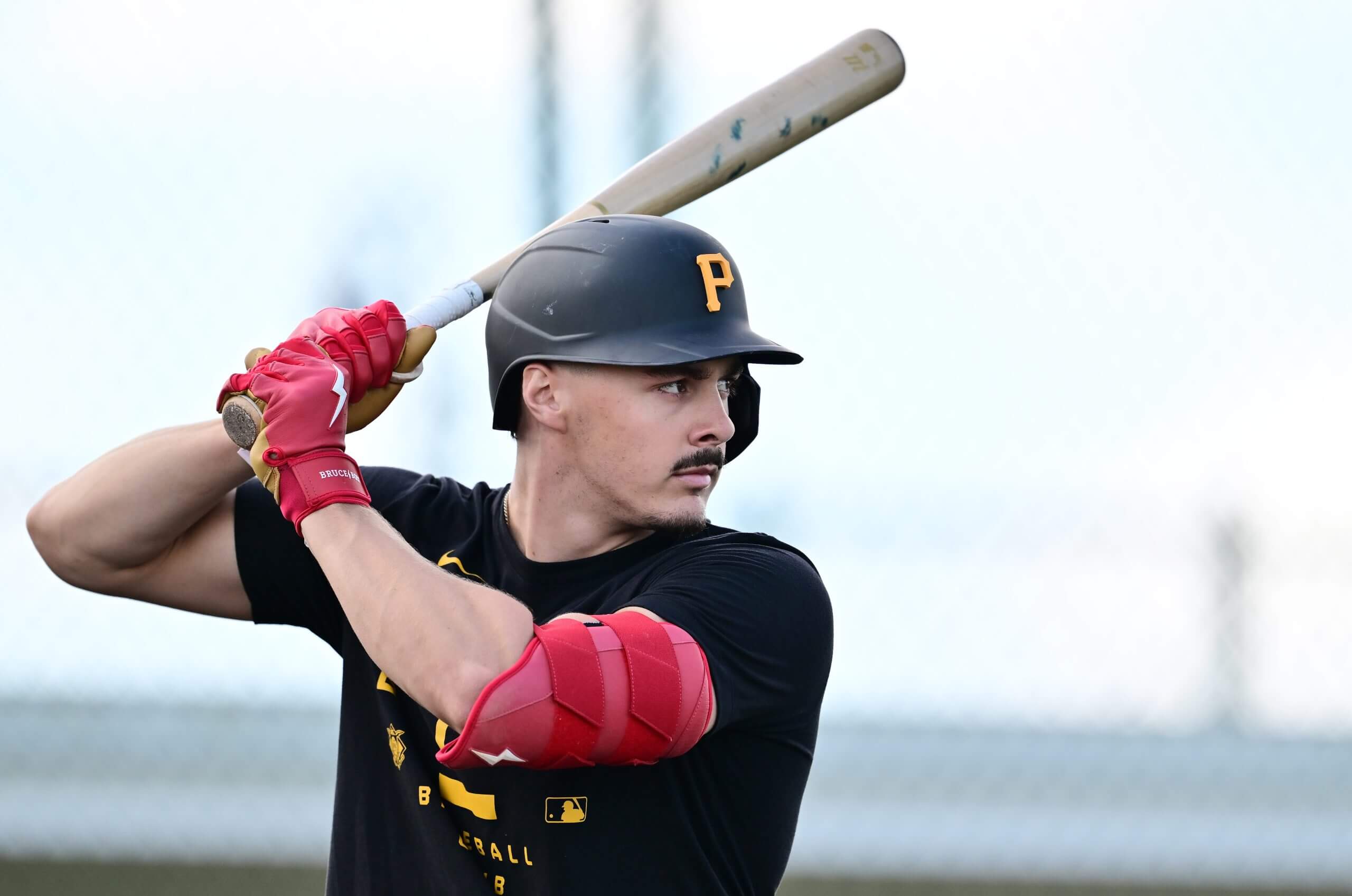
Konnor Griffin has the most upside of any potential rookie but may not be on the Pirates’ Opening Day roster given his age (19) and lack of upper-level minor-league at-bats. (Julio Aguilar / Getty Images)
10. Konnor Griffin, SS, Pittsburgh Pirates
Scouting grades: Hit: 60 Pwr: 65 Run: 70 Arm: 65 FLD: 60
Griffin, 19, is a generational talent and the best teenaged prospect we’ve seen since 19-year-old Bryce Harper made it to the major leagues in April 2012 with the Washington Nationals. Griffin is talented enough to follow Harper’s path sometime this year, whether the debut comes out of spring training or later in the spring or summer. He is a legitimate five-tool player, who thus far is showing that he can stay at shortstop even with his 6-foot-4 frame. If he gets too big for shortstop, center field is a long-term option, as well.
With only 83 at-bats under his belt above the A-ball level, he’ll have to dominate this spring to have a chance to make the big-league team on Opening Day. I can’t wait to watch how he fares. The Buccos have an exciting future given that they could soon feature superstars on both sides of the ball with Griffin and Paul Skenes. Griffin would be first on this list if I knew for sure he’d make the big-league team out of camp.
Ben Cherington, Pirates GM: “Konnor’s best trait may be his desire and discipline to stay rooted to what he can do each day to improve on the field and be a great teammate. The physical skills everyone can see but he shows up every day ready to work to get better and to earn respect from those he plays with.”
11. Chase DeLauter, CF, Cleveland Guardians
Scouting grades: Hit: 60 Pwr: 60 Run: 50 Arm: 60 Fld: 55
DeLauter, 24, could be the key to the Guardians’ season. He’s arguably the most talented offensive player in their camp besides future Hall of Famer José Ramírez. That’s high praise for any rookie, but it’s the truth. DeLauter has power to all fields along with tremendous athleticism and plate discipline. He barrels the ball consistently with high exit velocity and plus bat speed. He has a right field arm but can also play center field.
His potential to change the lineup is so significant the Guardians added him to their postseason roster last October and he made his MLB debut on the playoff stage. On the flip side, his professional career has been marked by significant time missed due to injury (he’s played just 138 games over three seasons since going in the first round in 2022), so it remains to be seen if he can stay on the field for an entire season. He’s a middle of the order bopper if he can stay healthy.
Chris Antonetti, Guardians President of Baseball Operations: “Chase is a dynamic player that can impact the game in a number of ways. Offensively, he makes really good swing decisions and impacts the ball. He’s an athletic defender that has the ability to play all three outfield spots. Chase is a great worker who is committed to getting the most out of his ability. We’re excited to see him continue to develop this year.”
12. Carson Benge, RF, New York Mets
Scouting grades: Hit: 60 Pwr: 55 Run: 55 Arm: 60 Fld: 55
Benge, 23, is probably the most underrated rookie on this list. He’s a complete player, showing above-average tools across the board while playing with high energy, enthusiasm and aggressiveness. He’s going to really benefit from being around elite hitters like Juan Soto and Bo Bichette. It wouldn’t be surprising when the dust settles if he’s the one who wins NL Rookie of the Year. Benge doesn’t profile as a future superstar but rather an All-Star who’ll lengthen the Mets’ lineup significantly both short- and long-term. With Soto moving to left field, Benge should settle into right field, where his plus arm will play well. I look forward to seeing his development this year.
Carlos Mendoza, Mets manager: “Carson is a player with bat speed, power to all fields, and an arm that plays at this level. He can help you win baseball games offensively and defensively.”
13. Bubba Chandler, RHP, Pittsburgh Pirates
Scouting grades: FB: 70 SLI: 55 CB: 50 CH: 55 CTL: 55 Cmnd: 50
Chandler, 23, was a third-round pick in 2021 out of a Georgia high school. At the time, he was a two-way player who also starred on the gridiron. After a steady rise through the minor leagues (where he eventually ditched the hitting side of his game), he made his major-league debut last season, going 4-1 with a 4.02 ERA in four starts and three relief appearances with a 31:4 K:BB in 31 1/3 innings. In Triple A, he struck out 121 in 100 innings, allowing just eight home runs, though he did walk 53. He is a hard thrower and features a plus slider and change-up. His best qualities are his athleticism, leadership and competitiveness. He’s a winner who will overachieve throughout his career.
Ben Cherington, Pirates GM: “Bubba brings the athleticism and competitor of a quarterback and shortstop to the mound. It’s been exciting to see how much he’s grown as a pitcher in a short amount of time and he knows there is still more to come. He wants to be out there with the game in his hands.”
14. Sal Stewart, 1B, Cincinnati Reds
Scouting grades: Hit: 60 Pwr: 55 Run: 40 Arm: 55 Fld: 45
Stewart, 22, can flat-out rake and he also works the count well, draws walks and avoids strikeouts, though he can still chase off the plate a bit too much. He has strong exit velocity numbers and makes consistent sweet spot contact with the ability to use the whole field. He’s a below-average runner in terms of foot speed but a plus base-runner thanks to his instincts. If the Reds just leave him at first base and let him play every day, he could be a sleeper NL Rookie of the Year pick.
Nick Krall, Reds GM: “Sal is an advanced hitter with high energy. He did a great job this offseason working on his body and getting more athletic to be able to play multiple positions. Still young and improving but has a chance to be a quality big-league player.”
15. Moisés Ballesteros, C/DH/1B, Chicago Cubs
Scouting grades: Hit: 60 Pwr: 50 Run: 25 Arm: 50 Fld: 35
Ballesteros, 22, has a “hit” tool that is going to carry him, as he’s one of the most advanced hitters in this rookie class. He has above-average bat-to-ball skills and can hit all types of pitches, including high velocity, sharp breaking balls and off-speed offerings. He’ll use the entire field to hit line drives with elite exit velocity. His raw power far out-paces his in-game power to date, but the homers will come in time. His best position is designated hitter, but he can backup both first base and catcher when needed with below-average defense. The bat is going to play.
Carter Hawkins, Cubs GM: “Bally is a natural hitter with a knack for finding barrels and a mature approach that is beyond his age. We think he can catch in the big leagues as well and have high expectations for his future.”
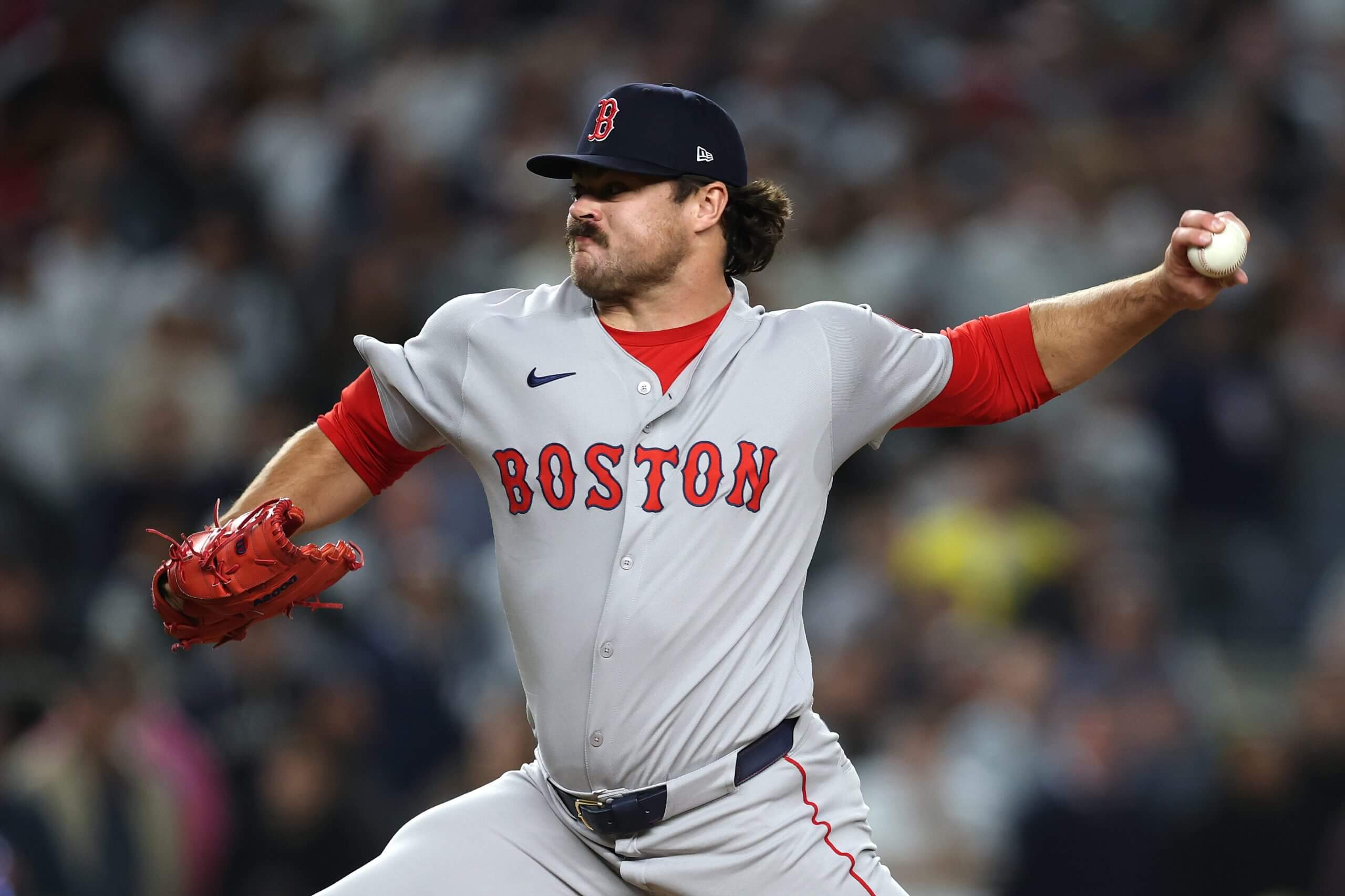
Payton Tolle looks ready for a full-time MLB role but the Red Sox have so much starting pitching depth he could start the season in Triple A. (Ishika Samant / Getty Images)
16. Payton Tolle, LHP, Boston Red Sox
Scouting grades: FB: 70 CT: 45 SLI: 50 CH: 50 CTL: 55 Cmnd: 55
At quick glance, Tolle, 23, elicits memories of David Wells. Tolle has a huge frame (6-4, 254) and gets special extension down the mound that helps his high-90s fastball with excellent spin rate generate a lot of swings and misses. He releases the ball from a low three-quarters arm slot and also features a power slider and solid cutter. For me, Tolle profiles as a mid-rotation starter. He appears to be major-league ready but the Red Sox might start him in Triple A given the additions they’ve made to their rotation this offseason.
Craig Breslow, Red Sox President of Baseball Operations: “Payton has a big personality and an even bigger fastball. The release characteristics allow it to play up, and at its best it’s one of the most dominant pitches in the game. He’s working to develop his secondaries, and if he’s able to consistently land his breaking ball, he’s got the makings of a front of the rotation arm.”
17. Colt Emerson, SS, Seattle Mariners
Scouting grades: Hit: 60 Pwr: 50 Run: 50 Arm: 55 Fld: 55
Emerson, a 2023 first-round pick who reached Triple A at the end of last season, appears on track to be the Mariners’ everyday shortstop in 2027 with J.P. Crawford reaching free agency after this season. The Mariners added the versatile Brendan Donovan this offseason but Emerson, 20, still has an outside chance of winning Seattle’s second or third base job, depending on where Donovan slots in. Emerson’s main competition for a roster spot will be Cole Young and as much as I like Young, Emerson is a better prospect. I like Emerson’s bat and make-up and consider him a “can’t-miss” type prospect.
Jerry DiPoto, Mariners President of Baseball Operations: “Colt Emerson contributes in all facets. Excellent barrel feel, plus hit (tool), emerging power and outstanding zone awareness. Average runner with plus instincts on bases. Fundamentally sound in all aspects of the game. Phenomenal teammate with real leadership skills, 80 work ethic.”
18. Walker Jenkins, OF, Minnesota Twins
Scouting grades: Hit 60 Pwr: 60 Run: 55 Arm: 60 FLD: 55
Jenkins, 20, is going to hit for power and has tremendous presence when he walks into a room. He has a classic left-handed swing and makes consistent sweet-spot contact with the ball hitting the barrel like a magnet. His home run power is mostly from the pull side right now but he uses the whole field with his gap power. He hits both lefties and righties and is an above-average runner and base-runner. He can stay in center field but will probably end up in right field with a strong arm for that corner. Jenkins has already reached Triple A but needs to find a way to stay healthy (he’s played in 82 and 84 games the last two seasons, respectively). That said, I love the player.
Jeremy Zoll, Twins GM: “Walker is a physical specimen who is as well-rounded in his game as they come. He does a great job controlling the strike zone, is continuing to grow into his power tool, and has as refined of a process as you will see for a 21-year-old. Defensively, he shows great playmaking ability in center field and will be an above-average defender anywhere he is asked to play. Walker’s drive and passion to be great has been evident from the day he stepped foot in Fort Myers after he signed. The sky is the limit for him.”
19. Max Clark, CF, Detroit Tigers
Scouting grades: Hit: 55 Pwr: 50 Run: 70 Arm: 60 FLD: 60
Clark, 21, leads all potential rookies in swag and speed. He profiles as an elite leadoff hitter who will reach base consistently and steal bases at will. He has solid bat speed and above-average plate discipline and he makes good swing decisions. Clark is a tremendous defensive center fielder with solid first-step quickness and well above-average range in all directions. He also has the arm to stop base-runners from taking the next base. He’ll be a fan favorite quickly in the Motor City and, along with McGonigle, should give the Tigers an extremely fun and bright future. He’d be higher on my list but he’s likely to start the season in the minor leagues as he has just 43 games of Double-A experience.
Max Clark on Max Clark: “I’m competitive in everything, whether it’s eating, video games, sports, it literally doesn’t matter. I’m just an ultra-competitive person. I feel like I push myself to the literal maximal limits and just give it literally every single ounce of effort.”
20. Kade Anderson, LHP, Seattle Mariners
Scouting grades: FB: 60 CB: 55 SLI: 55 CH: 65 CTL: 60 Cmnd: 55
Anderson, 21, was the Mariners’ 2025 first-round selection, going at pick No. 3 after being named Most Outstanding Player at the College World Series. Pitching for LSU, he led all of Division I in strikeouts last year. His fastball comfort zone is in the 91-94 mph range but he can reach the high-90s when he needs something extra. He has both a plus curveball and slider, but his changeup is his best secondary offering with tremendous sink and fade to it. He should be major-league ready by mid-season and if the Mariners have an opening in their rotation at that point, he should be able to hold his own. I view him as a No. 3 starter on a championship-caliber team with more upside than that when he’s fully developed. He knows how to pitch using his entire arsenal which makes his stuff play up.
Jerry DiPoto, Mariners President of Baseball Operations: “Kade Anderson has four pitches that all show plus, fastball sits 94-94, up to 97. Excellent command of a plus to double-plus curveball. He has added velocity to his slider and has feel for a solid change-up. Excellent competitor, well prepared and extremely mature.”