

Listen to this article
Estimated 5 minutes
The audio version of this article is generated by AI-based technology. Mispronunciations can occur. We are working with our partners to continually review and improve the results.
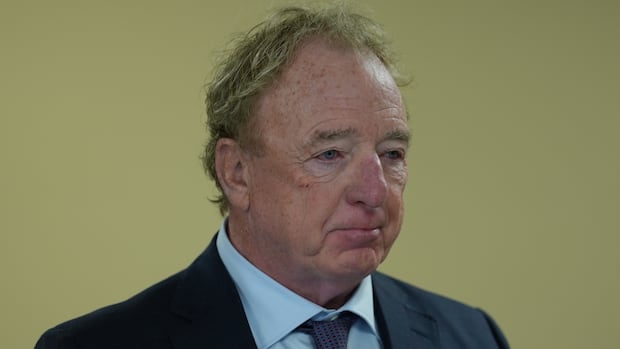
Former Winnipeg chief administrative officer Phil Sheegl threw his fists up in the air and yelled “Yeah baby!” on Thursday as he finished two and a half days of testifying before the inquiry into the city’s troubled police headquarters project.
Sheegl told the inquiry the fallout from how that project turned out — including delays, cost overruns, audits, an RCMP investigation that resulted in no charges and two City of Winnipeg lawsuits — left him feeling like “social enemy No. 1” in a city he said he only wanted to make a better place.
“I’ve gone through a lot of emotional stages through this, from denial to acceptance and everything in between. But I’m a big boy,” Sheegl said.
“I take full responsibility, and I understand the ramifications. The part that really bothers me is — well, there’s a lot of parts — but the main part is my family. It’s been really hard over the last 16 years to have a last name of Sheegl.”
Much of Sheegl’s testimony during his days before the inquiry focused on a finding made by a Manitoba court in 2022 that he accepted a bribe from the contractor responsible for the headquarters project.
Sheegl repeatedly denied that claim throughout his testimony, maintaining the $327,200 paid to him and former mayor Sam Katz by Armik Babakhanians of Caspian Construction was part of a land deal in Tartesso, Ariz.
Court of King’s Bench Chief Justice Glenn Joyal found Sheegl accepted a bribe and breached his duty as a city officer by accepting that money. Joyal’s decision also said the Tartesso deal “was a concocted story,” made up in 2017 after an RCMP investigation uncovered the payment from Babakhanians.
That decision, which ordered Sheegl to pay the city roughly $1.1 million Cdn, was upheld by the Manitoba Court of Appeal the following year.
That appeal court decision also said whether the Tartesso deal was real or made up to cover up a bribe “is immaterial in law,” and in either scenario, “the Sheegl defendants are liable for civil bribery.”
During redirect examination from his own lawyers at the inquiry on Thursday, Sheegl was asked about a series of documents submitted as exhibits, which he and his lawyers said showed the Tartesso land was actually worth much more than what was heard by the Manitoba court that ruled against him.
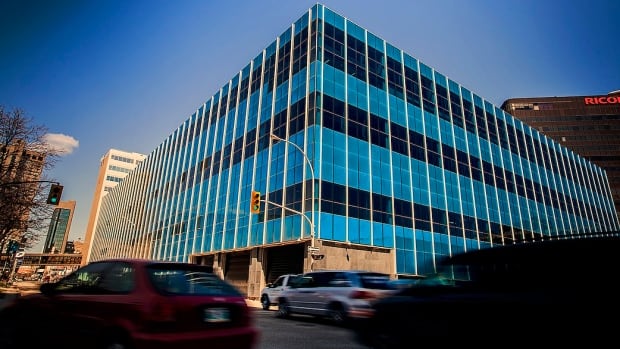 Winnipeg’s police headquarters inquiry, which began earlier this month, is scheduled to hear from more than 30 witnesses and continue until June. (CBC)
Sheegl agreed that information was introduced as evidence in his civil case after he agreed it was accurate in a sworn affidavit and during cross-examination. But he said that happened during a “very dark period” in his life, when he was dealing with loss in his family, and he developed a drinking problem.
“I don’t fault anybody or blame anybody. The judges made their decision based on the information that they were given, and I erred. And I am so embarrassed, as a human being, as a businessman, that I would miss that,” Sheegl told the inquiry.
“And it’s caused me huge anguish in my business life. I’ve literally been shut out by banks. When this whole investigation started with the RCMP asking the banks for documents … six months later, I got a letter from the bank that said, ‘Sorry, we’re not interested in doing business with you anymore.'”
Arizona court records filed in December 2022 reviewed by CBC News show Sheegl pleaded guilty there to an impaired driving offence with a blood alcohol concentration between 0.15 per cent and 0.19 per cent.
His lawyers declined to comment Thursday on the guilty plea.
Babakhanians to testify Thursday
The inquiry was previously shown evidence of two payments Babakhanians made: One to Sheegl for $200,000 in 2011 and another to Katz for $127,200 in 2012.
Both Katz, who testified at the inquiry last week, and Sheegl said that money was split between them as Babakhanians’s payment for the Arizona land deal.
The inquiry previously heard the $200,000 cheque to a Sheegl-controlled company from a Babakhanians-controlled company came on July 22, 2011 — two days after city council granted Sheegl the authority to award the police headquarters construction contract.
Current Winnipeg chief administrative officer Joseph Dunford said in January that Sheegl paid the city the money ordered by the court. The inquiry heard Wednesday that the city had to go to court in Arizona to get the judgment for damages recognized there, because Sheegl didn’t have any assets in Manitoba.
The inquiry previously heard Sheegl was with the city from 2008 to 2013, which included the period when the city planned and started renovating a former downtown Canada Post complex into a new headquarters for the Winnipeg Police Service.
Babakhanians and others have settled a separate lawsuit for as much as $28 million. Four of his co-defendants have paid $500,000 so far, the city said.
City council approved the purchase and renovation project for the new police headquarters in 2009, at a budget of $135 million.
By the time the police service moved into the building in 2016, the cost had ballooned to $214 million due to construction delays, change orders and flood damage.
The inquiry at the downtown Winnipeg offices of the Public Utilities Board, which began earlier this month, is scheduled to hear from more than 30 witnesses and continue until June.
Babakhanians is expected to begin testifying Thursday afternoon.