
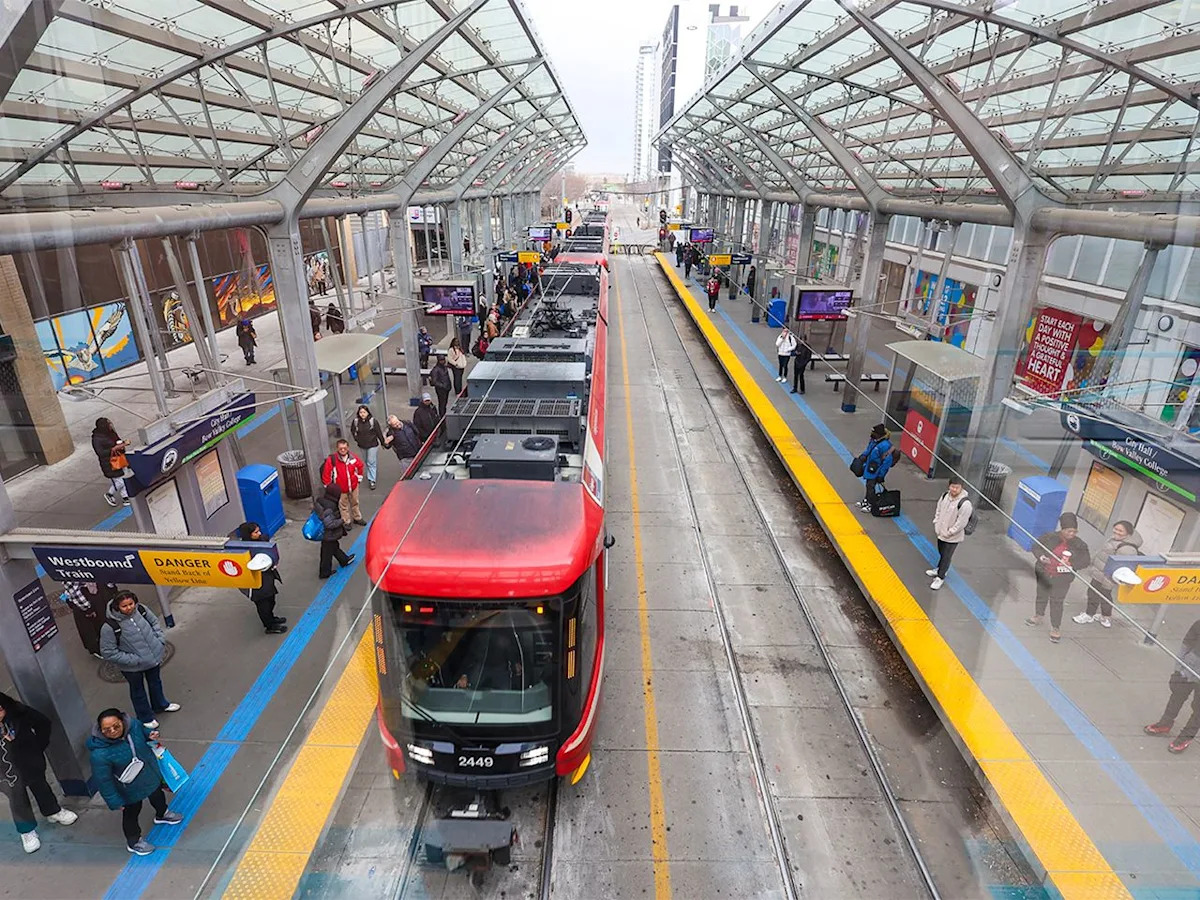
Calgary Transit is incorporating modern sensors on its CTrain fleet to ensure more accurate ridership estimates.
The agency said it has implemented automated passenger counting (APC) technology on 70 per cent of its LRT vehicles — a percentage that will increase as older trains are replaced with newer ones.
Info from the automated sensors will put Calgary Transit in a better position to make data-driven decisions in terms of planning and service delivery, according to a city news release.
“To have this daily feedback on the number of customers using public transit, across the entire system, is important for adjusting our operations and future planning,” said Laura Hoskins, Calgary Transit’s leader of performance and analytics.
“It’s a big value-add piece, not just for us at Calgary Transit, but for being strategic on where we and council invest dollars to improve service and expand the network.”
Related
This industry-leading technology has been used on Calgary’s bus fleet since 2023. The automated sensors are installed at each door of the vehicle to accurately capture when people board.
The data will help show ridership trends over the course of weeks, months and years, which the news release states can support fleet deployment that more closely reflects passengers’ needs.
“We know events throughout the year, and especially events in the summer, always attract more people,” Hoskins said. “This new data will help tell us when we should be scheduling more trains or less trains depending on the time of year.”
Accurate ridership estimates beneficial for transit, says expert
Before automated sensors were adopted, ridership was estimated by using manual passenger counts and periodic sampling, according to Calgary Transit’s release. This approach is still industry-standard and used by many public transit agencies in North America.
However, the city said it comes with limitations and relies on modelling and assumptions to develop system‑wide estimates for ridership.
“As a result, year‑to‑year comparisons could sometimes reflect differences in sampling, rather than actual changes in customer behaviour,” the agency said.
In the future, the city said, data from new payment technologies, such as tap-and-go, will be used with automated sensor data to further refine public transit service.
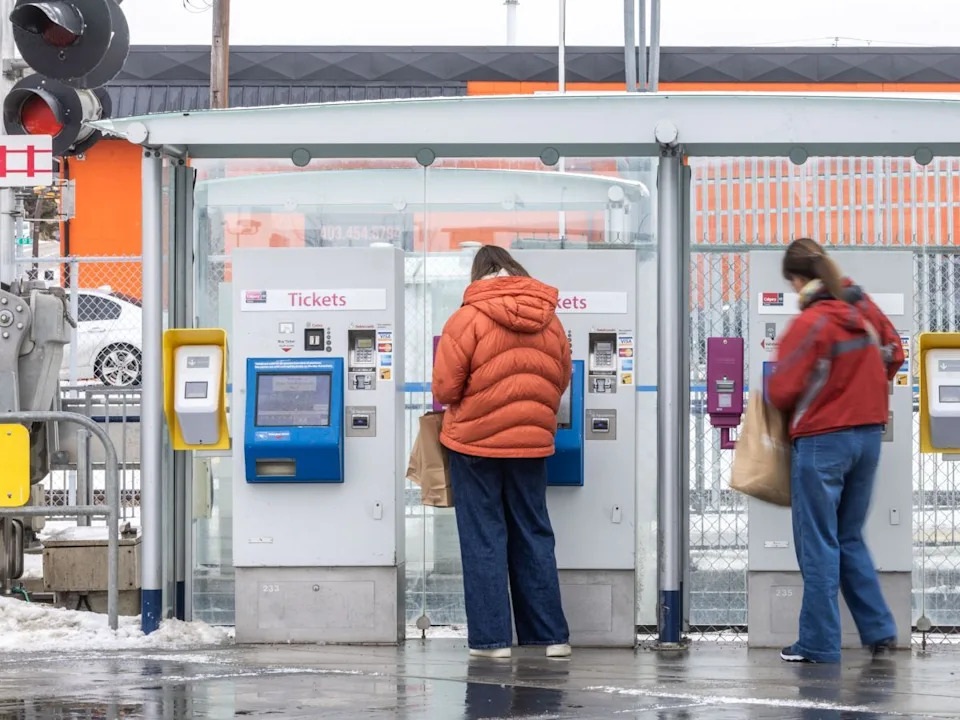
Transit riders purchase tickets at the Chinook CTrain Station in Calgary on Tuesday, Dec. 2, 2025.
David Cooper, a former Calgary Transit planner and the founder of Leading Mobility, a transportation planning firm that offers strategic support for public transit agencies, said more accurate ridership estimates provide transit agencies myriad benefits.
“Ridership is a pretty big determinant of how much service you’re going to put on the road, but also for reporting back to council and the public in terms of your overall performance,” he said in an interview. “The other thing some of this technology can do, depending on which technology you have, tells you the on-time performance of the vehicle and helps out with scheduling information and things like that.
“Having more technology to determine the ridership just gives you better data and data sets.”
Calgary Transit saw dip in ridership, uptick in fare revenue last year
Using new methodology, Calgary Transit’s 2025 ridership totalled 93.1 million trips, the agency said. To ensure accurate year-over-year comparisons, ridership from 2024 was restated using this approach, determining a total 93.7 million trips.
The city attributes the decrease of approximately 600,000 transit trips in 2025 to an extreme cold snap in February, workforce shortages throughout the fall that required select route cuts and the October 2025 teachers’ strike.
“When these factors are considered, underlying ridership demand continues to show stable growth,” Calgary Transit said in its release.
Cooper said he’s not surprised by last year’s dip in ridership, noting that a significant number of transit passengers are students in the K-12 school system.
“A pretty significant portion of ridership does come from students, so having a multi-week strike does detrimentally affect ridership,” he said.
Fare revenues last year totalled $123 million, a nine per cent increase from 2024, or approximately $10 million more. The city notes this increase reflects increased fare prices, but also the number of fares sold and initiatives to improve fare compliance, such as the installation of platform validators for the CTrain.