

Tolerance and unaccountability around human trafficking can’t be normalized, a prominent Canadian foe of the crime said Thursday.
Country singer Paul Brandt, who’s been waging war against the activity for a decade, made the comments against the backdrop of the former prince Andrew’s arrest Thursday linked to evidence in the so-called Epstein files, and accusations the U.S. Trump administration is blatantly covering up sex crimes mentioned in those documents.
He spoke while also describing efforts made by Canadian airports and advocates to disrupt human trafficking, which includes a victims’ safe room at the Calgary International Airport — one he says has been a resounding success.
That program, driven by his NotInMyCity organization, shows how institutions and the public can take action against the activity, he said.
“If (people) are not being held accountable for harm done, especially to children, that’s a problem in society . . . it’s a cancer when we don’t see perpetrators held accountable,” said Brandt.
Related
While the Albertan said he hasn’t read the Epstein files, he said news reports of those named prominently in some of them and the fact there have been no arrests is troubling.
“There’s a lot of people on every side politically (named in the files) . . . it shows a systemic rot that’s unprecedented,” said Brandt.
“We need to stand up as the public, that this is corruption at the highest level in governments . . . it’s very important there are denunciations and strong deterrents.”
He also said Canada’s federal government isn’t doing enough to combat the scourge through its Bill C-16 that in part criminalizes coercive control, legislation he called “extremely insufficient.”
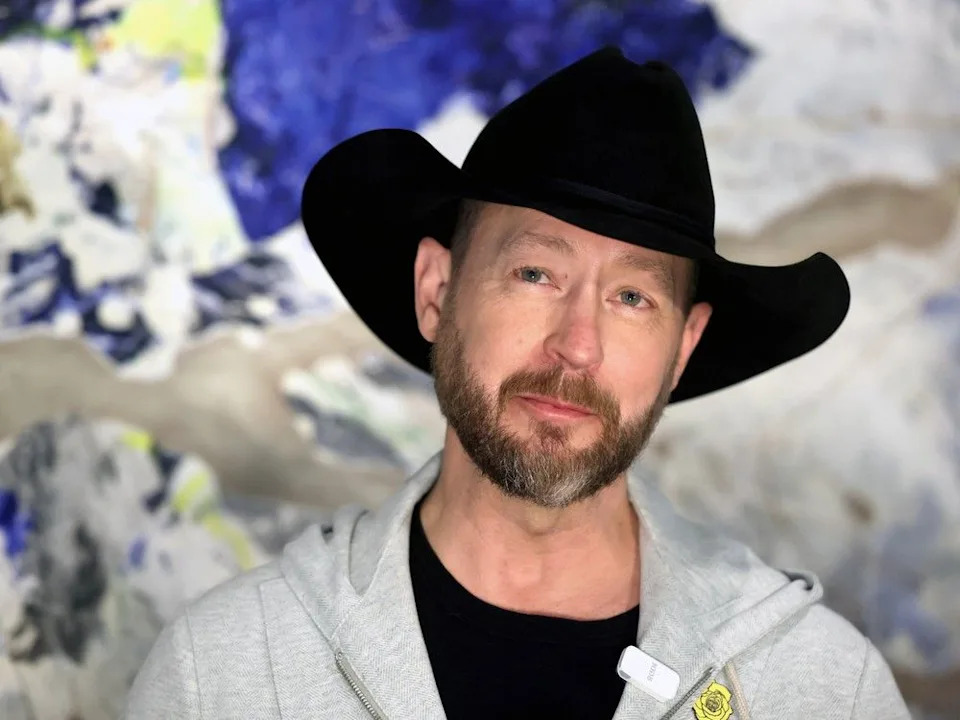
Paul Brandt, co-chair of the Alberta Centre to End Trafficking in Persons, speaks to media during a conference at the Best Western Hotel in Calgary on Tuesday, Jan. 27, 2026.
Airport safe room ‘being used all the time,’ says Brandt
Brandt was in Vancouver on Thursday to promote the role in battling human trafficking played by Canadian airports — which are often conduits for the activity.
Those have included the creation of a safe room at Calgary International Airport to help victims escape a life in sex trafficking.
The activist recalled going to inspect the site when it opened last fall in conjunction with the Calgary Airport Authority, when a young victim showed up, seeking refuge.
“Before we could even check it out, it had to be used — they were able to find the girl, bring her supports and get her home that same night,” said Brandt.
Initially, there weren’t high hopes for the room — that it’d be more symbolic than practical, he said, “but it’s being used all the time.”

The safe room for victims of human trafficking at the Calgary International Airport that was opened last fall.
A similar refuge has been created at the Edmonton International Airport and others across the country, he said.
The Calgary room includes a computer, kitchenette and plush furniture, and was designed with input from a human trafficking survivor, said Brandt.
“She went through everything, the nook and cranny details, even the lighting, (recommending) cellphone chargers or cellphones that can’t be traced, a fresh change of clothes, a shower, a cup of hot soup,” he said.
“We know the traffickers see the (airport) space as an opportunity and we want to disrupt that, make it the safest place in the city.”
‘Anybody can fight human trafficking’
He said the main theme behind the sanctuaries is building trust with victims, who are often convinced by perpetrators that the authorities are their enemies.
For safety and security reasons, Brandt wouldn’t disclose its location in the airport.
Users access the refuge in a number of ways, including informing authorities of their plight or being spotted by airport staff or law enforcement trained in identifying those being trafficked, said Brandt.
Victims and perpetrators can be identified at airports as individuals speaking for others or holding their identification, those controlled by a drug or by certain tattoos, he said.
“Anybody can fight human trafficking,” said Brandt.

The safe room at the Calgary International Airport provides a private space where individuals identified as at risk of human trafficking can access safety and support while next steps are coordinated with law enforcement and community agencies.
While the Calgary Airport Authority said a second safe room is not being planned, “we are exploring the idea internally as a future project.”
A year ago, a senior Calgary police officer said human trafficking activity is increasing in Calgary with the city seen as a major hub for those crimes.
And the severity of those crimes is also intensifying, said police, with survivors being encountered who have been physically branded by traffickers.
The city has become a prime destination point for human trafficking involving sex workers due its lucrative nature, Acting Deputy Chief Jeff Bell told the Calgary police commission in late February, 2025.
“Currently, the trending (of activity) is going upwards and it’s due, number one, to awareness and when we look at Calgary, it’s a strong economic climate,” said Bell at the time, adding Calgary’s robust economic climate means those crimes fetch higher prices.
Police reported 260 incidents of human trafficking in Alberta from 2012 to 2022, according to Statistics Canada, but the number is suspected to be higher. In the past four years, 135 people have been arrested on trafficking offences, and 68 victims have been supported by community partners.
In December 2024, the Alberta government announced it was investing $5.5 million in its latest round of grants for agencies working to prevent human trafficking and support victims.
The funding is part of the $20 million budgeted by the province for anti-trafficking efforts over three years.