

Listen to this article
Estimated 4 minutes
The audio version of this article is generated by AI-based technology. Mispronunciations can occur. We are working with our partners to continually review and improve the results.
A year after Toronto staff sent a cease and desist to a man who built several tiny mobile homes for those experiencing homelessness, the city is moving closer to embracing micro shelters with its own potential pilot project.
Until Thursday, the city was accepting proposals for a two-year micro shelter pilot project, to be part of the city’s 10-year plan to deal with homelessness. Among the applicants? Ryan Donais and his non-profit Tiny Tiny Homes.
Donais received a cease and desist last winter telling him to remove micro shelters he placed in St. James Park, though he eventually worked with the city to ensure everyone was given somewhere else to stay.
While he’s glad to see the city bring an open mind to the transitional housing solution, Donais says the requirement that applicants come forward with land as part of their application is not realistic.
“I think the only way this works is when the city uses their land,” Donais said in an interview with CBC Toronto.
“It’s completely unreasonable to rent land when the city has vacant land that they can use.”
WATCH | City told Tiny Tiny Homes to stop last year: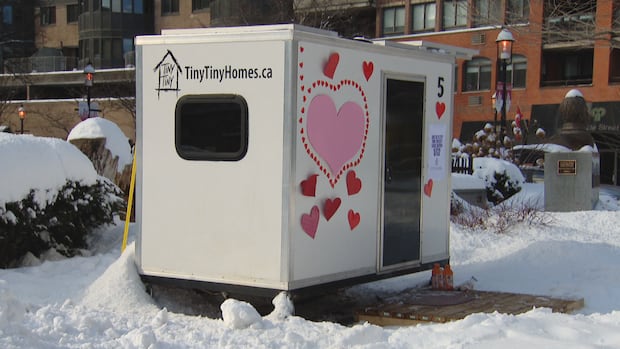
City of Toronto sends cease and desist to tiny homes organization
The City of Toronto has sent a cease and desist letter to Tiny Tiny Homes, a non-profit organization that builds micro-shelters for unhoused communities. CBC’s Dale Manucdoc has the story.
But the city says it looked.
According to spokesperson Elise von Scheel, the city spent a year evaluating 44 different sites and determined none met the size and location criteria for a micro shelter community.
Additionally, she said, staff found a micro shelter program would delay the construction of other housing projects that would serve a large number of people.
“We recognize the need to be innovative and nimble to address the homelessness crisis,” von Scheel said in a statement.
Coun. Chris Moise, who previously asked city staff to explore micro shelters on underused TTC parking lots, said the land requirement is a chance for the city to see what options might be out there.
“We’re just trying to do our due diligence by trying to make sure that we turn over every stone that’s available to us in the city of Toronto,” he said.
Micro shelters could be ‘critical step,’ applicants say
That land stipulation has been a hurdle for other applicants as well, like Two Steps Home, according to Robert Raynor, the non-profit’s lead advisor.
Two Steps’s goal is to find land that a developer has purchased to build on and use it as a micro shelter community until shovels are ready to go in the ground.
“Finding land and finding a developer to support this has definitely been the most challenging aspect of responding to this expression of interest,” Raynor said. “We hope that we’re able to work with them in the future to find city-owned land for this.”
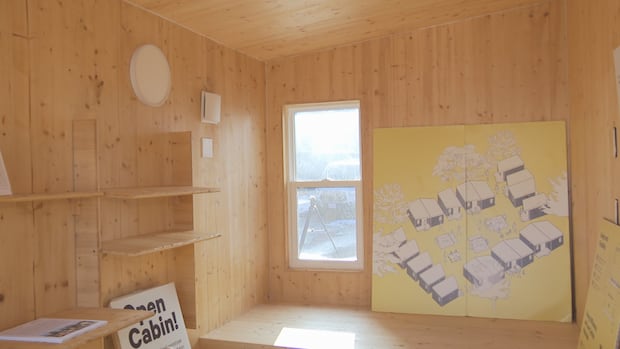
Two Steps was founded by architect John van Nostrand, who prefers to call his micro shelters cabins, and also includes Sheila Penny, a former senior leader with Toronto Community Housing.
WATCH | Could micro shelters solve the homelessness crisis? Advocates say yes: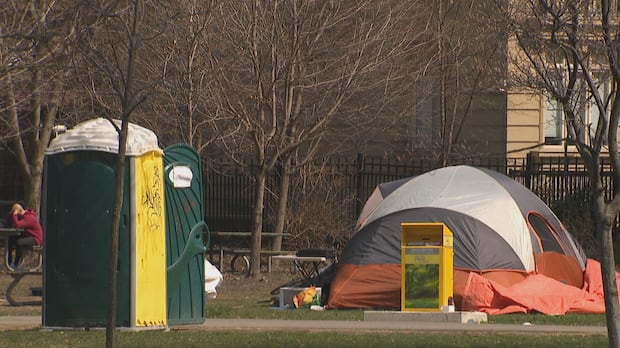
Could micro shelters solve Toronto’s homelessness crisis? Advocates say yes
Advocates are urging the city to use tiny cabin communities as a way to help combat homelessness in Toronto. CBC’s Britnei Bilhete explains why.
Penny said micro shelters can help bridge the massive transition someone undergoes when moving out of an encampment into an apartment.
“Living on the street is a full-time job, you have to be an expert in: how do you keep your stuff safe? Where do you get food? How do you deal with any mental health issues that you have?” she said.
“To go from that to having a community that’s stable and safe and provides for you is a critical step in someone’s life cycle and we’re hoping that this model will help sustain people through that critical time.”
Penny said the non-profit has found some “socially minded” developers but the discussions are ongoing.
“We’re hoping that something will come out of it and we’ll see the first pilot community built in Toronto.”