
Mental health key to dispute
Maria Rantanen / Richmond News – Feb 19, 2026 / 3:07 pm | Story: 599859
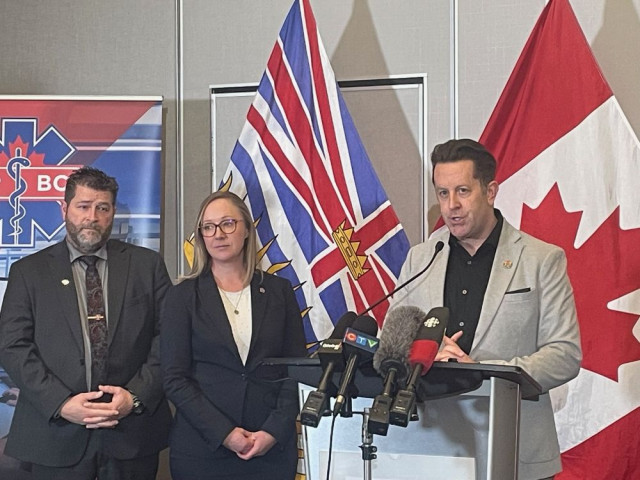
Photo: Maria Rantanen/Richmond News.
Ian Tait (right), spokesperson for the Ambulance Paramedics of BC union, said mental health and wellness are still sticking points in contract negotiations.
Mental health and wellness support is one of the final sticking points for B.C. paramedics and emergency dispatchers as they try to hammer out a deal with their employer.
Ambulance Paramedics of BC – CUPE Local 873, the union that represents paramedics and emergency dispatchers, held a news conference in Richmond on Thursday and said while wages have been agreed upon, they are still trying to agree on support for paramedics struggling with mental health issues.
Negotiations are ongoing at the Hilton Vancouver Airport Hotel on Minoru Boulevard in Richmond where the press conference was held.
Ian Tait, spokesperson for the union, said they’d hoped to have better news at the press conference, but the two sides were not able to come to an agreement on the financing of mental health and wellness supports before the noon event.
“I don’t believe we’re far apart, but we’re not close enough where we were able to have a deal before this press conference started,” he added.
The membership voted 97 per cent in favour of strike action, the union said on Wednesday, but they have not yet issued a 72-hour strike notice.
Tait noted many of the mental health and wellness issues are a result of burnout and “our lack of ability to staff appropriately.”
He said BC Emergency Health Services (BCEHS) relies on paramedics working overtime and on their holidays.
“So, when we come to the table, when we talk about wages, when we talk about benefits, we talk about supports, all of those things are designed to recruit and retain paramedics that will hopefully balance staffing and then … hopefully improve mental health and wellness issues,” he added.
Ambulance Paramedics of BC – CUPE Local 873 has been negotiating with their employer, BCEHS, through the Health Employers Association of BC, since September.
If paramedics were to have job action, Tait said it would most likely affect rural, remote and Indigenous communities the most.