
Japan has made the first commitments under a $550-billion investment program that made part of its trade deal with President Trump. Those first commitments are worth $36 billion and include what Commerce Secretary Howard Lutnick has called “the largest natural gas generation facility in history.”
The U.S. and Japan sealed a trade deal last summer, featuring a reduction in proposed tariffs—from 25% to 15%—on Japanese imports and a $550-billion Japanese investment pledge for the U.S. economy. Japan also pledged under the deal to expand market access for American goods, including cars, agricultural products, and energy.
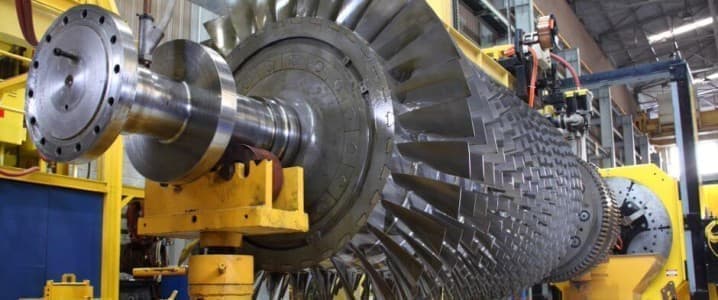
Most of the money from that first investment tranche would be used to build the largest natural gas power plant, with a capacity of 9.2 GW. “We will strengthen grid reliability, expand baseload power, and support American manufacturing with affordable energy,” Secretary Lutnick said in a statement after the deal. The plant will be built in Ohio. The facility will be operated by a subsidiary of Japan’s SoftBank, SB Energy.
The rest of the money would be split between a synthetic diamond factory and a deepwater oil port in the Gulf. “This project is expected to generate $20–30 billion annually in U.S. crude exports, secure export capacity for our refineries, and reinforce America’s position as the world’s leading energy supplier,” per Lutnick.
Related: Japan’s $36 Billion Bet on U.S. Energy Dominance
The deepwater oil project was greenlit by the Trump administration earlier this month. Led by Sentinel Midstream, the Texas GulfLink facility would have an export capacity of 1 million barrels of crude daily. The approval was part of the federal government’s efforts to boost the United States’ energy dominance through oil and gas exports.
“The Texas GulfLink project is proof that when we slash unnecessary red tape and unleash our fossil fuel sector, we create jobs at home and stability abroad,” Transport Secretary Sean Duffy said in a statement to Reuters at the time. “This critical deepwater port will allow the U.S. to export our abundant resources faster than ever before.” In a factsheet on the Japanese deal, the Commerce Department said the deepwater facility would generate between $400 and $600 billion over 20 years and advance President Trump’s energy dominance agenda.
Most countries that struck trade deals with Trump last year to avoid massive tariffs on their U.S. exports made an energy import commitment specifically, with the tariff threat proving a useful tool for pursuing the energy dominance goal. Perhaps the most notable commitment in that respect was the European Union’s promise to buy $750 billion worth of U.S. oil and gas—a feat considered impossible by analysts due to physical factors such as constraints on the availability of such massive volumes of the respective commodities, constraints on consumption, and price considerations.
The largest natural gas power plant in history is most likely a response to the surge in electricity demand—and more specifically, baseload electricity demand, driven largely by the proliferation of data centers as the AI race among Big Tech majors intensifies. Earlier this week, the International Energy Agency said global electricity demand was growing at the fastest pace in 15 years. In the United States specifically, electricity demand rose by 2.1% in 2025 and is expected to grow by nearly 2% annually through 2030. The rapid expansion of data centers will drive half of the increase, the IEA noted.
Natural gas has emerged as the big winner of the AI race alongside nuclear, both of which provide the kind of electricity that data centers depend on: round-the-clock, uninterrupted electricity. Nuclear, however, takes longer to build and costs more, which is why gas power plants have taken priority.
By Irina Slav for Oilprice.com