
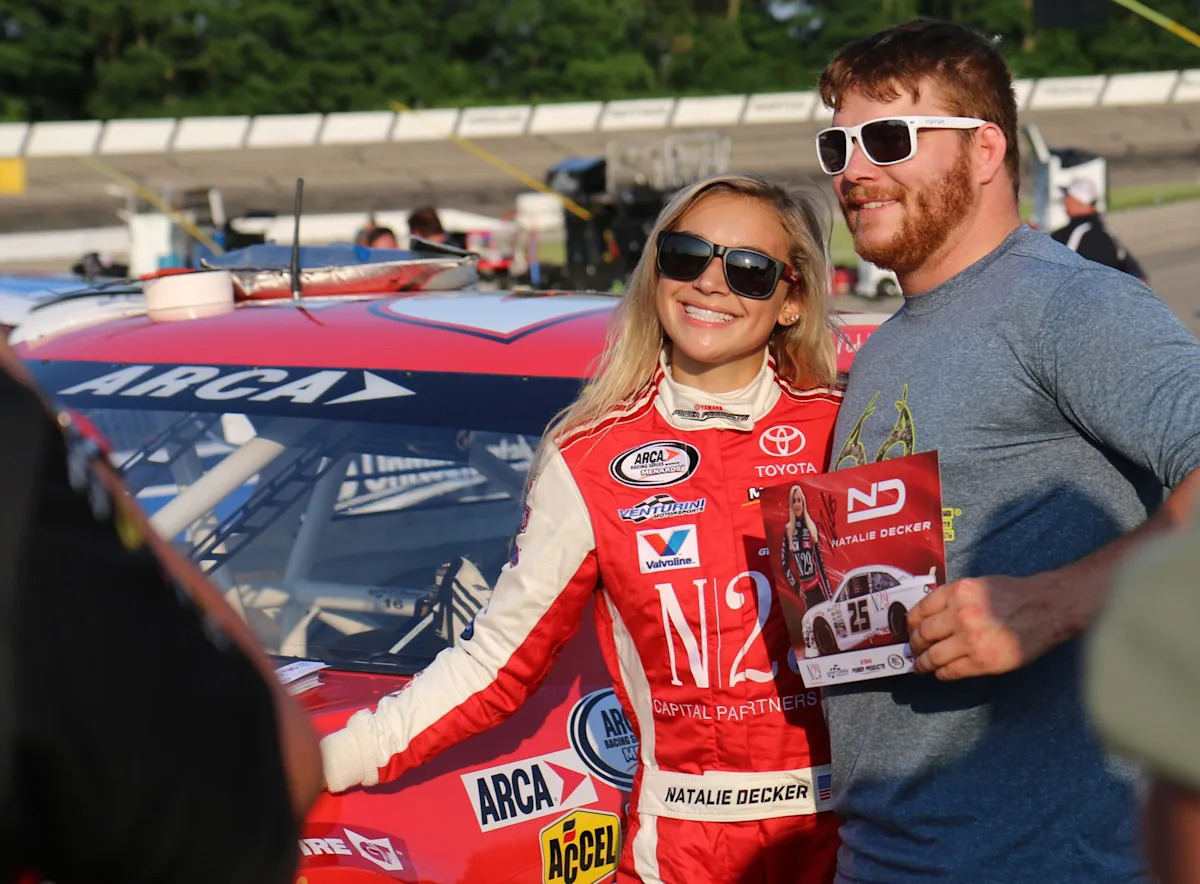
The crash itself lasted only seconds. The reaction to it hasn’t stopped. What began as a late-race collision at Daytona has evolved into a broader conversation inside NASCAR — one that now includes some of the most recognizable women in the sport, including a member of the Earnhardt family.
Natalie Decker’s involvement in a multi-car incident during the O’Reilly Auto Parts Series race at Daytona set off immediate debate among fans. But in the days that followed, the discussion shifted from racing lines and reaction time to something far larger: representation, responsibility, and the pressure facing female drivers fighting for credibility in a historically male-dominated garage.
Advertisement
The Daytona Moment That Sparked It
During the race, a major crash unfolded ahead of Decker. Sam Mayer’s car spun and later rolled back toward the racing surface. Decker, trailing the incident, collided with Mayer as his car returned toward the groove.
Critics argued she had time to reduce speed and avoid impact. Supporters pointed to the unpredictable nature of superspeedway wrecks, where visibility can change in an instant and reaction windows shrink to fractions of a second.
Television analysts noted that drivers are expected to slow when cautions emerge and wreckage is still active, but stopped short of placing definitive blame.
Advertisement
Afterward, Decker attributed the collision to the path of the spinning car, a response that further fueled online scrutiny.
The Conversation Moves Inside the Garage
What made this different from typical fan backlash was who weighed in next.
Karsyn Elledge, granddaughter of Dale Earnhardt and a co-host on Dirty Mo Media’s Door Bumper Clear podcast, addressed the situation publicly. While not framing it as a personal attack, Elledge expressed frustration over what she described as an embarrassing moment for women working to earn respect in NASCAR.
Her comments resonated because they spoke to a larger issue — the constant balancing act female drivers face between performance and perception.
Advertisement
Soon after, ARCA Series driver Taylor Reimer shared her own thoughts on social media, emphasizing the importance of being a role model in motorsports and noting that every action on and off the track carries weight with sponsors, teams, and young fans.
Jade Avedisian echoed that sentiment by sharing Reimer’s post and reinforcing the idea that maintaining a high standard matters in a sport where opportunity is limited and scrutiny is constant.
None of the drivers explicitly launched personal attacks. But the message was unmistakable: visibility comes with responsibility.
Why This Debate Is Different
Natalie Decker is not a full-time competitor in NASCAR’s national series, but she remains one of the most recognizable female drivers in the field. Her presence generates attention — both positive and negative — in ways that many developing drivers do not.
Advertisement
In modern NASCAR, attention is currency. Sponsors invest where exposure exists. Television time matters. Social engagement matters. Controversy can sometimes create visibility that results alone do not. That reality complicates the dynamic inside the garage.
For drivers working their way up the ladder — often grinding through ARCA and development programs — performance is viewed as the primary path to long-term legitimacy. When headlines revolve around crashes or social media moments instead of finishes, frustration can build.
The Daytona incident didn’t just reopen questions about racing judgment. It exposed tension about how female competitors want to be represented in a sport still evolving in its diversity.
Performance, Perception, and Pressure
Female drivers in NASCAR operate under a spotlight that male drivers often avoid. Every mistake can become a narrative about gender rather than competition. Every strong run can feel like proof of something larger. That environment creates added pressure.
Advertisement
For some, the priority is simply earning respect through results. For others, brand-building and media presence are necessary tools to secure funding in a competitive sponsorship market. The Daytona crash brought those philosophies into the open.
What Happens Now
Decker is expected to continue making select starts this season. The intensity of the reaction may fade as new storylines take over — or it may linger if similar incidents occur.
For now, the conversation has shifted beyond a single superspeedway collision. It has become a referendum on how female drivers believe the sport should evolve and what standards they believe must be upheld to accelerate that progress. Daytona always leaves marks. Sometimes they’re on sheet metal. Sometimes they’re in the garage.
This time, the aftershock is about more than who hit who. It’s about how women in NASCAR want to be seen — and how they believe that future should be built.