
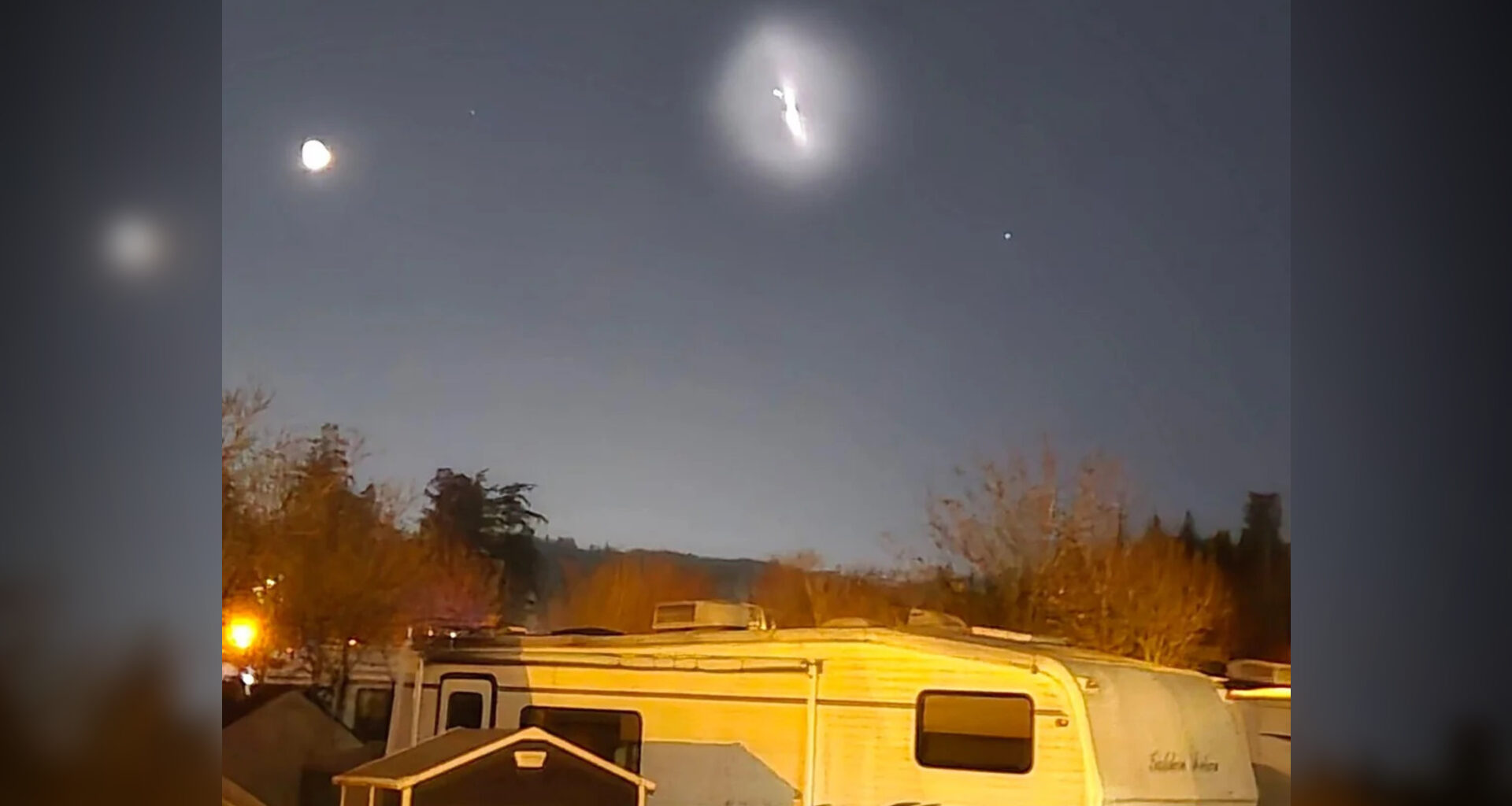
On a clear, chilly night over Vancouver Island on Thursday, many Islanders were intrigued after spotting bright lights flying across the sky.
Reports of the lights came in from Victoria to Nanaimo to the San Juan Islands, Wash. and beyond, and theories about what they were quickly poured on.
Dave Balam, an astronomer with National Research Council Canada and a principal investigator with Space Guard Canada – has confirmed the lights were part of a SpaceX Starlink launch on Feb. 19.
He says he tracked the trajectory and confirmed that the Starling G10-36 travelled over Vancouver Island just after 7 p.m., around the time the sightings were reported.
“That was the very first orbit after launch,” he told CHEK News on Friday.
A video posted to social media showed the lights flying over Nanaimo.
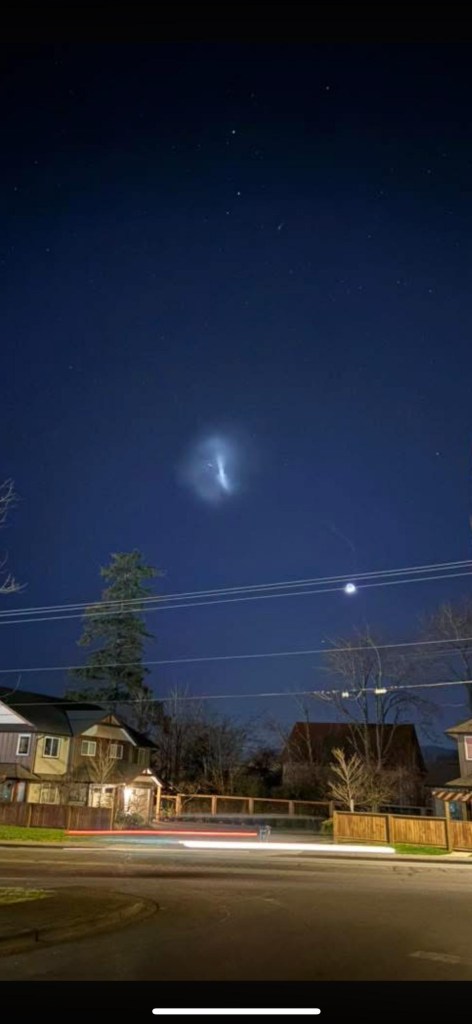 The lights are pictured over Victoria around 7 p.m. on Feb. 19, 2026. (Reddit/lookatyourwatchnow)
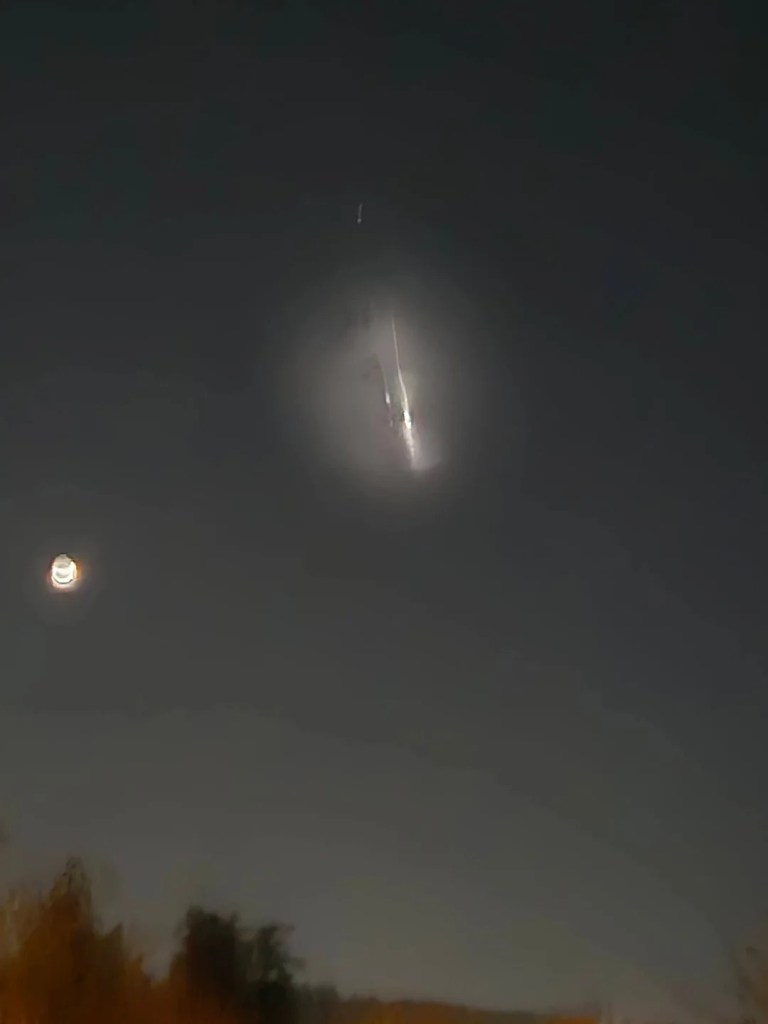 The lights are pictured over Esquimalt around 7 p.m. on Feb. 19, 2026. (Reddit/Ill-Perspective-5510)
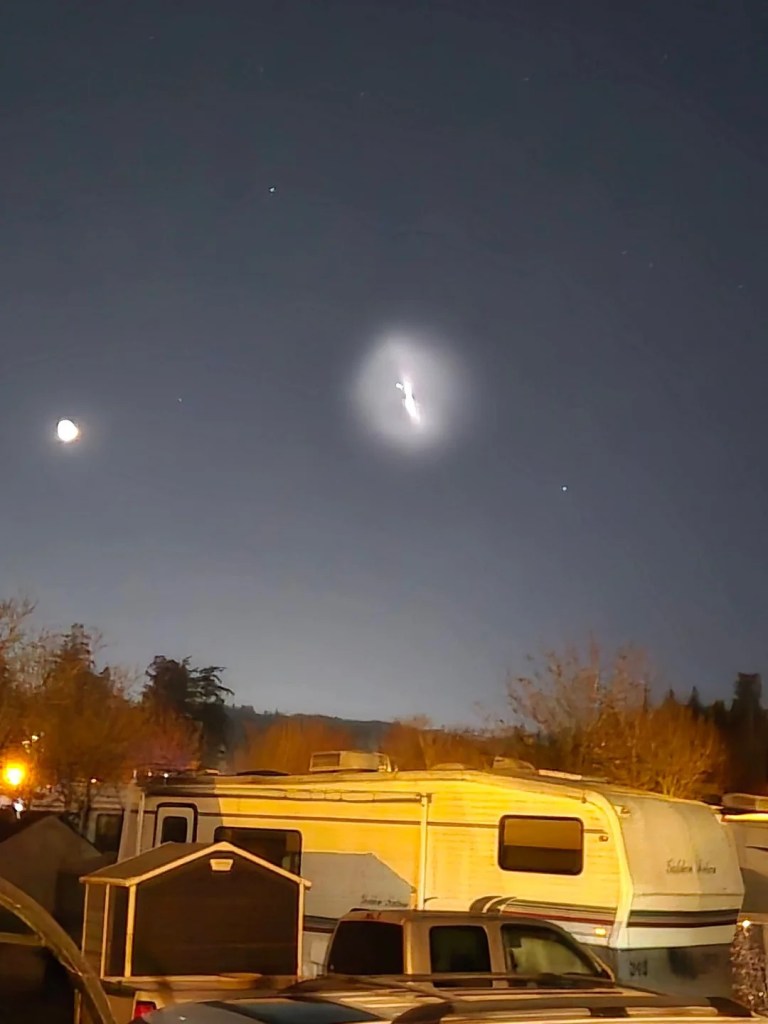 The lights are pictured over Esquimalt around 7 p.m. on Feb. 19, 2026. (Reddit/Ill-Perspective-5510)
It’s not the first time that Starlink satellites have been spotted over Vancouver Island, raising attention and questions.
Indeed, the sheer number of satellites in low orbit, like Starlink satellites, has started to raise issues of their own.
“Did you know there’s 9,764 Starlight satellites in lower orbit right now?” said Balam.
He says the number of satellites and debris causes issues both on Earth and in the skies above.
For astronomers like Balam, the satellites are increasingly blocking photos.
“I was tracking what we call ‘flying couches,’ very small asteroids, and we tried to get long exposure and we literally had hundreds of satellite trails blocking our field,” he said.
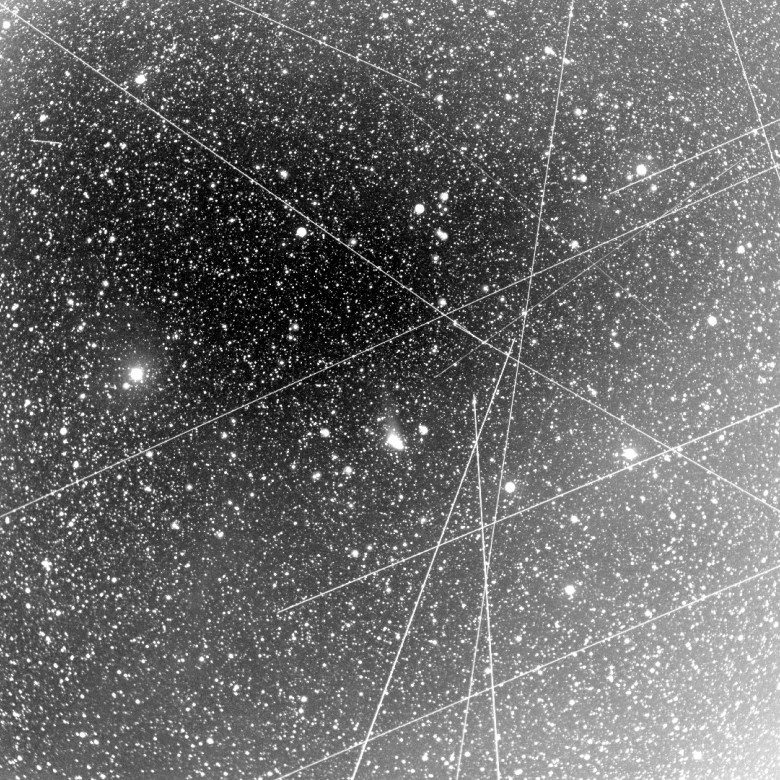 Satellite trails are shown crossing this two minute exposure image obtained with the 0.76-m Schmidt telescope at the Rothney Astrophysical Observatory (University of Calgary) last summer. Balam says you can fit the full moon into this image four times, and that longer exposure shots are filled with hundreds of satellite trails. (Dave Balam)
In the sky, Balam says he’s concerned a cascading crash of debris will inevitably occur.
“You know what I think is going to happen is that, low Earth orbit is so crowded these days, that there’s going to be a collision, and that’s going to cascade into other collisions,” he said. “And we’re going to end up with a ringed planet.”
He added that such cascading crashes have already occurred, and will increase in frequency and scale as the Earth’s orbit gets more crowded.
“I think a Chinese satellite hit a booster and started a cascade of debris, so it broke into thousands of pieces, and you have to keep in mind that these things are travelling at 18,000 kilometres an hour,” said Balam.
“And all of a sudden you get a massive debris stream out there,” he said. Debris can damage things like the International Space Station or endanger the lives of astronauts if they collide.
“Even a tiny little fleck of paint is like firing a bullet,” said Balam. “It’ll puncture a space suit.”
The countless satellites overhead could even cause global concerns.
If an asteroid seems to be heading towards Earth, satellite trails could obscure images of it that could help measure its size.
A similar incident happened to Balam earlier this year when he was tracking an asteroid with his Nasa-built telescope in Calgary, “but unfortunately a satellite trail went through it and I [couldn’t] measure it.”
While Balam thinks it’s possible that Earth will develop a ring of space debris, he says such a thing would happen over the long-term and not within our lifetime.
READ MORE: ‘Building blocks of the solar system’: Central Saanich astronomer names asteroid after ‘Saanich’