
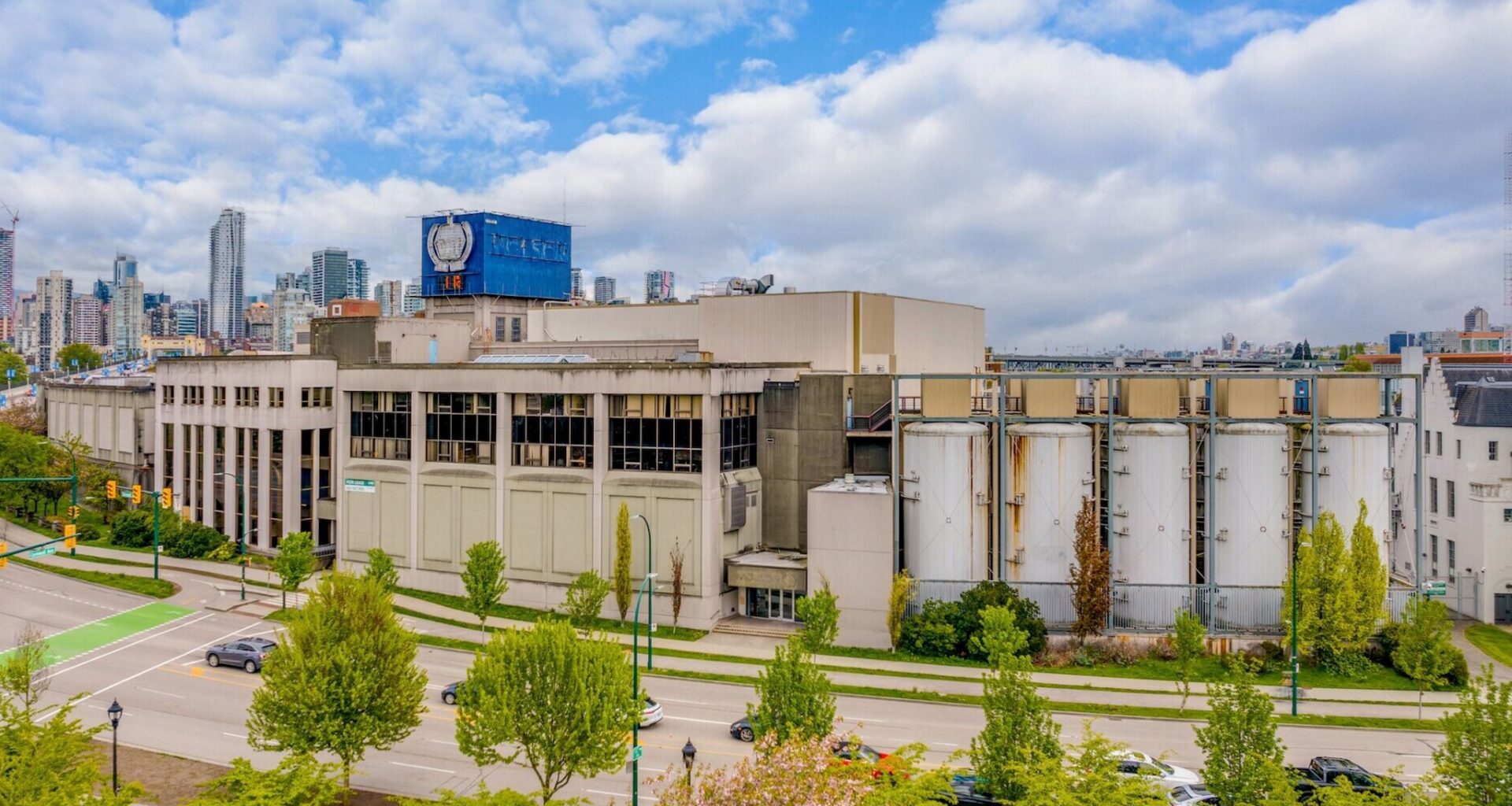
Vancouver City Council is being asked to take the first formal steps toward transforming the former Molson Coors brewery site at the south end of the Burrard Street Bridge from a traditional industrial property into a high-density, mixed-use development that could include residential and commercial uses and public amenities.
This comes a decade after local developer Concord Pacific acquired the property for $185 million in 2016, and after the full closure of the brewery’s operations in 2019, when Molson Coors opened its new state-of-the-art facility in Chilliwack next to Highway 1.
City of Vancouver staff are recommending that Vancouver City Council provide the green light to begin the process of changing the site’s land use allowances in the forthcoming new citywide Vancouver Official Development Plan (ODP). City Council is expected to make its decision on enabling a process for the former brewery site next week.
The prominent site at 1550 Burrard St. spans eight acres at the easternmost end of Cornwall Avenue — wedged between Squamish Nation’s Senakw rental housing towers to the north and the Canadian Armed Forces facility to the south.
The intention is to remove the site’s regionally-protected industrial designation, which makes it the last major industrial property in the area tied to False Creek’s historic industrial past — other than the active concrete plant on Granville Island. Since the 1970s, the industrial uses that once lined both sides of the shoreline of False Creek have steadily declined as the city’s economy shifted away from natural resources and mixed-use residential development emerged.
City staff argue that the former Molson Coors site is no longer suitable for heavy industrial uses. With dense residential neighbourhoods now on multiple sides of the property, and without strong connections to major trucking routes or active freight railways, City planners state the site no longer makes sense as a stand-alone industrial hub. This is particularly reinforced by Senakw’s high-density, residential uses.
Last year, City Council approved a member motion by Mayor Ken Sim directing City staff to “unlock” the development potential of five “exceptional” sites currently under regionally-protected industrial land uses, with the former Molson Coors site being one of the locations. In late 2025, in response to that direction, City staff reported back to City Council, informing them that four of the sites would be more challenging to achieve, with the former brewery site being the only exception due to the location’s specific context and condition.
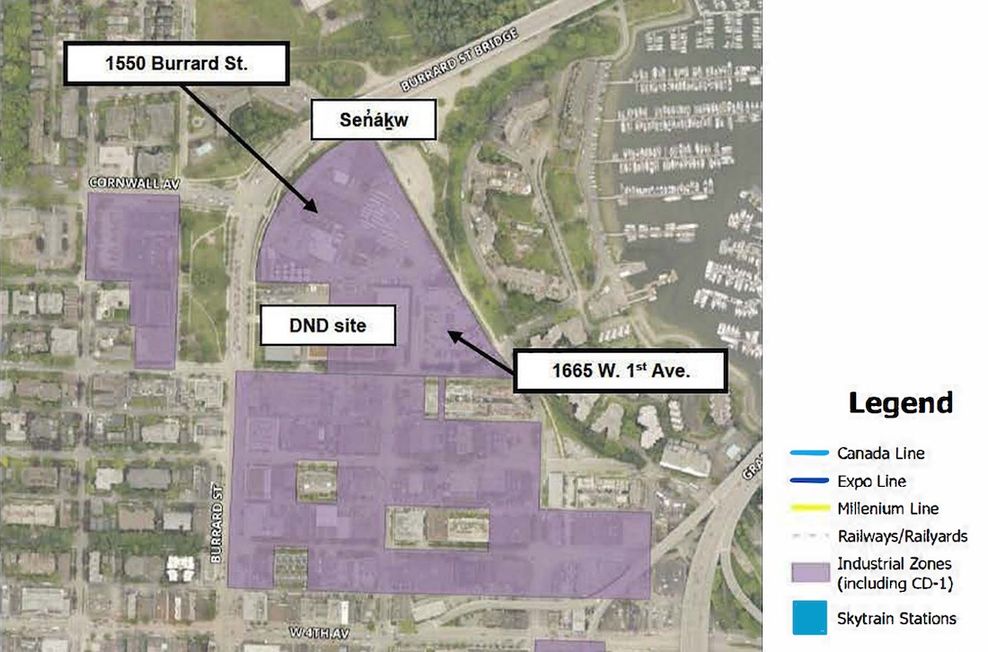
The former Molson Coors Vancouver brewery site. (City of Vancouver)
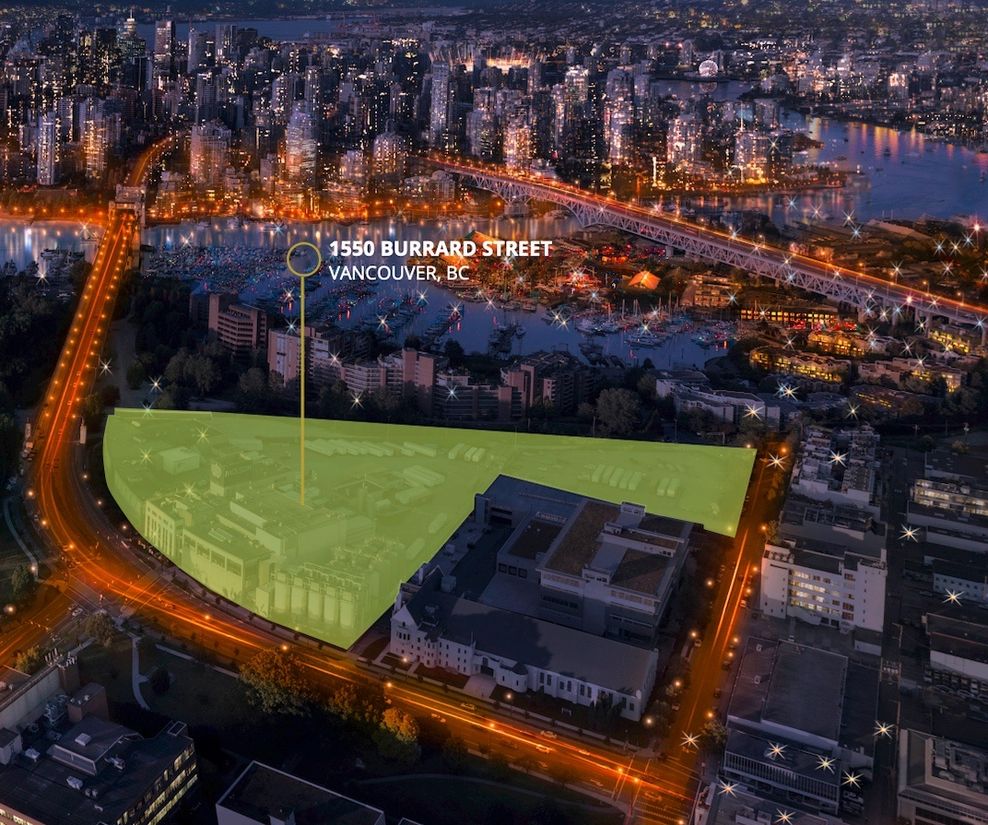
The former Molson Coors Vancouver brewery site. (CBRE)
Ahead of next week’s public meeting, City staff now state the former brewery offers a “unique opportunity” to redevelop the centrally located site into a mixed-use district. Possible future uses could include offices, retail, hotels, services, and creative/light industrial uses, such as production studios and small-scale manufacturing. These could be combined with residential uses, as long as building and safety standards are met.
City staff note that their early discussions with Concord Pacific suggest the site could support around 300,000 sq. ft. of new job space alongside residential development.
Before any of that can happen, however, several layers of approvals are required.
First, City Council would need to approve an amendment to the upcoming Vancouver ODP, which is expected to go to a public hearing on March 10, 2026. City staff are recommending that City Council provide the permission needed to prepare that amendment and to begin a formal consultation process. That consultation to change the brewery site’s land use designation would include not only the general public, but also First Nations, the provincial government, TransLink, Vancouver School Board, and Metro Vancouver Regional District.
Secondly, the regional district’s approval process is most critical.
At the regional level, the municipal government would also need to work with the regional district to change the site’s designation in the Metro 2050 Regional Growth Strategy from “Industrial” to “General Urban,” effectively removing the regionally-protected industrial land use designation. This type of amendment should take roughly half a year after the process kicks off, including public and stakeholder consultation and a regional public hearing involving other mayors and city councillors across the Metro Vancouver region.
The regional district is particularly concerned about Metro Vancouver’s diminishing industrial land uses, which are critical for supporting the overall economy and a wide range businesses and jobs. Because the former brewery is a standalone industrial site that is nowhere near any other major industrial lands, changing its designation is unlikely to put pressure on nearby industrial areas to also convert.
Thirdly, after the City and the regional district’s board of directors approve those changes, the site would need to go through the municipal government’s separate formal rezoning application process. That later stage would determine the exact mix of uses, building heights and density, site layout, transportation needs, and public benefits.
Years before Squamish Nation’s 2019 public unveiling of the Senakw project concept next door, Concord Pacific created an early concept for the “Quantum Park” redevelopment of the brewery site with towers up to 25 storeys in height, with about 3,000 homes and 300,000 sq. ft. of office and retail/restaurant space.
Senakw’s density and heights sets new precedent for the development potential of the former Molson Coors site, which could offer a very high degree of neighbourhood-serving retail/restaurant uses and public amenities — something that is relatively more limited at Senakw due to its tight footprint.
Moreover, the brewery redevelopment could help tie Senakw’s urban fabric to the rest of the city and provide another major anchor of economic activity for the Broadway Plan area, with the site’s parking lot located just beyond the plan’s northern boundary.
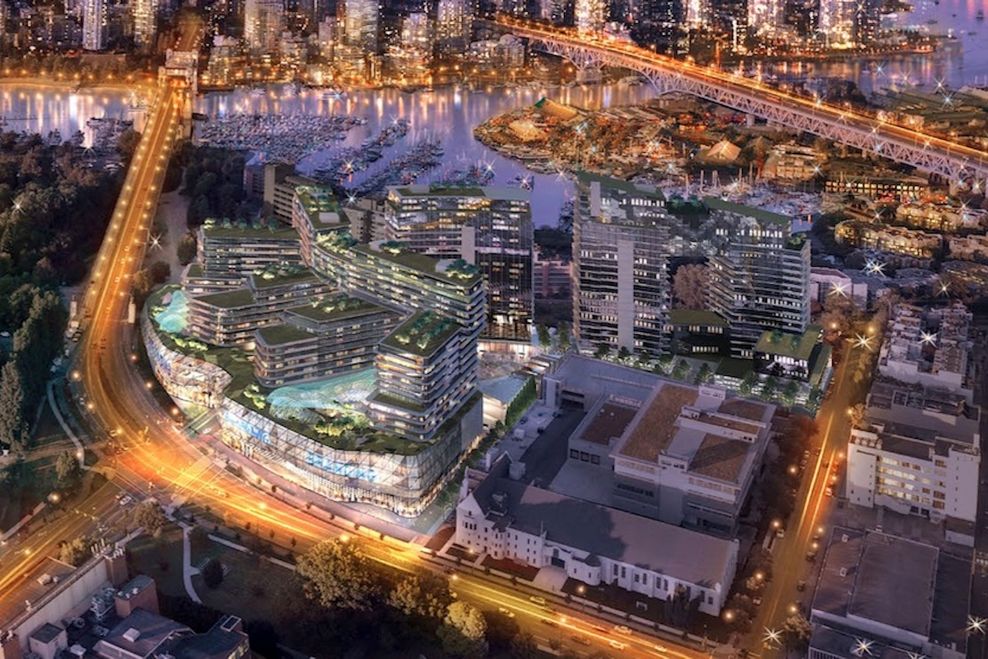
Cancelled concept: Previous 2019 artistic rendering of Quantum Park, the redevelopment of the old Molson Coors brewery in Vancouver, conceived before the Senakw project. (Concord Pacific)
“In our plan, the Quantum Park, we plan to develop a mixed-use modernized community with 10 times the employment [compared to the former brewery] and thousands of housing units,” Peter Webb, senior vice-president of development for Concord Pacific, previously told Daily Hive Urbanized in 2025 upon inquiry, confirming that Quantum Park’s design and uses have been drastically revised due to Senakw’s precedent and more recent changes to the office market.
“While we wouldn’t need rezoning or Metro approval to put heavy industrial into this neighbourhood in the middle of the city, but instead, Concord has been forced to wait for over eight years wanting to create high-tech job space and housing on this site…. We’re not just adding residential; we are also bringing office and new concepts of employment to the community. It’s an integrated approach that supports livability, jobs, and better access.”
Webb added that the redevelopment would also deliver significant improvements to the local road network, helping to ease the long-standing vehicle traffic congestion at the south end of the Burrard Street Bridge.
Senakw’s first three towers on the west side of Burrard Street Bridge will reach full completion this year, with over 1,400 purpose-built rental homes being released to the market in the summer. The remaining three phases of Senakw — each generating roughly 1,500 rental homes — will be built on the east side of the bridge, immediately north of Quantum Park.
As part of the First Nation’s agreement with the City of Vancouver, the south end of the bridge will be widened to create a bus public transit hub to help serve Senakw’s high-density residential uses with very limited vehicle parking — only about 800 stalls will be built across the entire complex. Senakw will be home to up to 9,000 residents upon full buildout.
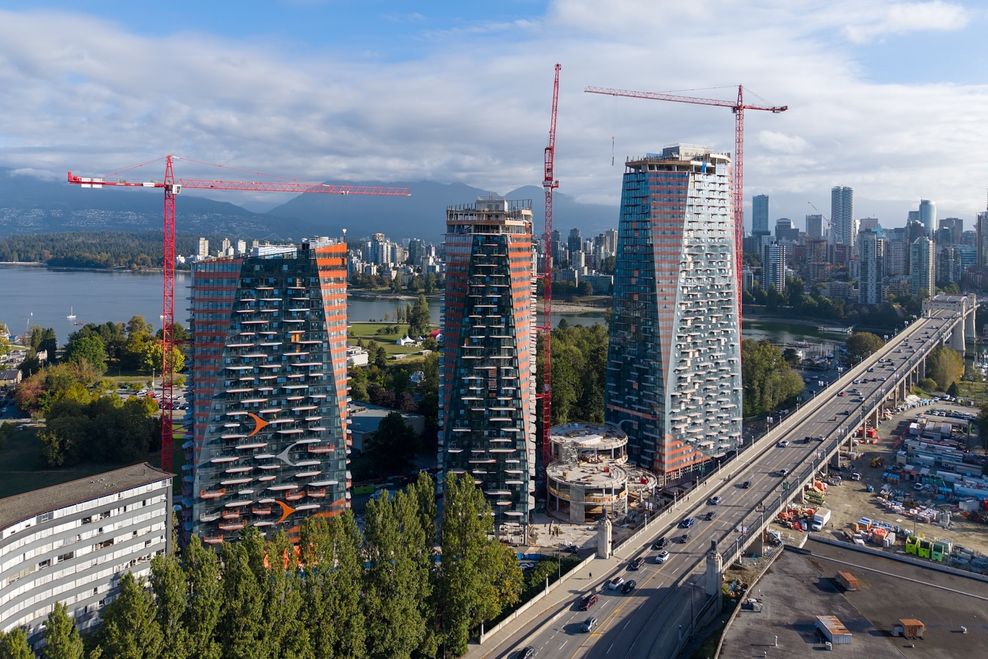
Fall 2025 construction progress on the first phase of Senakw. (Westbank)