
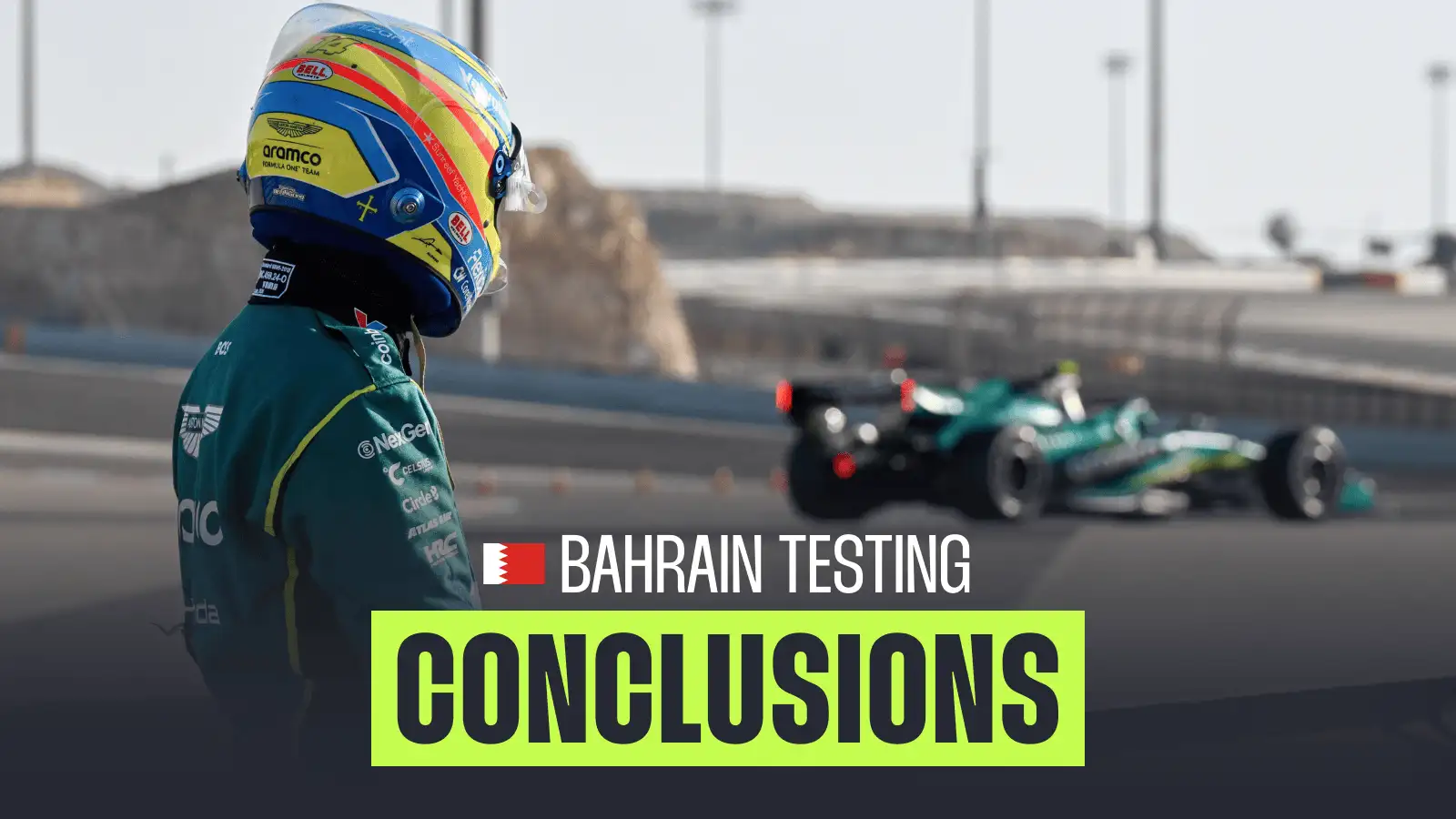
Ferrari driver Charles Leclerc ended F1 testing at the top of the pile in Bahrain as Aston Martin-Honda’s preparations for the F1 2026 season suffered another blow.
What exactly to make of F1 2026 ahead of the Australian Grand Prix next month? Here are our conclusions from the final pre-season test in Sakhir…
Has Formula 1 just neutered itself with the F1 2026 rules?
Want more PlanetF1.com coverage? Add us as a preferred source on Google to your favourites list for news you can trust
Formula 1 has always lived on the fault line between science and entertainment.
For most of its history, it has got the balance right. But on the evidence of 2026 so far?
With cars running out of puff before the end of the straights? With drivers talking of the need to lift and coast ON A QUALIFYING LAP?
It is as though these rules have asked everyone – teams, drivers, outside observers – to forget everything they previously knew about motorsport and how it works.
It is likely to prove a question too far. Was F1 really so broken before that it required this mass overcorrection?
Little wonder that Max Verstappen, always a voice of reason in the debate about where F1 stands and should be heading, has described the new regulations as “anti-racing.”
Early days these might be, yet it is hard to escape the sense that F1 has just taken a very wrong turn.
You do not have to look very far in the paddock to find a reminder of Formula 1’s commitment to achieving Net Zero (whatever that means…) by 2030.
Yet the great – and largely unspoken – problem with F1 going green is that such a target cannot be met without changing the face of the sport beyond all recognition.
Here is where we find Formula 1 in 2026: a sport grappling with its identity, unsure of itself and its place in an increasingly climate-conscious world.
It is this thinking that results in the new regulations in place for this season, produced not purely with the spectacle in mind unlike most previous rule changes, but with the aim of tempting major car manufacturers, all facing the same existential concerns, into F1.
These regulations were widely agreed to be a bad idea at least two-and-a-half years before a 2026 car hit the track and it hardly screams of a recipe for success when the chassis rules were devised primarily to make up for the shortcomings of the engine ones.
Has Formula 1 just committed an act of self-sabotage here?
That would be a step too far without yet seeing these cars in racing situations (even if the very concept of ‘active aero’ conjures up nightmarish images of a never-ending DRS train).
Yet there is every possibility that the self-styled pinnacle of motorsport has just gone and neutered itself in a ham-fisted attempt to pander to the eco-centric demands of the age.
On the plus side, it’s been a very good couple of weeks for the ‘Bring Back V10s’ brigade…
The action against Mercedes leaves a sour taste, but…
How do we know that Mercedes’ compression ratio trick is almost certainly legal?
Just refer back to Toto Wolff’s comments at the team’s season launch earlier this month.
Asked about the mounting opposition from rival manufacturers, Wolff told PlanetF1.com and other media outlets that “communication with the FIA was very positive all along” during the development of Mercedes’ 2026 engine.
If it’s good enough for the FIA, it should be more than good enough for everyone else too.
It is common practice for teams working on a particularly risky or innovative design to maintain dialogue with the FIA throughout the development process to ensure that it remains on the right side of the regulations.
Mercedes, you’ll recall, previously did it this way while working on its Dual-Axis Steering (DAS) system for the 2020 season, reaping the rewards for 12 months before it was banned for 2021.
For the tide to suddenly turn against Mercedes on the eve of 2026 – it is likely that a change to the way compression ratios are measured will be made in August after 13 races of the new season – leaves a sour taste.
It is fundamentally anti-sport to close off the advantage a team has created for itself just because the rest have missed a trick and have no other option left but to kick up a stink.
Yet this entire episode is also another reflection of the hole F1 has dug for itself with these new rules.
However unfair it would be from a sporting perspective, moving to shut down the avenue Mercedes has pursued – widely estimated to be worth around 0.3s per lap – offers a way out for the sport’s authorities.
It represents an easy win. A chance to salvage what could otherwise be a highly unsatisfactory season.
If the rule changes for 2026 do indeed turn out to be one great misstep, after all, the last thing the sport needs is one team being too good for the common good.
Nothing would be more damaging than a season with cars too complex and rules nobody understands… and George Russell wrapping up the title with nine races to go.
Put another way, if F1 really has just gone and neutered itself, neutering Mercedes too suddenly doesn’t seem that big a leap.
The great danger, of course, is what kind of precedent it will set.
As long as there’s Adrian Newey, there’s hope for Aston Martin-Honda
History tells us that teams do not recover quickly from a start like this.
The McLaren-Honda reunion in 2015 began on a downbeat note and only went down, down, deeper and down from there.
So the chances of Aston Martin and Honda fixing all their problems between now and the start of the new season are remote in the extreme.
Indeed, there was more than a touch of the McLaren days about the photographs of Fernando Alonso turning to glance at his stricken car following his stoppage on the penultimate day in Bahrain.
Even at the dawn of a new season, that picture – like the famous Interlagos deckchair of 11 years ago – threatens to become the defining image of Alonso’s 2026.
Is it happening all over again to poor old Fernando? At a point of his career when he has no more time to waste?
Nobody will take any joy from seeing Alonso take one more punch to the gut before retirement.
Yet if there is one comfort for Aston Martin as it faces a humbling start to the new season, it is to be found in the form of Adrian Newey.
Go deeper: Why Aston-Martin Honda’s slow start should come as no surprise
What if the Honda PU rains on Adrian Newey’s parade?
Aston Martin AMR26: What we’re hearing about Adrian Newey’s first Aston Martin
It was Newey, after all, to whom Honda turned after it finally parted ways with McLaren at the end of 2017.
Only when it fell into the hands of Newey and his technical team at Red Bull – first via Toro Rosso in 2018 before linking up with the senior team the following year – did Honda rediscover its self-worth and a sense of direction.
The rate of progress, in an environment more accommodating and patient than Honda ever found at an already underachieving McLaren, was astonishing.
Never let it be forgotten that, four years after its split from McLaren, that same engine won the world championship in the back of Max Verstappen’s Red Bull.
This is what Honda is capable of when it is managed correctly and with no small degree of emotional intelligence.
In Newey, there is nobody better placed in the entire paddock to harness its potential.
His very presence at Aston Martin, knowing what he has achieved with Honda not so long ago, should cushion the disappointment at the start of this season.
With Andy Cowell leaving the team, as exclusively revealed by PlanetF1.com earlier this month, there will be an increased emphasis on Newey to manage the relationship between team and engine partner.
The key, almost certainly, will be to double down on the concept of the ‘partnership’ and shield Honda from bearing the brunt of the frustration of a team which had long regarded 2026 as its time to strike.
One too many emotional team radio messages and post-race interviews, or one party briefing against the other, would risk setting fire to this relationship before it even has a shot of long-term success.
This is not a time to bring the house down, to borrow a phrase from Oscar Piastri, but to stress the importance of maintaining a united front and seeing the bigger picture.
Ever since his move from Red Bull was announced in 2024, it seemed almost inevitable that Newey would prove to be Aston Martin’s ticket to the top.
For now, his job is to simply hold it all together.
But as long as there’s Adrian, there’s hope for Aston Martin.
Red Bull Powertrains is already the great revelation of F1 2026
Many were convinced that Red Bull would find itself in the Aston Martin position at this stage of 2026.
A widespread suspicion that Red Bull was behind with the development of its power unit was at the heart of calls for Max Verstappen to make the move to Mercedes in the middle of 2025.
Get out while you still can, Max. You’ll only end up regretting it if you don’t.
That was the tone of the debate in the weeks before the summer break last year.
Perhaps it was more telling than anyone realised at the time, then, when Verstappen confirmed that he would remain with Red Bull.
Naturally, he would have had access to Red Bull’s projections for 2026 at the time of his decision.
Toto Wolff, meanwhile, would not have been doing his job if he had not given Max an indication of what Mercedes had planned too.
And yet still Verstappen chose home. He chose Red Bull.
Turns out that the departure of Christian Horner was not the only factor that convinced him to stay.
The difficulties experienced by its old friends at Honda have only further hit home what Red Bull Powertrains has achieved with its first real attempt at an F1 engine.
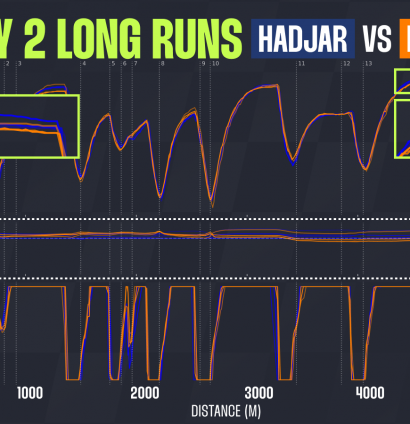
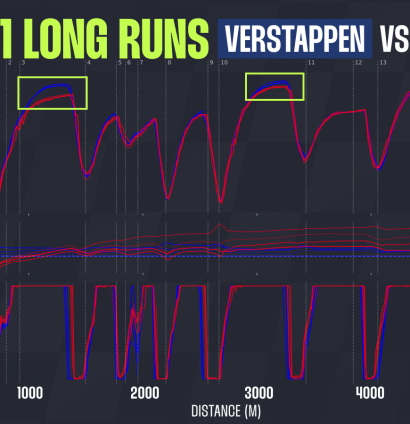
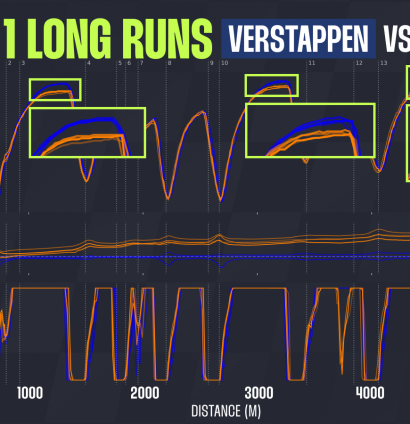
He might not be welcome in Milton Keynes these days, but much of the credit for RBPT-Ford’s assured start should go to Horner, who recruited smartly and effectively after the team’s in-house engine division was founded in 2021.
That RBPT hired a large number of staff from Mercedes High Performance Powertrains – including technical director Ben Hodgkinson and engineering director Phil Prew – almost certainly explained why it was the only other manufacturer to have exploited the famous loophole in the new rules.
If this is the kind of experience and expertise Red Bull Powertrains bought itself, how could it possibly have crashed and burned in 2026?
The greatest compliment that can be paid to Red Bull is that it should begin the new season in almost exactly the same place – very close but not quite at the front – it started last year.
There has been no step back. No dramas. No extended period of learning.
And as we know by now, the team only ever needs to get Verstappen close.
Do that and Max will take care of the rest.
Watch out for Lewis Hamilton and Charles Leclerc at the start in Australia
It is said that Ferrari was a dissenting voice in talks last year for a change to the race start procedure for 2026.
This week’s practice starts in Bahrain have shown why the team has been keen to keep things as they were in previous years.
With the highly complex MGU-H – the ancillary used to convert thermal energy into electricity and manage the speed of the turbo – removed from the engine architecture this season, turbo lag has re-emerged as an issue (yep, another one) with the 2026 cars.
A prolonged start procedure, featuring a five-second warning period between the last car lining up on the grid and the start of the lights signal, was trialled this week after teams expressed safety concerns ahead of the Australian Grand Prix.
It quickly became evident that Ferrari’s starts are by some distance the most potent on the grid even with its rivals getting more time to prepare for lights out.
It is said that Ferrari’s smaller turbo, responsible for its punchy acceleration out of slower corners and its success at street circuits under the previous rule set, is the secret weapon behind the team’s impressive start-line performance.
Not since the first year of the old KERS system in 2009, when the starting grid was split between the haves and have-nots, has there been such a performance disparity among the cars off the line.
The SF-26’s standard-setting starts came as an added bonus in what has been a highly encouraging pre-season for Ferrari, which should go some way to easing the tensions that developed over the course of 2025.
Matt Somerfield tech analysis: Ferrari’s eye-catching SF-26 upgrades in Bahrain
Ferrari unveils radical exhaust flap ahead of F1 2026 aero fight
F1 Testing: Ferrari unveils radical rotating active rear wing
The famous blame culture risked raising its head at points last year as Ferrari suffered its third winless season of the decade, John Elkann called for Lewis Hamilton and Charles Leclerc to “talk less” and Fred Vasseur faced weekly questions over his future even after signing a new multi-year contract.
This, to all intents and purposes, was a team spiralling out of control in slow motion.
In that sense, perhaps the most uplifting aspect of Ferrari’s winter came in the final week in Bahrain with the arrival of two highly innovative upgrades: an exhaust-mounted wing and a rotating active aero rear wing.
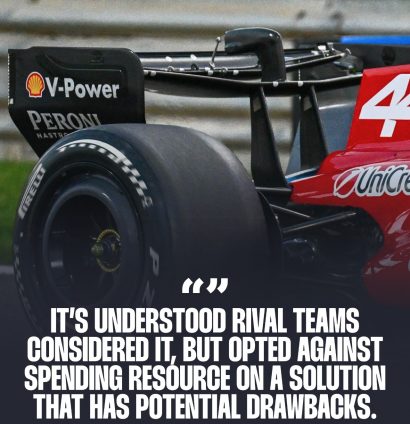
As noted by PlanetF1.com tech editor Matt Somerfield, it remains to be seen whether the new rear wing in particular will bring any significant advantage.
Or whether it will even be an upgrade on the more conventional DRS-style rear wings, which, for one thing, open and close more quickly than Ferrari’s version.
Yet the fact these parts have been developed at all is the surest sign that Ferrari’s willingness to take risks and think creatively – both pillars of Vasseur’s philosophy since his appointment more than three years ago – remains unbruised by the experience of 2025.
That kind of technical courage, in an environment in which mistakes have historically been heavily punished, deserves to be rewarded.
Want to be the first to know exclusive information from the F1 paddock? Join our broadcast channel on WhatsApp to get the scoop on the latest developments from our team of accredited journalists.
You can also subscribe to the PlanetF1 YouTube channel for exclusive features, hear from our paddock journalists with stories from the heart of Formula 1 and much more!
Read next: Max Verstappen, Izzy Hammond and the great Formula E delusion