
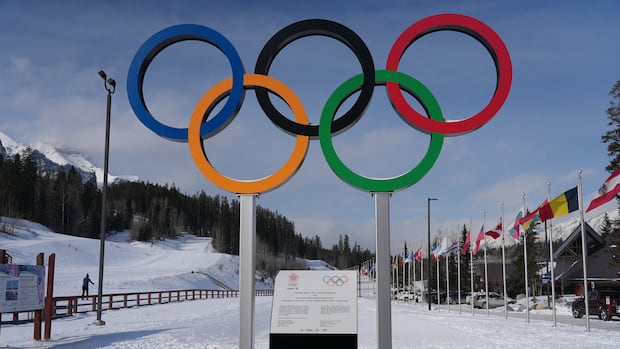
Mining and the 1988 Winter Olympics are forever linked in Canmore’s legacy.
For most of its history, Canmore was a resource-rich coal town. When its last mine shuttered in 1979, the Alberta mountain community suffered a bit of an identity crisis.
Norbert Meier, who came to Canmore in 1976, wondered if the town would become “just the place you stop for gas before you go to Banff.”
But then in 1981, Canmore hitched its wagon to Calgary’s successful Olympic bid.
Canmore — at the time home to 3,500 people — was thrust onto the world stage.
Meier, who helped the CTV broadcast of the 1988 Winter Olympics as a spotter at the Canmore Nordic Centre, said the Games became a “defining characteristic of the town.”
Ken Davies, a Canmore resident for more than 40 years who volunteered at Nakiska Ski Resort during the Olympics, said it showed Canmore wasn’t a “little sleepy mining town.”
“I think that was a big awakening for a lot of people,” said Davies. “We could host the world.”
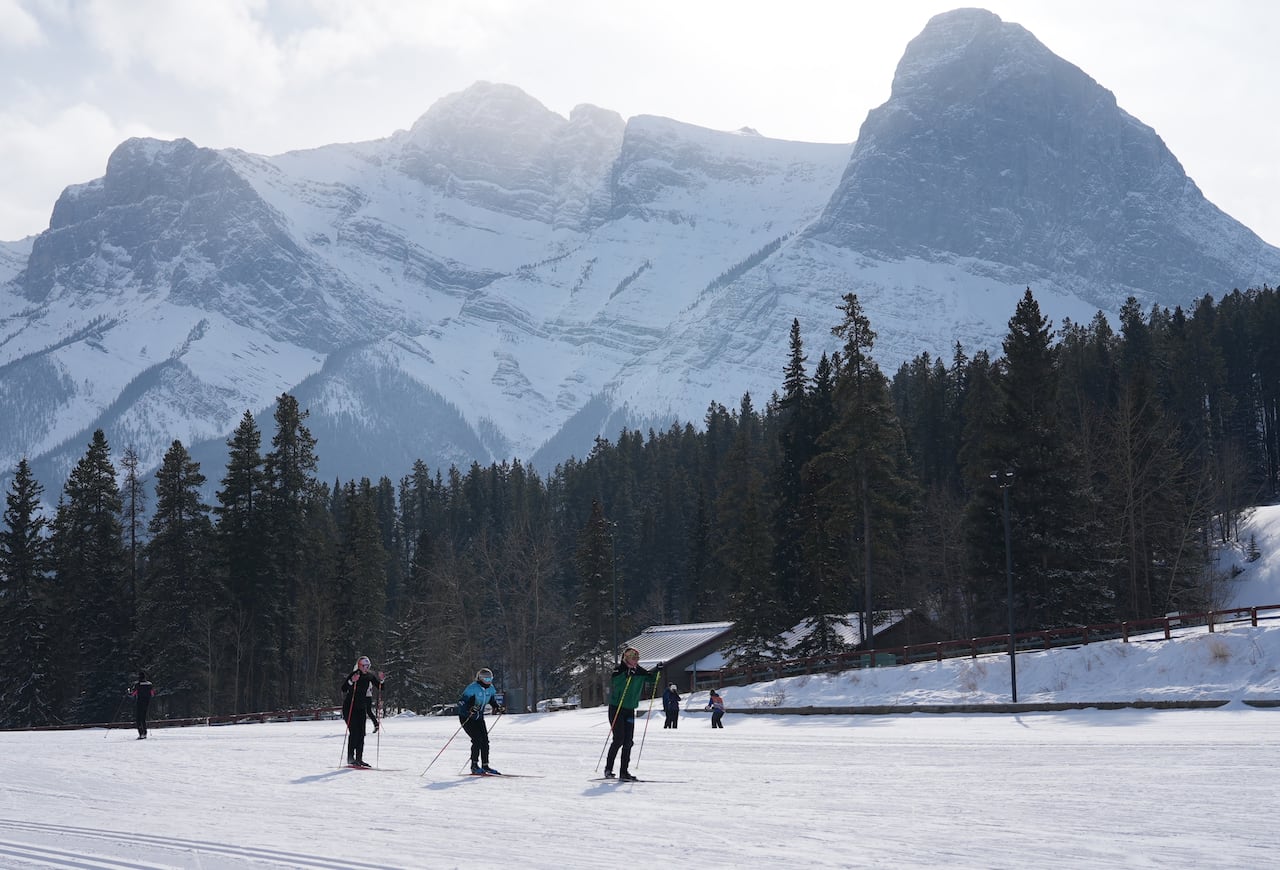 Cross-country skiers use the Canmore Nordic Centre. (Greg Colgan/CBC)Figuring out an identity
Born as a railway town in 1884, Canmore opened its first mine three years later and slowly grew.
The draw of Banff National Park led many to pass the community without knowing it existed, but in the early 1970s the provincial government was already looking for it to be a tourism hub.
A May 19, 1973, front page of the Calgary Herald titled “Will Canmore corridor be ‘valley of gold’?” highlighted its potential as a tourism destination.
LISTEN | What would it take for Calgary to host the Olympics again?:
This is Calgary14:17What would it take for Calgary to host the Olympics again?
Most Calgarians remember the 1988 Olympics as a success for the city — and for what they got built. Hello new CTrain line, Saddledome and Olympic Oval! But when the city had the chance to host the 2026 Winter Olympic Games, Calgarians said no. In this episode, we explore why the No Calgary Olympics campaign prevailed and what it might take to become an Olympic city for a second time.
In 1981, when Calgary was awarded the Winter Olympics over Falun, Sweden, Canmore’s tourism focus shifted into the next gear.
New facilities would be needed. Among them were the Canmore Nordic Centre and Nakiska Ski Resort.
WATCH | Calgary Olympians say expenses can top $50,000 per year:
Calgary Olympians say expenses can top $50,000 per year
Italy-bound Calgary Olympic athletes tell CBC Calgary about the high costs of funding their Olympic dreams, and how they do it.Olympics revive Canmore
Hundreds of locals worked for years to organize the role Canmore would play in the Olympics.
“Banff is preparing to graciously step out of the spotlight, so as not to upstage its budding neighbour Canmore,” stated an article in the Dec. 14, 1987, edition of the Calgary Herald.
John Borrowman arrived in Canmore in 1975 and served as mayor for three terms. He said all Canmore residents were “somehow involved in the ‘88 Olympics.”
The Canmore Leader and Banff Valley Crag & Canyon newspapers chronicled the excitement: the torch arriving, Canmore’s “Olympic baby” Robin Marie Westhaver, and two members of the Soviet Union’s team practically cleaning out Marra’s grocery store, spending $1,000 each.
Banff local Karen Percy — dubbed the “uncrowned Queen of the Rockies” — shined, earning two bronze medals.
“It was amazing. We’d never seen anything like it. The sheer number of athletes, visitors all over town. It was a really happy environment,” said Rob Alexander, who wrote The History of Canmore and grew up in the community.
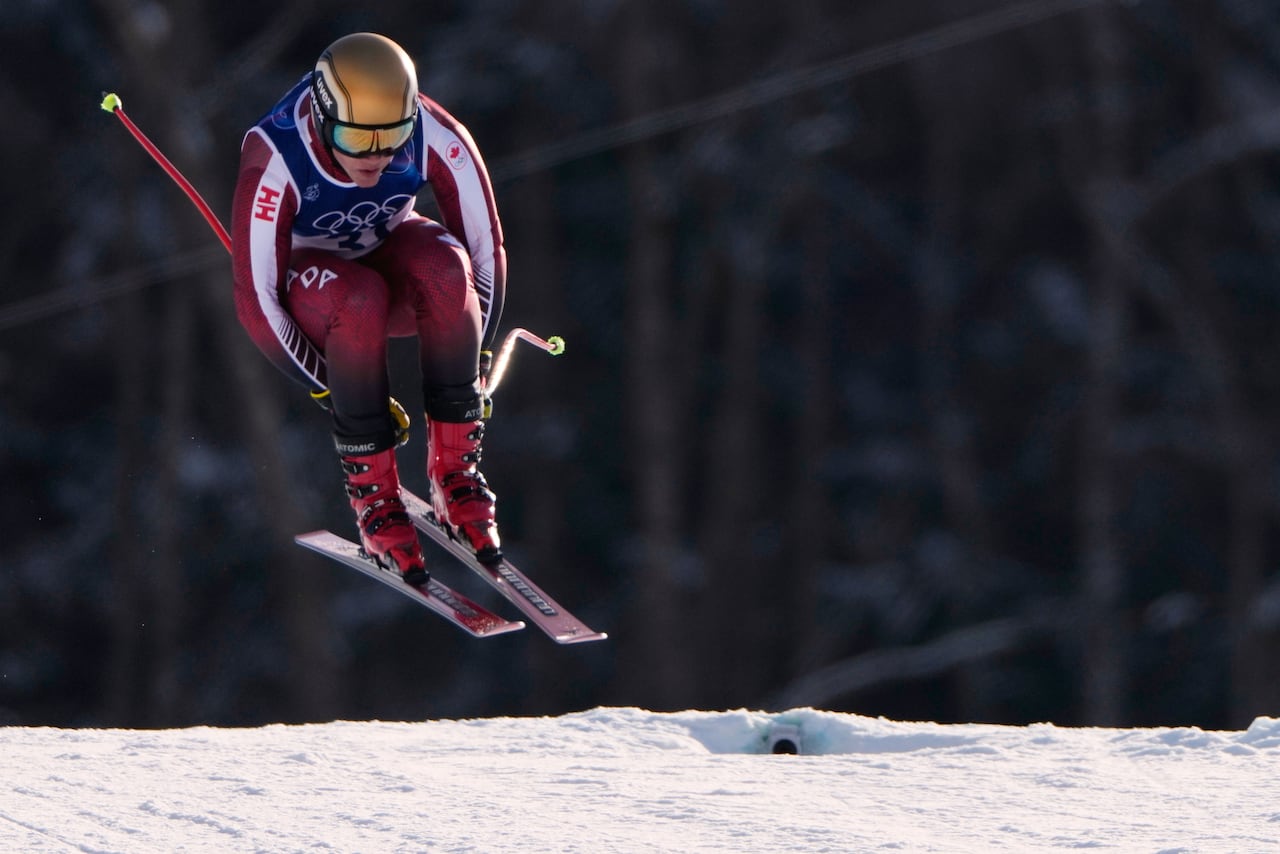 Canmore’s Jeffrey Read speeds down the course during the alpine ski, men’s downhill second official training at the 2026 Winter Olympics, in Bormio, Italy, on Feb. 5, 2026. (John Locher/AP Photo)‘Myth of the Olympics’
The 1988 Olympics are often pinpointed as the moment that transformed Canmore. It pushed the town into its next chapter, one focused on tourism, commercial growth, recreation and second homeownership.
“Canmore would have got to where it is today regardless. It just would’ve taken longer, so I think the Olympics accelerated the change,” Alexander said.
He said “the myth of the Olympics” make it seem like the Games saved the mountain town; instead, he thinks it opened people’s eyes to the fact the Canadian Rockies are more than Banff.
From 1976 to 1986, Canmore doubled in size to 4,000 residents. It had its first big development boom, with greater construction per capita compared to Calgary by 75 per cent. Land worth $30 after the Second World War was then going for $50,000, said Alexander.
The municipality ran ads in the Canmore Leader promoting the community as “the new centre” of development.
LISTEN | Olympic alpine skier Britt Richardson hails from Canmore:
The Homestretch8:11Alpine Skiing Olympic Athlete, Britt Richardson
For the past few weeks we’ve been getting to know some of our Team Canada Athletes from Alberta. Canmore’s Britt Richardson is part of the alpine skiing team.
Alexander said the Olympics had a “profound effect on Canmore.”
While the Games attracted worldwide attention on Canmore, it also meant the town has since been trying to play catch-up on issues such as affordable housing, the environment and conservation.
“It kind of pulled the trigger and everything went into rapid fire,” Alexander said.
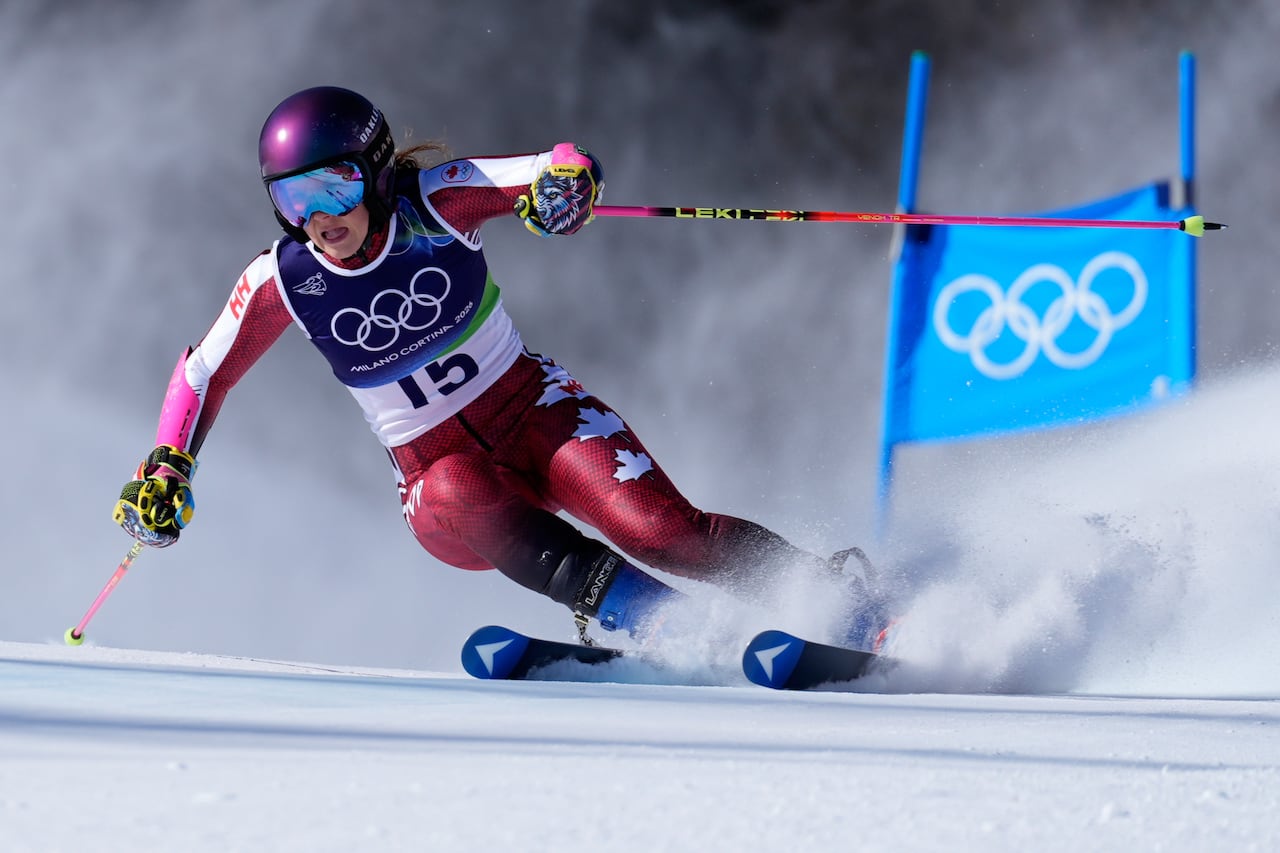 Canmore’s Britt Richardson speeds down the course during an alpine ski, women’s giant slalom race at the 2026 Winter Olympics in Cortina d’Ampezzo, Italy, on Feb. 15, 2026. (Robert F. Bukaty/AP Photo)Legacy of sport
After being spotlighted on an international stage, Canmore’s outdoor recreation became a world destination, with the Nordic Centre being its crown jewel.
The Nordic Centre has held dozens of national and international events since, while Canada’s biathlon and cross-country ski teams and several Paralympians call Canmore home. Meier said there are now 11 cross-country ski clubs in the area for all age groups.
“It’s become a defining characteristic of the town,” Meier said of the Nordic Centre.
Borrowman said as a result of the Olympics, Canmore has become a home for dozens of past, current and future Olympians, solidifying the town as a “centre of excellence for Nordic sports.” It’s not uncommon for young skiers to be taught by former Olympians or Paralympians, for example.
“It dramatically changed the makeup of our community,” Borrowman said.
“We’ve literally watched them be born, grown up, compete on the world stage and have their own kids. That’s a couple generations of Canmore kids directly involved with the Olympics.”
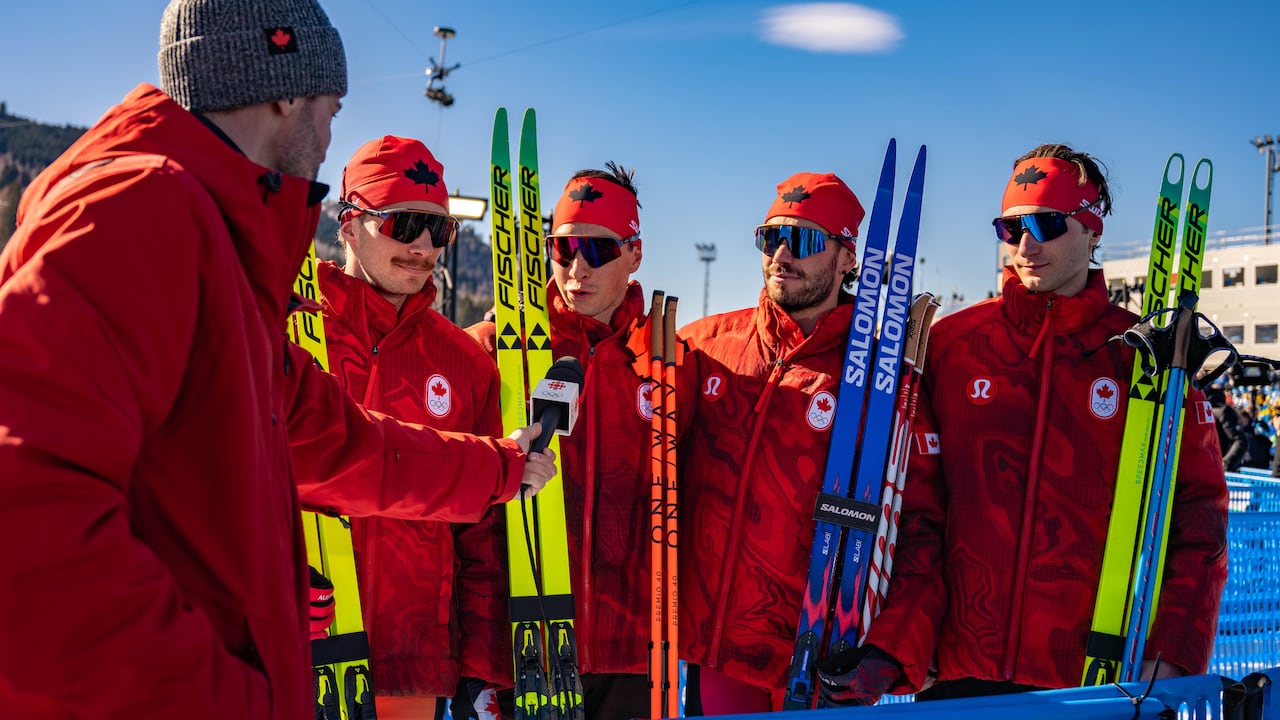 Team Canada’s men’s cross-country skiing 4×7.5 km relay team at the Tesero Cross-Country Skiing Stadium for the Milano-Cortina 2026 Winter Olympic Games on Feb. 15, 2026. The team includes Xavier McKeever, who was born in Canmore, Antoine Cyr, Rémi Drolet and Tom Stephen, who trains in Canmore. (Mathieu Thériault/CBC)