
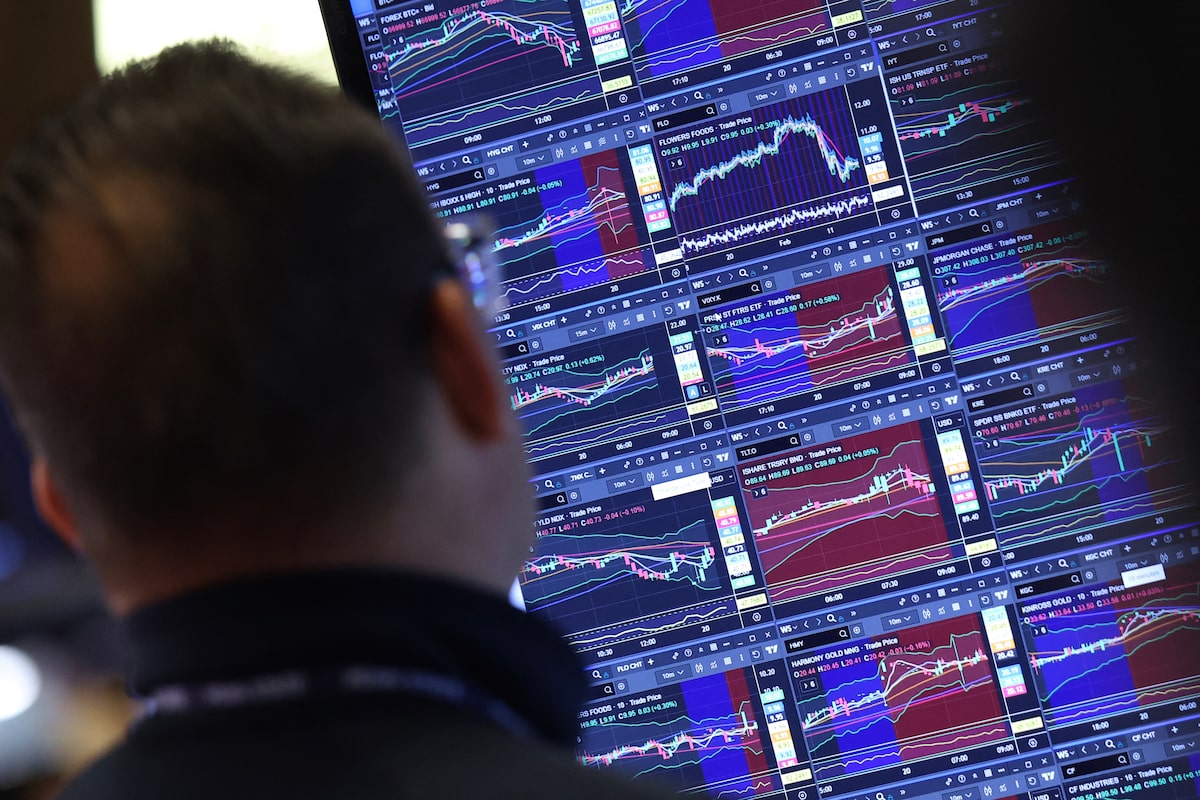
Investors who deliberately embrace huge risks don’t usually achieve bigger rewards. It’s the slow and steady gainers who often wind up on top.TIMOTHY A. CLARY/AFP/Getty Images
I’ve been trying to devise a rallying cry to carry investors through these turbulent times. Here is the best I can offer: Dare to be a wimp! Join me as we throw heroism to the wind and become the cautious folks we have always suspected ourselves to be!
All right, all right. I acknowledge my sloganeering might need a bit of work. But I stand by the underlying sentiment.
The common belief among many investors is that fortune favours the brave. Unfortunately, that stops being true past a certain, quite limited point. Yes, you have to take on a moderate amount of risk to be in the stock market at all. However, investors who deliberately embrace huge risks don’t usually achieve bigger rewards. It’s the slow and steady gainers, the humdrum plodders, who often wind up on top.
Skip the headlines. Your portfolio will thank you for it
To see how this plays out in practice, look at how one of the world’s most boring investments and one of the world’s most exciting investments have fared over the past five years.
My candidate for the world’s most boring investment is Vanguard Canada’s Balanced ETF Portfolio, commonly referred to by its ticker symbol VBAL. It’s a great fund, but it is also a total snooze. This is by design. VBAL consists of a diversified basket of index funds that passively track stocks and bonds around the world. Its low-cost, balanced strategy makes VBAL a steady, dependable investment. However, nobody has ever talked it up at a dinner party or bragged to their pickleball buddies about how they’re betting big on it.
Let’s compare this humdrum investment to bitcoin, the rambunctious cryptocurrency that is supposed to revolutionize the monetary system and create enormous wealth for its holders. Unlike VBAL, bitcoin is known for its wild rallies and heart-stopping plunges.
How have these two very different investments performed since 2021? Bitcoin has gained a cumulative 31 per cent in Canadian dollar terms over that five-year span. Meanwhile, VBAL is up 46 per cent, assuming you reinvested your dividends. At least for now, boring has edged out exciting.
To be sure, the outcome of any comparison like this can change depending on exactly what period you measure. (Bitcoin would look a lot better if we moved our starting point a few months earlier.) The point here is simply that investors should not count on any dependable, surefire payoff from taking bigger gambles. Financial theory might like to assume a predictable relationship between more risk and more reward. The real world, though, begs to differ.
A landmark 1972 study by financial economists Robert Haugen and James Heins found that low-risk U.S. stocks beat high-risk stocks between 1927 and 1971. Subsequent work has shown that this low-risk advantage holds true around the world. Steadier stocks tend to produce market-like returns but with considerably less volatility than the market as a whole. “The notion that greater risk pays off in the long run by generating higher returns has been proven incorrect by academic research,” in the dry words of Dutch investing giant Robeco.
Researchers are still debating exactly why this low-risk anomaly exists. It could be a matter of our limited attention spans. Investors might overlook unexciting, low-volatility stocks because most of us don’t appreciate how a steady flow of incremental gains can add up over time.
The low-risk advantage could also have something to do with deeper parts of our psychology. Surveys show that many investors hanker for lottery-like payoffs from their portfolios. They’re willing to pay unrealistically high prices for investments that have a shot – or at least are perceived to have a shot – at producing spectacular, life-changing gains.
Sadly, these high-volatility, casino-like bets often wind up badly. The result is that more dependable, lower-volatility stocks may emerge as long-term winners simply because they tend to be priced more realistically than their flashier cousins.
More Canadians have workplace pensions, but many are making a big mistake
Wise investors should keep the low-risk anomaly in mind when someone pitches them on a dicey but enticing new venture. Chances are that a steady-as-she-goes approach will generate equally good returns over the long haul, but with considerably less volatility.
Granted, the key words to emphasize there are “long run.” Investing in low-risk stocks is not all gravy. Low-risk strategies – also known as low-volatility or minimum-volatility, in the jargon – tend to lag behind the broader market during times when stocks are roaring, as they have been in recent years.
In fact, minimum-volatility strategies have significantly underperformed the market over the past decade. The biggest reason for their lacklustre results is the amazing rise of the Magnificent Seven stocks and related tech sectors. This is an unusual case where high-volatility stocks have actually carried through on their promise.
History shows, though, that trends can reverse quickly. The appeal of low-volatility strategies is that they tend to shine when markets are falling. If you’re disturbed by the stock market’s recent turbulence and worry about the impact of artificial intelligence on stock prices, now might be a good time to embrace your inner coward and edge into these lower-risk approaches.
There are many ways to do so. Several fund providers, including Vanguard Canada, iShares and BMO Global Asset Management, offer low-volatility or minimum volatility funds. These funds focus on stocks that tend to have reliable earnings and revenue and that gyrate less than the overall market. Not very exciting, I agree. But that’s precisely the point.