
Ottawa’s former poet laureate is urging the city to acknowledge the “oppression” suffered by the Indigenous inhabitants of the region — where they have lived for thousands of years — during this year’s 200th anniversary of the founding of Bytown.
Albert Dumont, the city’s English-language poet laureate from 2021 to 2023 and a spiritual guide from Kitigan Zibi Anishinabeg — an Algonquin First Nation community in West Quebec about 100 kilometres north of Ottawa — said the “Ottawa 200” series of events announced recently by Mayor Mark Sutcliffe should reflect the harms inflicted on the region’s original people.
The city’s planned programming for the 200th anniversary was announced on Jan. 20. It includes funding for special art projects, public events and bicentennial promotions across Ottawa’s retail and restaurant districts or Business Improvement Areas.
“We live in a wonderful city,” Sutcliffe stated at the time. “And this year, we have a chance to celebrate everything that’s special about Ottawa. Ottawa’s 200th anniversary is about telling our story, celebrating together, having some fun, and reflecting on what makes our community so special and unique.”
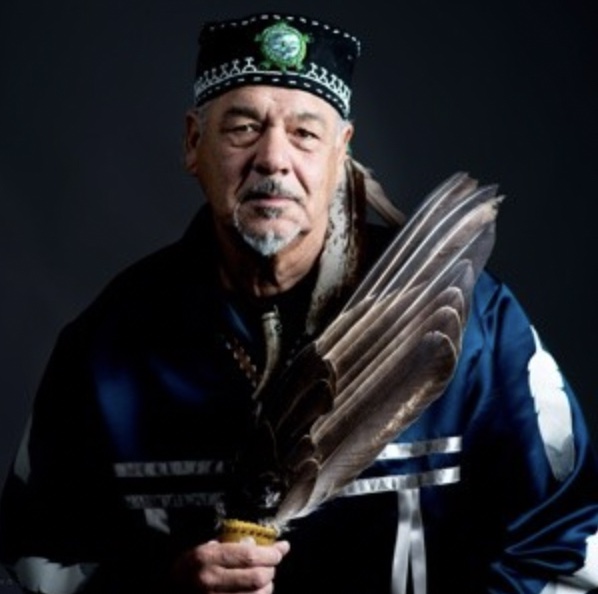 Albert Dumont, Ottawa’s English-language poet laureate from 2021 to 2023, says the 200th anniversary of founding of Bytown/Ottawa should be a teaching moment for local residents to learn about the history of the region’s Algonquin people going back thousands of years. [Photo Photo: ©Jason Pickering/albertdumont.com]
“What are they celebrating?” asks Dumont. “Is it the fact that Algonquin lands were stolen? Is it the oppression of this land’s original peoples by the settler community?”
Dumont said the September 2026 marking of 200 years since construction began on the Rideau Canal — effectively the beginning of Bytown, the future Ottawa — is an opportunity for all citizens of the national capital to learn about who the Algonquin people are, and their history.
“The history regarding how the Algonquins were abused and neglected is not a pretty picture to look at,” said Dumont. “Tell the truth.”
Dumont recently published a poetry collection, The Sound My Heart Makes, that includes a poem titled “The City of Ottawa”. It begins: “When your city was being planned / The Anishinabe Algonquin drum / was not heard / Our songs, not requested / Our voice / Not asked to contribute . . . “
Dumont said he wants to see “Algonquin Days” — a showcase and celebration of Algonquin culture — incorporated into the events of Ottawa 200. He wants city residents to learn the full history of what transpired over the past 200 years, to “let the people absorb it as they ought.”
This part of Eastern Ontario was settled as a hotspot for the logging trade and was a military camp for soldiers and canal workers, led by Lt.-Col. John By, for whom the community was named in 1826.
‘The history regarding how the Algonquins were abused and neglected is not a pretty picture to look at.’
— Albert Dumont, Algonquin poet and spiritual guide
At the time, in the years following the War of 1812 and amid ongoing concern about the military threat posed by the United States, the Rideau Canal was viewed an important alternative transportation route between Upper and Lower Canada beyond the St. Lawrence River and Lake Ontario, which were prone to American attacks.
However, the lands along both sides of the Ottawa had long been occupied and used as hunting grounds by the Algonquin people.
Ben Weiss, a member and spokesperson for The Historical Society of Ottawa, said this Indigenous history is often forgotten about.
“If you look at a lot of what our historical society may have written about, you would think it goes back only 200 years,” said Weiss. “It does not go back 8,000 years, which is how long the Algonquin people have been here.”
There is archaeological evidence of an Indigenous presence in the Ottawa area that begins after the end of the last ice age and retreat of the Champlain Sea, a body of water that once covered much of West Quebec and Eastern Ontario until about 10,000 years ago.
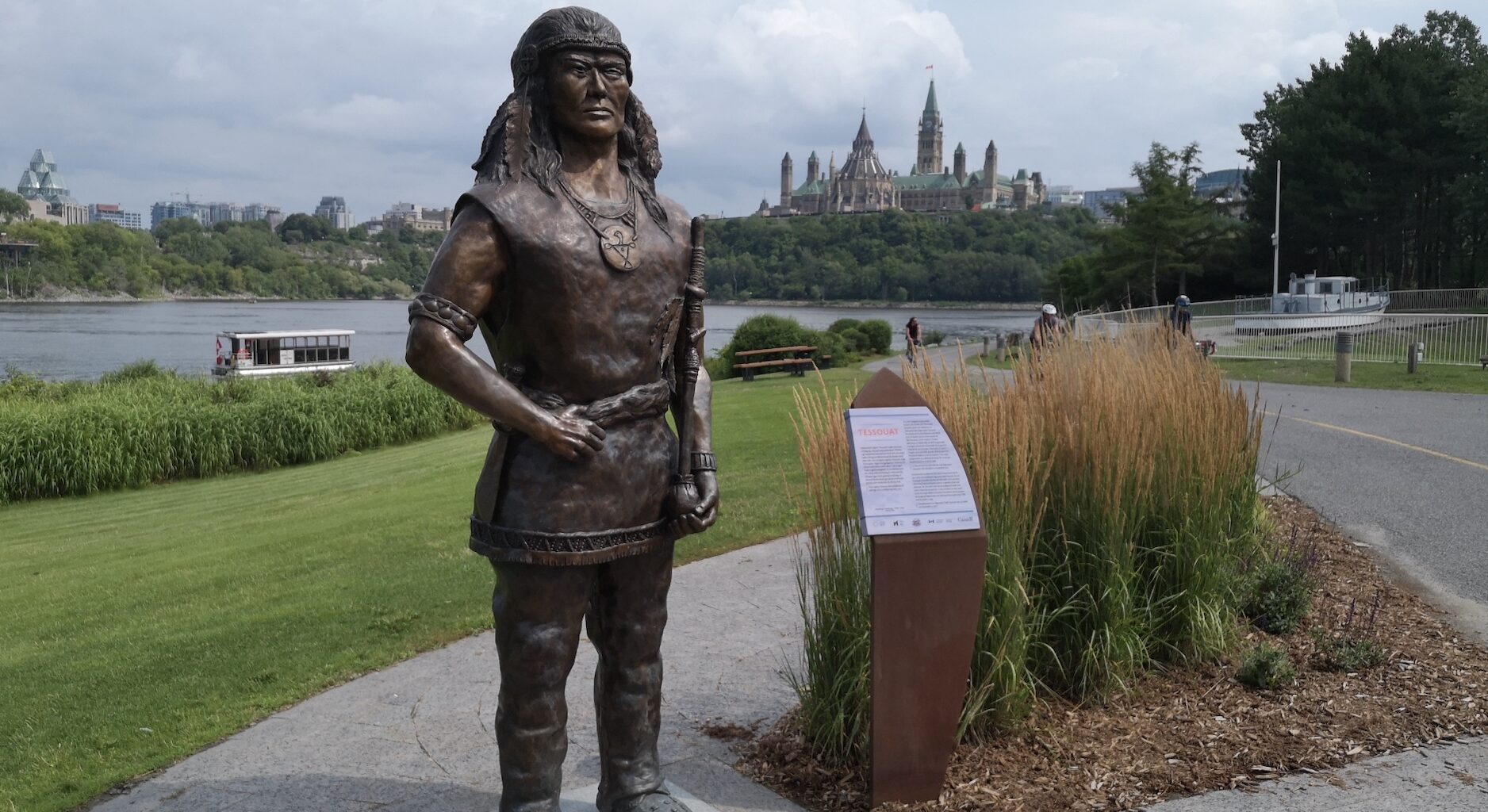
When French explorer Samuel de Champlain arrived in the Ottawa River region in the early 1600s, an Algonquin chief named Tessouat controlled the watershed and blocked Champlain’s travels upriver.
Weiss said that by the beginning of the 19th century, the Indigenous leader and protector of the Algonquin people’s unceded lands was Chief Pinesi. His people’s hunting grounds encompassed all of the present-day city of Ottawa.
Weiss said Pinesi was born around 1780, when the only Europeans he would have seen were voyageurs and fur traders. In Pinesi’s lifetime, however, he witnessed American colonizer Philemon Wright found a settlement — today’s Gatineau — on the north side of the Ottawa River, he saw Colonel By build the Rideau Canal, and watched the region’s white pine forest begin to be felled for the lumber industry.
‘If you look through a lot of our history, we would both romanticize and patronize, perhaps belittle the history of the Indigenous people.’
— Ben Weiss, spokesperson, Historical Society of Ottawa
Weiss said through all the hardship Chief Pinesi saw — the ruination of his people’s hunting and fishing grounds — “he remained confident that the British were going to do the right thing” and respect Algonquin control over much of their territory.
During the War of 1812 against the U.S., Chief Pinesi led warriors who fought on the side of the British. Throughout this time, he sent petitions to the Crown, asking the British government to deal fairly with Algonquin claims for protected land and restitution.
Unfortunately, said Weiss, Chief Pinesi died never losing faith that the British were going to do the right thing.
The Historical Society has planned a series of storytelling sessions as a way to educate people and commemorate the 200th anniversary of Bytown/Ottawa while encompassing the region’s Indigenous history.
Dr. Lynn Gehl, an Algonquin scholar and author of the 2017 book Claiming Anishinaabe: Decolonizing the Human Spirit, delivered a public talk on Feb. 14 titled “Algonquin Anishinaabeg of the Ottawa River Valley: Yesterday, Today & Tomorrow”.
She recalled in the presentation how Champlain “encountered Tessouat, who had jurisdiction of the Ottawa River, and he would charge a toll. So Algonquin people did have an economy. He would charge a toll for the people to move past the islands — Allumette Island, Calumet Island and Morrson Island.”
Weiss said in the coming months, more speakers will be presenting perspectives encompassing different sides of the story of the region’s colonization.
“If you look through a lot of our history,” said Weiss, “we would both romanticize and patronize, perhaps belittle the history of the Indigenous people.”