
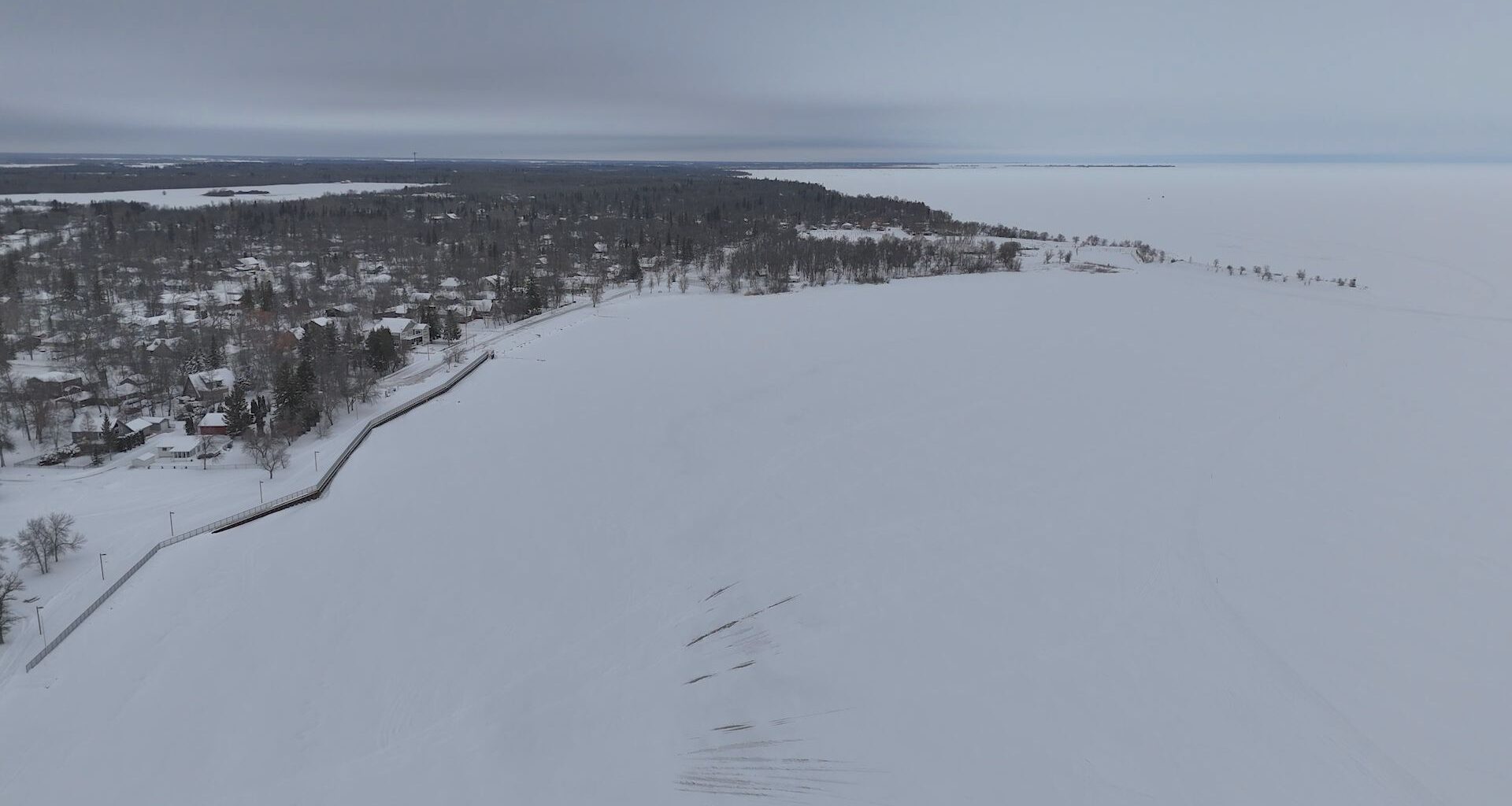
Norway House Cree Nation has filed a lawsuit over water regulation on Lake Winnipeg, citing new scientific findings and decades of environmental concerns it says have reshaped Playgreen Lake.
Chief Larson Anderson said the community has long raised concerns about the impact of the Lake Winnipeg Regulation system.
“In 1997 I signed a master implementation agreement, and I regretted it ever since,” said Larson Anderson.
For decades, the First Nation has argued that water regulation has altered shorelines, fish habitat and traditional land use in Playgreen Lake. Now, backed by a new scientific study, the Nation has filed a statement of claim against Manitoba Hydro, the Province of Manitoba and the federal government.
The lawsuit centres on the Lake Winnipeg Regulation system, built in the 1970s, including the 2-Mile and 8-Mile channels that control water flowing north toward hydroelectric dams. Norway House leadership says while the project supports power generation and flood control, it has also caused long-term environmental damage in Playgreen Lake.
“I am going to go to the supreme court, if need be, but at the same time we are looking for a solution and the solution is right at our doorstep, but they are not willing to listen,” said Larson Anderson.
To support its claim, the Nation commissioned a study by DHI Water & Environment Inc. examining how water and sediment move through the lake. The study found about 70 per cent of fine sediment entering Playgreen Lake now flows through the 2-Mile Channel. Researchers say the lake acts like a bowl, trapping much of that sediment on the bottom. Without the 2-Mile Channel, the study estimates sediment buildup could drop by about 50 per cent.
“What this also does is lead to wherlershine erosion and erosion rates could increase from 25-50 per cent by mid to late century compared to today, so there will be much more sediment erosion down the,” said Danker Koljin, P.Eng., DHI Water and Environment Inc.
Community members say they have seen beaches shrink, sandbars form in old boat routes and changes to fish habitat. Leadership says pickerel and whitefish, key species for the local fishery, have declined over time.
“They used to have a program a nursery for fish, and they would introduce those fish regularly and after the MIA agreement was signed that all stopped so over a period of 25 plus years the fisherman find there are no fish worth catching on that lake now,” said Larson Anderson.
The chief also said Manitoba Hydro’s 50-year licence tied to the regulation system is up for renewal, and the Nation is calling for a full environmental review before any extension is granted.
Both the province and Manitoba Hydro said they cannot comment on a matter before the courts. In a statement, Manitoba Hydro said, “Manitoba Hydro conducts all its operations within the requirements of its licenses, permits, and the legal and regulatory regimes within which Manitoba Hydro operates,” adding the utility is aware of the claim that has been filed and served. The company said it is taking the claim very seriously and will participate fully in the legal proceedings.