
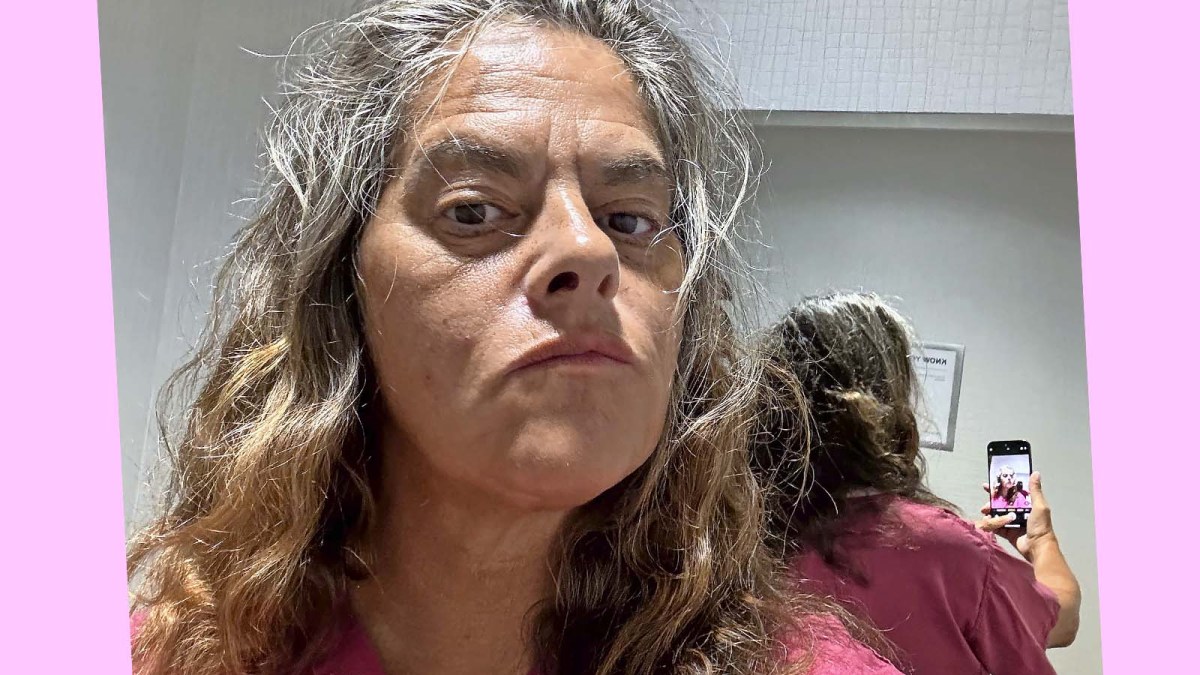
Tracey Emin checks the front of her pyjamas, fixes the buttons and pulls the sheets up higher. She may be in bed, but these days decency is important. In 2024 the King made her a dame in his birthday honours list, and dames don’t flash their bazongas at just anyone.
“I thought I was going to die as a mediocre YBA,” she says with a giggle, nestling deeper in her aircraft carrier-sized bed. We both know there was never a chance of that happening. But she says it anyway. And I respond with a complicit chuckle.
We’ve been reminiscing for hours. Emin is in bed because she’s exhausted. If doing many things at once were an Olympic sport, they would be hanging winner’s medals round her neck in the snow in Milano Cortina.
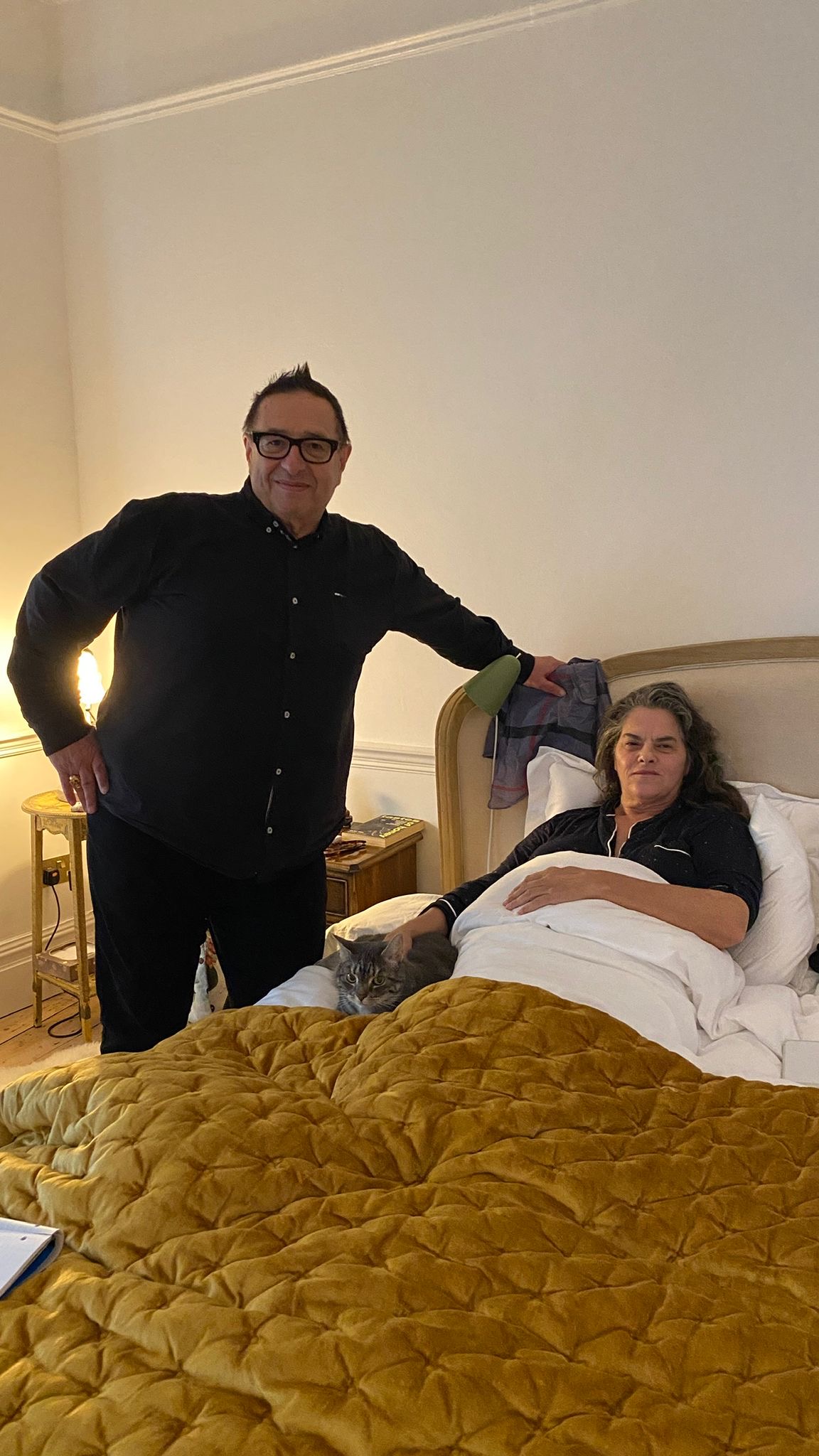
She’s 62 now. Six years ago she was diagnosed with bladder cancer and had an operation to remove her bladder and parts of her intestine along with a hysterectomy. She now has a stoma and has written about how exhausting and tough it is with “constant infections, kidneys working overtime, related bowel issues, constant backache, not to mention living without a vagina”. But, she adds, “the good news is I’m still here”.
But Tracey Emin 2026 isn’t just in overdrive, she has fired the rockets. Playing the “mediocre YBA” card is a bit of knowing cheek.
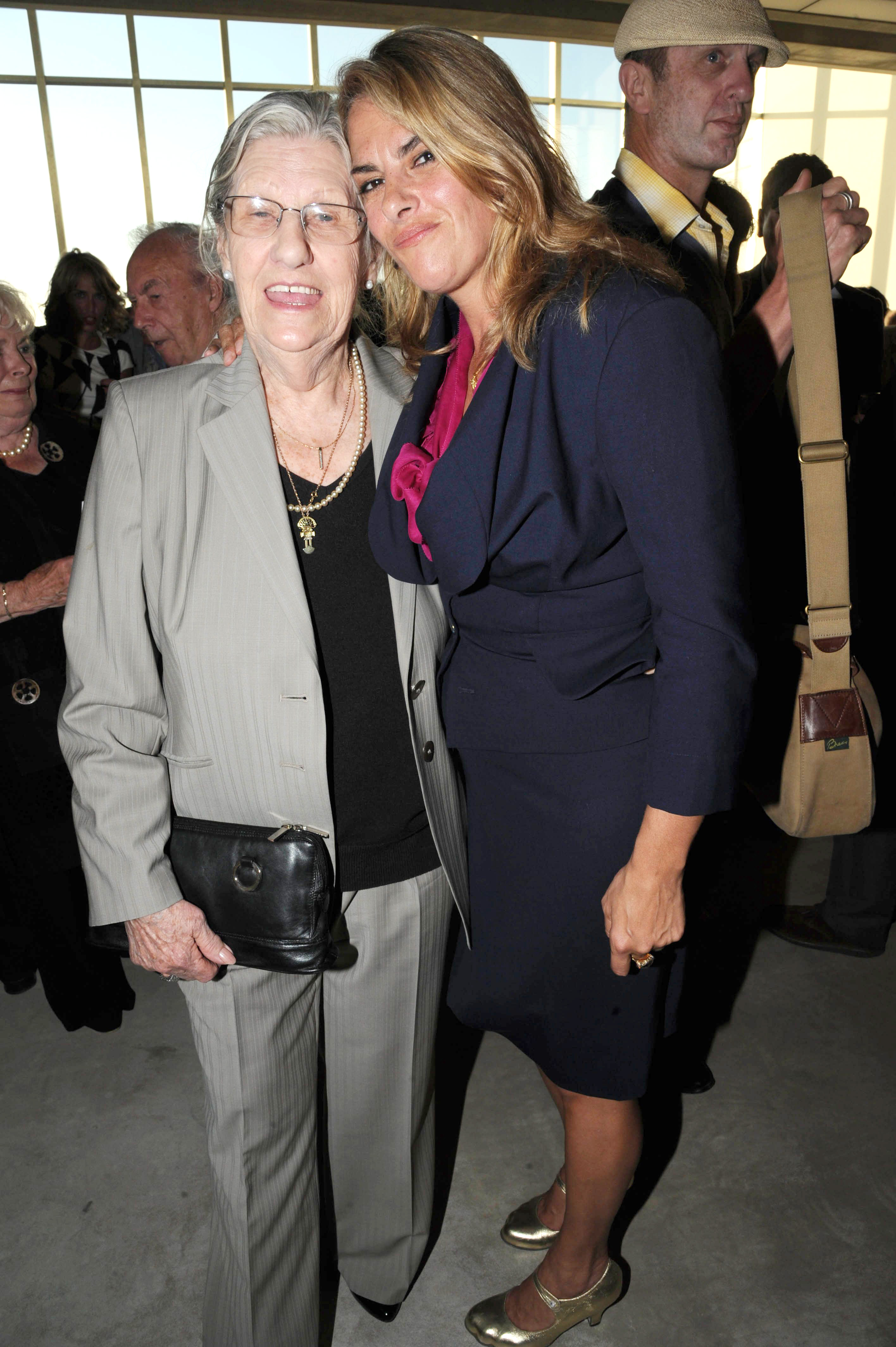
With her mother Pamela, 2012
RICHARD YOUNG
We’re in her boudoir in a towering Georgian townhouse perched in a commanding position in the centre of Margate. Her plan is to make it the Tracey Emin Museum. In preparation she appears to be buying up most of the town, with property after property enjoying one of her exquisite restorations. I call it her “Margate empire”, but she corrects me. “It’s not an empire. It’s a world. Wherever I go I love to feel comfortable. I don’t really like going out much.”
I can’t say I blame her for spending the day in bed. Margate in February is a vicious test of the £5 umbrella. The first half of my trip to the seaside was spent getting rained on and knocked sideways as I tried to catch up with her crazy to-do list.
At her private art school in Margate, TKE Studios, the latest intake of students have reached the halfway point, so shehas curated a selection of their work on the theme of “love”. A few days ago her pal Madonna, whom she has known since Madge popped into the 1999 Turner prize exhibition, visited the school and went round all the students discussing their work.
• Madonna hits Margate! Why the queen of pop was on the southeast coast
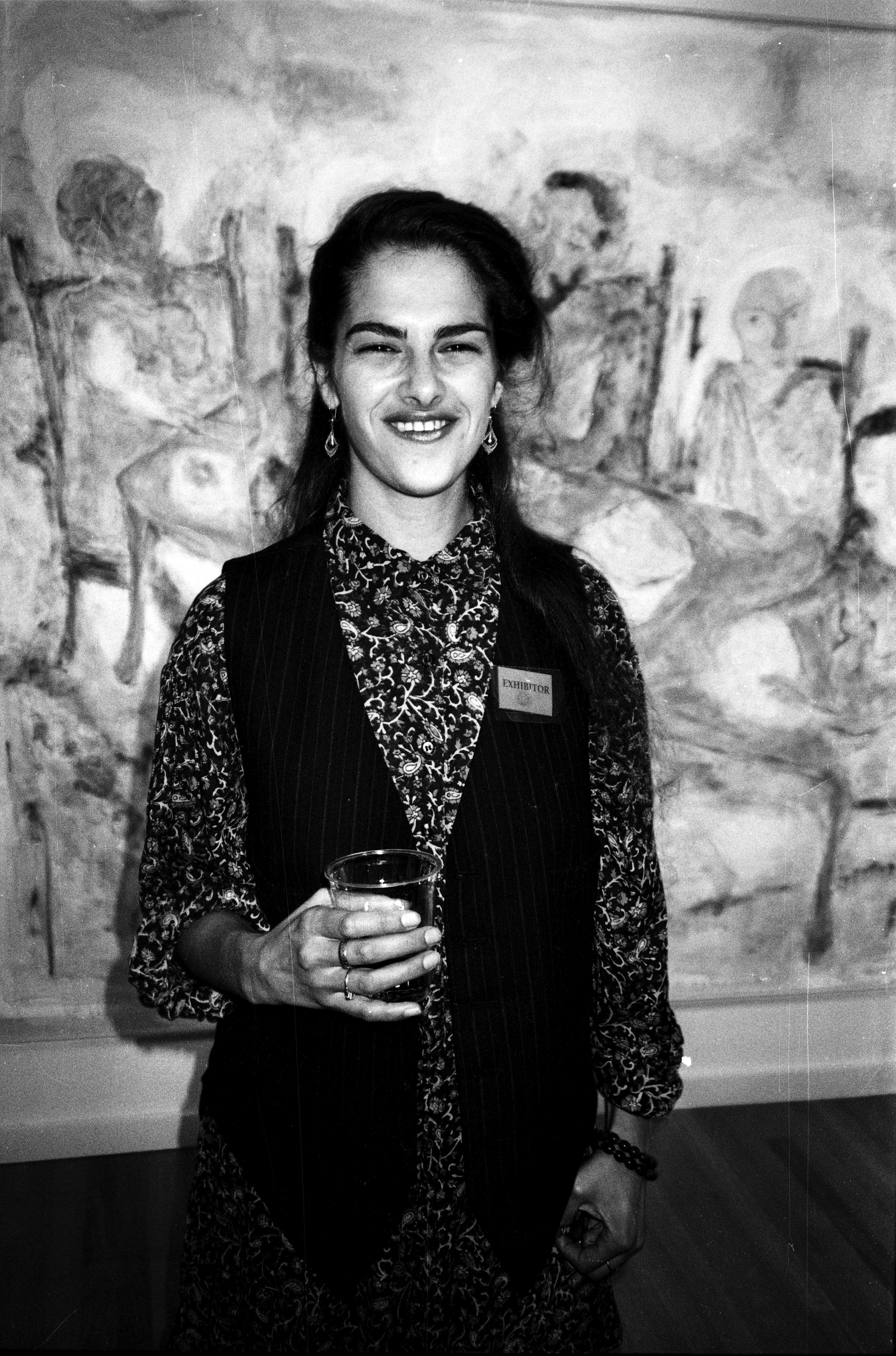
Tracey Emin at her graduation show, 1989
SHUTTERSTOCK
Also at the art school, she has selected some enjoyable paintings by her old art buddy from Maidstone, Vincent Hawkins, where you cannot help but notice how the work she likes in others bears a passing resemblance to her own. In a third display, at the town’s Carl Freedman Gallery, she has chosen works by Anselm Kiefer and Louise Bourgeois.
And then, of course, there’s the biggie. In two weeks she’s opening a huge look back at her career at Tate Modern, where the installers are now frantically installing. It’s the largest and most ambitious show she has had.
Having completed the circuit training through Margate that is required to witness these efforts, I finally get ushered into her cavernous bedroom, where she takes me back to her 13-year-old self to explain the mad busyness. Did I know she used to enjoy cross-country running? No, I didn’t.
“I loved running on days when it was really cold. You had shorts on and your legs would go purple and you’d run through these cabbage fields up to your shins in mud. I was really, really good at it.”
When others tired, she didn’t. She wasn’t quick, but she had stamina. To complete the race they had to do two final loops of the school field. It was only then that she started sprinting.
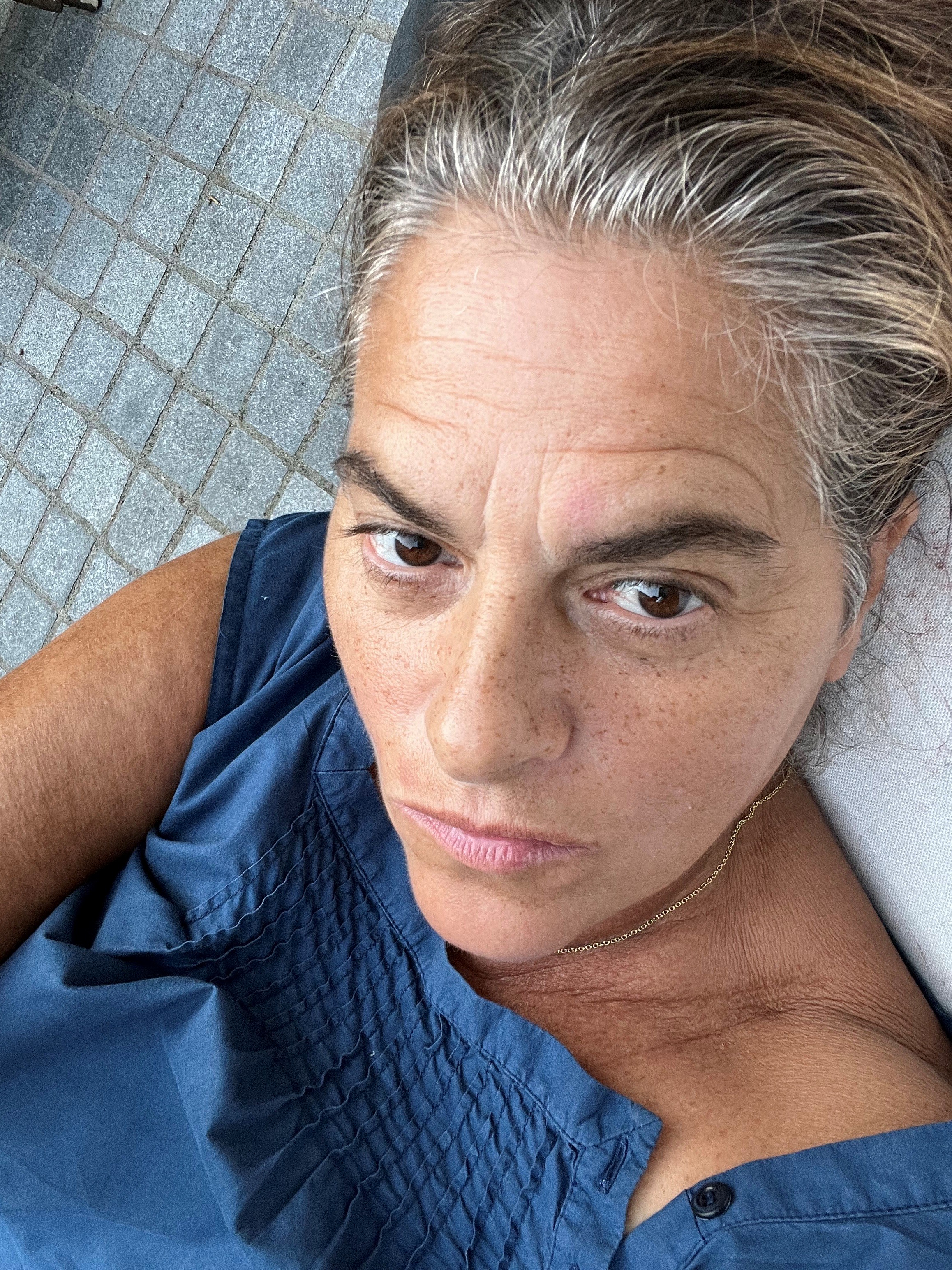
Self Portrait by Tracey Emin, 2025, for The Sunday Times
“I’d run really fast, and that would take another five minutes off my time. I think my career as an artist is a bit like that. I was just running and running. Keeping the same pace up. And now I’m getting to the end, I’m doing the sprint round the field.”
It is a metaphor I wasn’t expecting. But hang on, Tracey, when you were 13 you weren’t just watching your legs go purple and coming 19th in the Kent county trials. Weren’t you also going to nightclubs, drinking, dancing and surviving all that underage sex you’ve made all that art about?
• Are you ready for Frida Kahlo and Tracey Emin at Tate Modern?
Well, yes, there was that too. Her father, who was Turkish Cypriot, never married her mother, who was an English Romanichal (she can say “Gypsy”, she tells me, but I can’t). Her dad had another family. So Tracey was brought up in a hotel, and while her mother went out to work she was left alone and abused.
“When I was a child lots of really bad things happened to me. It’s interesting now when people know so much more about grooming. People refer to paedophile rings, with girls that are 14, 15, having sex with men. When I was 13 or 14 it was considered the status quo. Grooming wasn’t even a word. If you talk about me being groomed, I would say, no. I was down the nightclub. And then I’d go and have sex with someone.”
Having been abused as a child, she sees her teenage sex antics as a way of taking control. “Whether it’s conscious or subconscious, it doesn’t matter. If you’re having sex with a grown man, you think, ‘I’m in control of this situation, it’s my choice.’ Whereas when I was seven or eight it wasn’t my choice.”
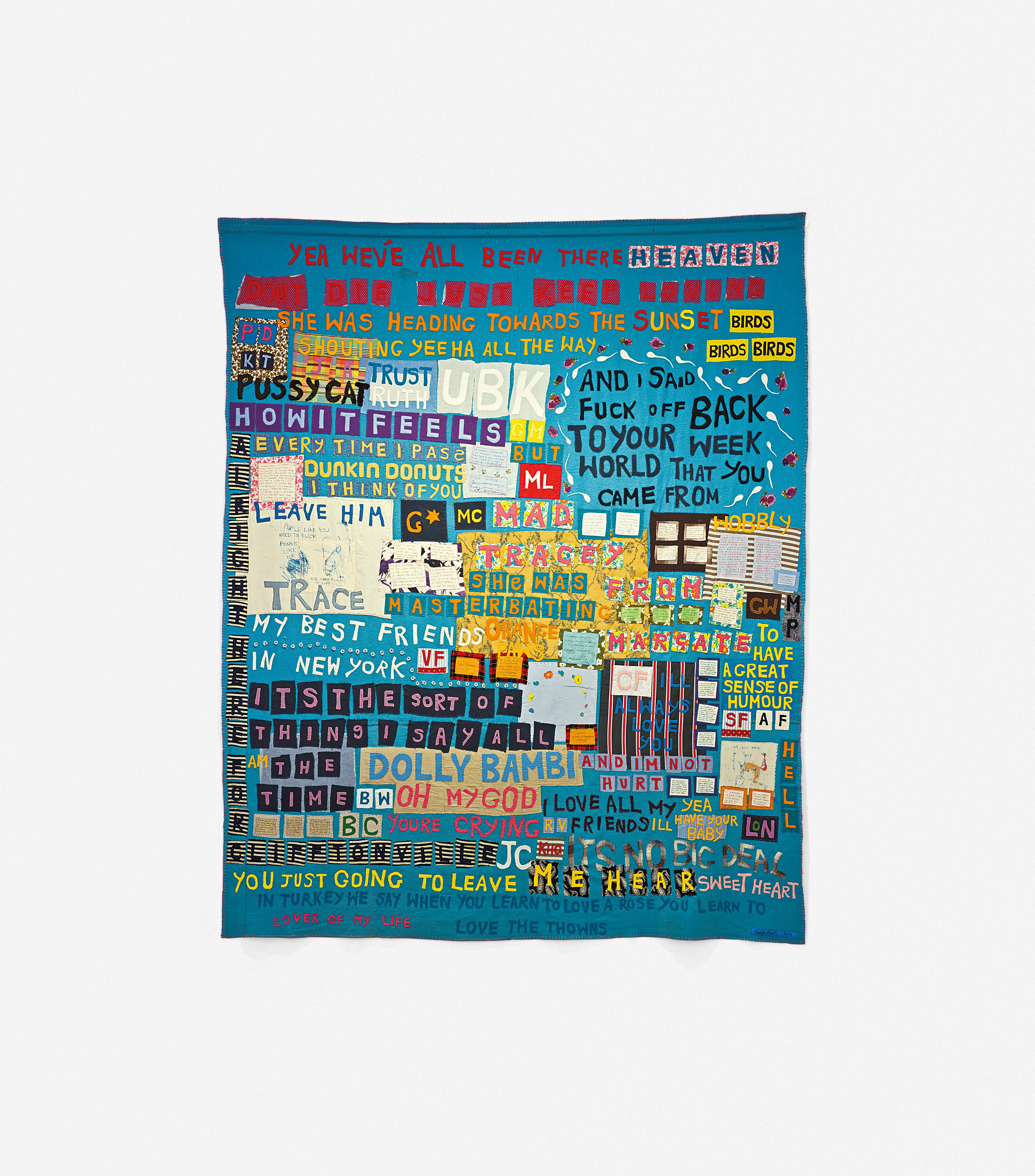
Mad Tracey from Margate. Everyone’s been there, 1997
© TRACEY EMIN. ALL RIGHTS RESERVED, DACS 2026. PHOTO: ANTONIA REEVE
All this will be touched on at Tate Modern in a show she is calling A Second Life. The first part of the journey will be about “pain”, the dark stuff she has lived through and survived. In the rousing video she’s including, Why I Never Became a Dancer, made in 1995, she recounts her teenage years in Margate with little disguise. “I remember the first time someone asked me to grab their balls. I remember the power it gave me.”
At 15 she stopped shagging and started dancing. And got so good she entered the British Disco Dancing Competition of 1978, where she might have made it to the finals had not a gang of boys, most of whom she had slept with, started up a chorus of “Slag, slag, slag”.
At the end of the video, as payback, she shows herself dancing happily, sexily, wholeheartedly, to Sylvester’s You Make Me Feel (Mighty Real). “Shane, Eddy, Tony, Doug, Richard,” she bellows, “this one’s for you.”
Finding out about her Romanichal ancestry was a belated pleasure for her. Her mum had never made a big thing of it, but Emin feels it explains a lot. Her mum had a Romanichal understanding of the “spiritual life”. There were seances and a belief in divinity that Emin defends vigorously. Indeed, we get into something of an argument about it, with my rational doubts measured against her faith in the powers beyond. Isn’t that what art is all about?
• Read more art reviews, guides and interviews
Still on the subject of her Romani past, there was a rumour doing the rounds that for the Tate Modern show she was going to remake her second most notorious work, the travelling tent on which she embroidered the names of Everyone I Have Ever Slept With 1963–1995. Tragically it was destroyed in the Momart warehouse fire of 2004. Is she really going to recreate it? No.
Before I get to Margate, she texts me the facts: “I would never remake the tent or any work for that matter. The tent was made in 1994/5 in my tiny co-op flat in Waterloo. I lived with it erected in my tiny living room for about eight months. Sewing, eating, watching my portable black and white TV in there. Cutting up felt and fabric from old clothes. Each name I sewed I felt like I was carving it in stone.”
Not all the names were lovers. Her twin brother was there as well. Even the foetuses she lost in her notorious abortions. But because it no longer exists, it has no chance now of being taken seriously or understood properly.
Although the tent cannot be in the Tate show, her most notorious work, My Bed, will be. Indeed, it’s going to be the exhibition’s pivot, the point where the “pain” ends and the second life begins.
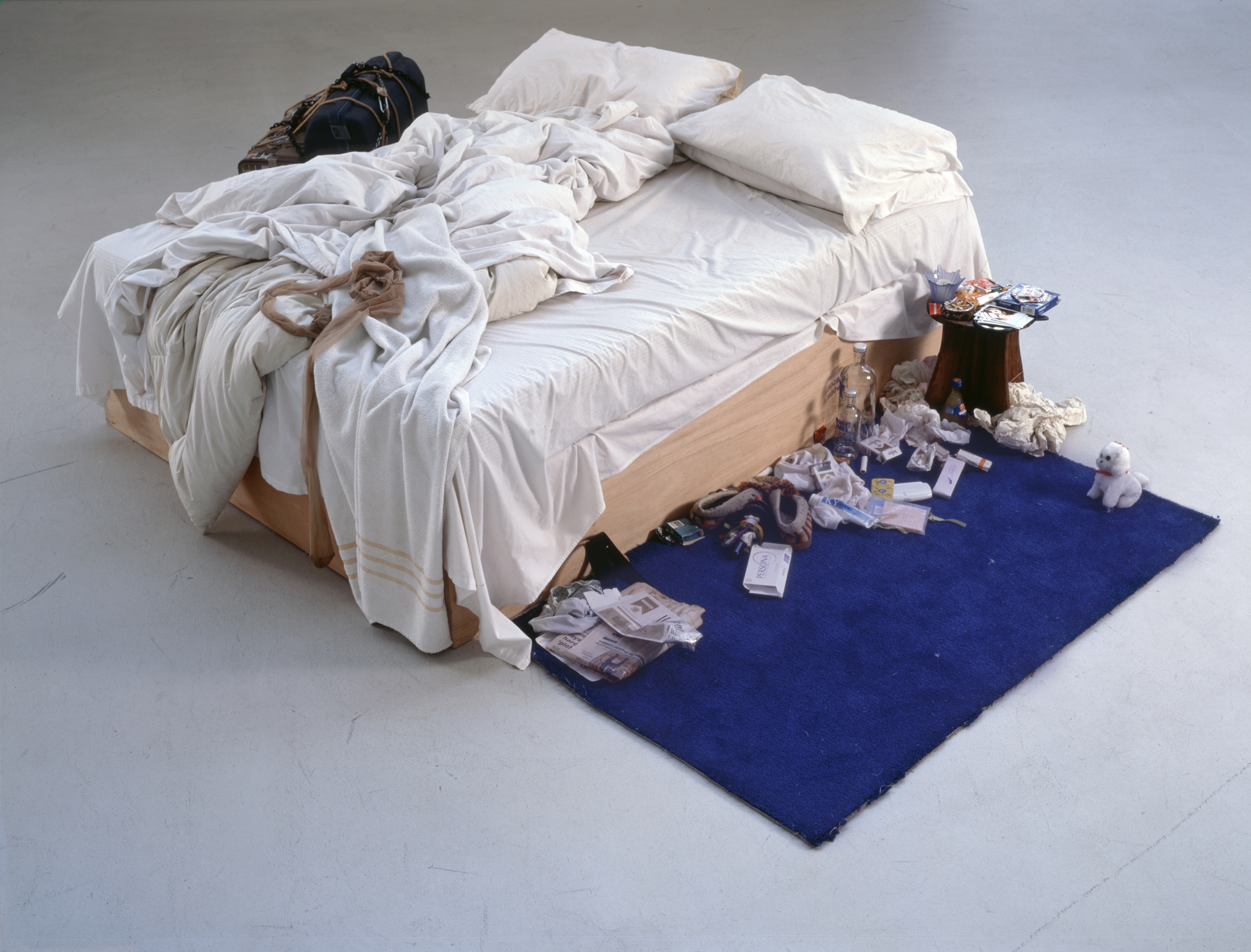
My Bed, 1998
COURTESY THE SAATCHI GALLERY, LONDON/PHOTOGRAPH BY PRUDENCE CUMING ASSOCIATES LTD
My Bed, you will remember, made in 1998, was exactly what it says on the tin: a bed, covered in the detritus of a messy urban life. Empty fag packets, used condoms, blood-stained knickers. It was life not as a symbol but as a précised reality. And although it did not win the 1999 Turner prize in which it was included, it remains her signature work.
“The bed changed my world. It wasn’t an affectation, it wasn’t me whining, it was real, real, real. My whole life I will have to defend it as a work of art, as a thing that’s important to me, as something precious. So I’m very pleased it’s in the show. Really pleased.”
To expand on its importance to her she tells me a story about the time it was displayed in Japan. The bed arrived on time, but the detritus to be scattered on it — the used condoms, the empty vodka bottles — was impounded by Japanese customs and refused entry.
Distraught at the thought of not being able to exhibit it, she wandered the Tokyo streets and found a small temple where she washed her hands and prayed for the bed’s survival. When she got back to the gallery, the Japanese staff could not believe where she had been. The temple was the temple of the samurai. Only samurai and their kin were allowed to enter. But they had some news. The British Council had intervened and the missing bits of My Bed had been waved through customs.
These days she doesn’t drink. Not a drop. “Six years ago I swore to God that if I fell in love I’d stop drinking. And I fell in love.” So that was one reason. Another is the cancer she’s survived. No, she won’t tell me who she fell in love with.
She’s never taken drugs, either. Never had a line of coke. Once, in 1993, she had a quarter of a tab of Ecstasy and it took her three days to recover. And she’s only been stoned three times. Once, at the Royal College of Art, where she had a spliff on the roof with David Dawson, who is now the director of the Lucian Freud Archive. And twice with her twin brother.
I notice she has been rubbing her eyes. What’s up, Tracey? “I’ve got cataracts. I can hardly see colours.” But it’s OK. She’s going to have an operation. “I was going to wait until after the Tate show. But now I want to see it in its full glory.”
Tracey Emin: A Second Life is at Tate Modern, London, Feb 27-Aug 31, tate.org.uk. The exhibition book is available, £32
Which exhibitions are you looking forward to this month? Let us know in the comments below