
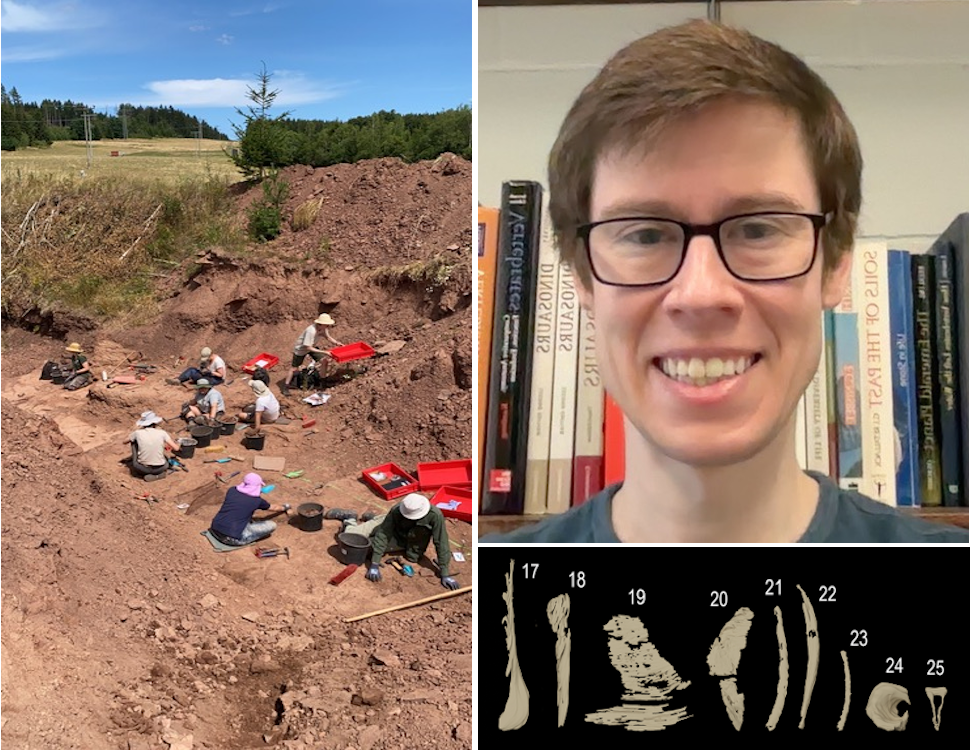
Dr. Mark MacDougall, Assistant Professor of Biology at Brandon University and paleontologist co-authored on the study on may be the oldest known example of fossilized vomit from a land-dwelling predator, dating back nearly 290 million years. The new international study was recently published in Scientific Reports, a peer-reviewed, open-access scientific journal best known for accepting research across a wide range of disciplines, including natural sciences, medicine, engineering, and more.
The study documented the findings of fossilized vomit, more accurately known as a regurgitalite, discovered at the Bromacker fossil site in Germany. It represents the preserved remains of a prehistoric predator’s rejected meal containing partially digested bones that were thrown up rather than passed through, and it’s the earliest confirmed example from a fully terrestrial ecosystem.
Modern animals, including people, do the same thing when something we’ve ingested doesn’t agree with us. Dr. MacDougall says finding evidence of this behaviour so far back in time gives scientists a rare snapshot of feeding behaviour, food webs, and predator-prey relationships in one of our world’s earliest land ecosystems.
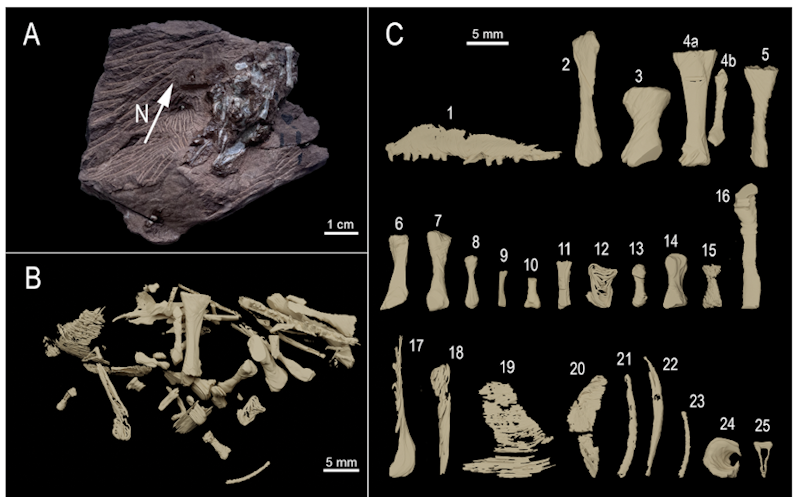 (This 1st image shows the fossil (in A), the CT scans of the bones in the regurgitalite (in B), and then the bones organized (in C). Photo credit: Arnaud Rebillard)
“This fossil is extremely important for understanding how early land ecosystems worked,” says Dr. MacDougall. “It’s rare to get such direct evidence of who was eating whom nearly 300 million years ago. In this case, the predator clearly bit off more than it could stomach.”
Using CT scanning and chemical analysis, the research team identified bones from at least three different animals inside the regurgitated cluster, including a small reptile, a fast-moving lizard-like animal, and part of a much larger plant-eater. All signs point to a top predator, likely an early relative of mammals such as Dimetrodon, gulping down a mixed meal and later coughing it back up.
MacDougall says their belief this is vomit is based on things like the positioning of the bones.
“So, because the bones are all aligned in a certain way, it’s very unnatural. Like you wouldn’t find that typically from an animal that just died. So, these bones are all kind of aligned together, which is what would happen if they were in the stomach of an animal, they would kind of go in the same alignment,” he explains.
“There’s also multiple animals found together, which suggests that there were many different animals in this – that it was munching on at this point in time. And also, yeah, like we identified, we used some techniques to identify the chemical composition of the surrounding rock that it’s found in, and that is what the minerals and elements that you would find in vomit will be different from what you would find in just normal rock at this area.”
“So based on all of these different lines of evidence, we’re able to suggest and interpret that this is likely fossil vomit,” he adds.
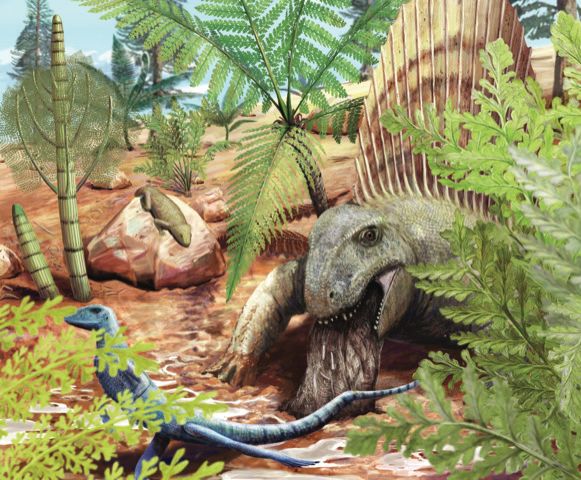 (An artist’s rendition of a dimetrodon – submitted)
Why a Dimetrodon?
“There are only certain animals big enough at this site that will be able to eat these other animals,” says MacDougall. “There’s only a few candidates that could possibly be eating the other animals because one of the things that I did was go through the different bones that were identified in the vomit and identify what animals they belonged to. And based on their sizes, there are only a few things that will be big enough to actually eat them. So that’s why one of the candidates for that would be this dimetrodon.”
More studies: The oldest fossilized impression of scales
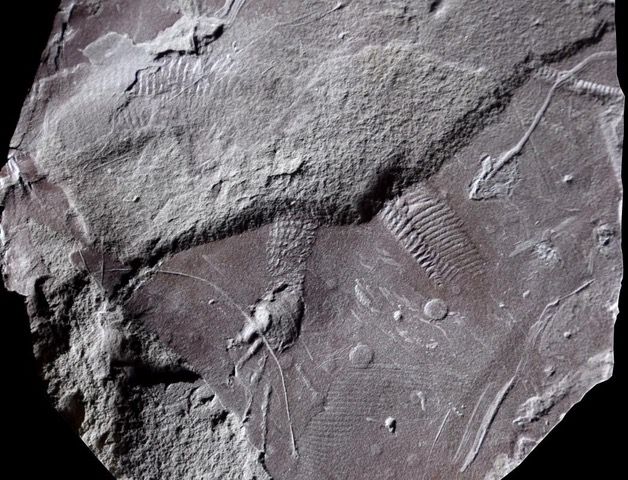 (A photo of the earliest reptile skin impression. Photo credit: Lorenzo Marchetti)
Recently, Dr. MacDougall co-authored another paper on the oldest fossilized impression of scales.
“So, a lot of these animals would have been covered in scales, much like a lizard today would be. And we found impressions. So, these aren’t bones, but impressions in the rock from where these animals would have died that shows the scales, so the shape of the scales and where they would have been located, which is also very rare.”
“It’s rare to get that kind of fossil where you’re seeing evidence of the skin, because usually the skin is one of the first things that will rot away when an animal dies. That’s why it’s usually the bones you find because they preserve much better. But in this case, we’re finding fossil skin impressions, which is quite rare.”
“So that’s another recent study that we just had, and we have many new fossils that we’re describing from there, so new or new little reptiles, amphibians, things like that, as well as some of these other these mammal ancestors as well,” he adds.
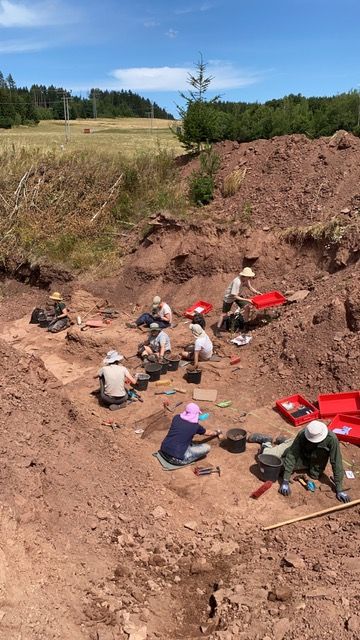 A photo of the Bromacker fossil locality in central Germany.