
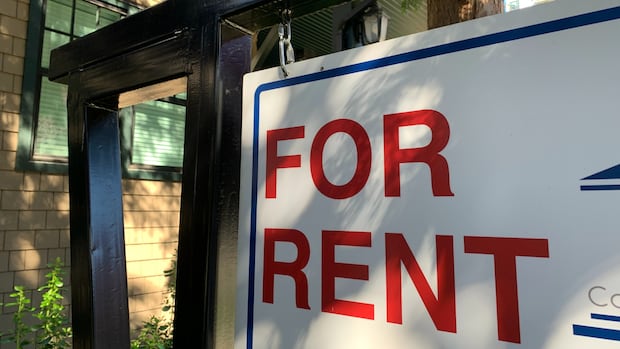
When Kayla Copley moved to the central Alberta town of Rocky Mountain House, it took her more than four months to secure a rental apartment suitable for her and her seven-year-old son.
“I pretty much jumped on the first one that I could find,” she said. “I just wanted a place where me and my son could call home.”
Though Copley now works as a medical office assistant in the town, about 80 kilometres west of Red Deer, she was unemployed and on income support in August 2025 while house hunting, which limited her options.
“The prices were just outrageously high,” said Copley, adding she got help from her family in town during that time. “I couldn’t afford any of it.”
Copley’s experience reflects a broader trend across rural Alberta, where vacancy rates have dropped to their lowest point in the last decade while rents continue to rise, according to data from the provincial government.
A new provincial survey shows the vacancy rate in smaller communities fell to three per cent in 2025, down from 4.3 per cent in 2024 and far below the rate of 14.1 per cent recorded in 2018.
At the same time, some of the highest rents were reported in Hinton, located just east of the Jasper National Park gates, where bachelor and one-bedroom units reached as high as $1,875 per month.
Two-bedroom units in Drayton Valley, about 150 kilometres southwest of Edmonton, climbed to $2,400, while larger units in the northern communities of Peace River and Grande Cache reached up to $3,000.
The annual survey, which has been conducted since the 1970s, looks specifically at multi-family dwellings in communities with between 1,000 and 10,000 residents and at least 30 rental units.
It focuses on non-subsidized rental buildings with four or more units, meaning other types of data, such as basement suite accommodation, is not captured. The provincial government describes it as the only official and unbiased rental housing cost and vacancy information source for rural Alberta.
The survey was not conducted in 2019 or 2020.
Low vacancy rates in many communities
Rocky Mountain House, where the vacancy rate fell from four to two per cent, is one of 21 communities where the survey showed a drop in units sitting empty.
Swan Hills, about 200 kilometres northwest of Edmonton, saw one of the sharpest drops, with the vacancy rate falling from 39.3 per cent in 2024 to 8.7 per cent in 2025. That was followed by Bruderheim, a town in the Edmonton Metropolitan Region, where the vacancy rate dropped from 36.1 to 19.1 per cent.
“It is a trend that’s really important. It’s not like a one-off change,” said Damian Collins, a University of Alberta human geography professor specializing in housing.
Collins said the drop to three per cent signals tightening supply and growing pressure on renters.
“We’re not seeing a lot of new, purpose-built rental housing coming onto the market to meet demand in those communities,” he said.
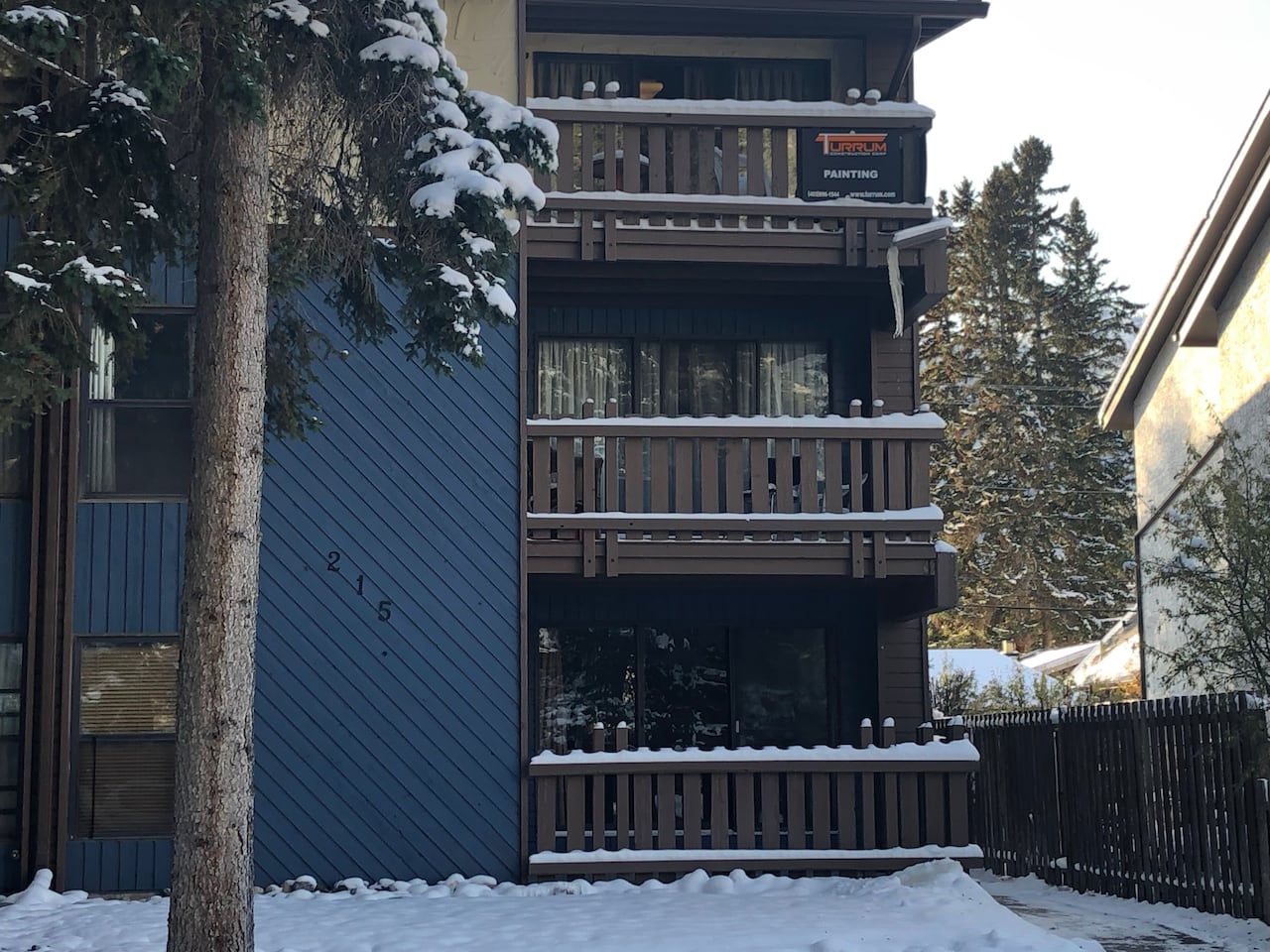 An undated file photo of a three-storey apartment building in Alberta. (Elissa Carpenter/CBC)
In Canada, he added three per cent is generally considered a healthy vacancy rate. Anything below that raises concerns about housing shortages.
“There’s a clear downward trend,” Collins said. “That indicates increasing pressure on renters who are looking for affordable housing.”
No longer just a big city problem
Collins said rural vacancy rates are now lower than in some of Alberta’s big cities. He pointed to similar data in the 2025 rental market report from the Canada Mortgage and Housing Corporation (CMHC), which said the vacancy rate was 3.8 per cent in Edmonton and five per cent in Calgary for purpose-built rentals.
He said Edmonton and Calgary have had success in recent years in adding new, purpose-built rental units, which has improved supply and stabilized vacancy rates.
“For what we’ve been able to achieve with rental housing, I’d like to see that expand into our smaller communities,” Collins said.
Kara Westerlund, president of Rural Municipalities of Alberta, echoed Collins’ concerns. She said a key focus for governments is larger projects in bigger cities, and that smaller communities often struggle to attract the same level of investment and attention as those centres.
“They receive the splashy headlines I think politicians are looking for,” Westerlund said.
The Alberta government survey excludes communities that are reflected in the CMHC annual rental market survey. As well, Jasper and Banff are typically included in the survey but are excluded from overall calculations because of their tourism-driven housing markets.
Jasper was also excluded this year due to ongoing wildfire recovery.
A spokesperson for Assisted Living and Social Services Minister Jason Nixon told CBC News the province has made significant progress in increasing the housing supply, including in rural and smaller communities.
A recent government news release said Alberta communities “made up six out of the top 10 most affordable small- and mid-size rental markets in Canada” and noted that construction starts for purpose-built rentals soared in 2025.
For Copley, the months-long search left her feeling discouraged and overwhelmed.
“It was very frustrating because I felt like I couldn’t support my son. I felt like I was failing him,” she said.
Now, they finally have a place to call home and she said she’s grateful they made it through.