
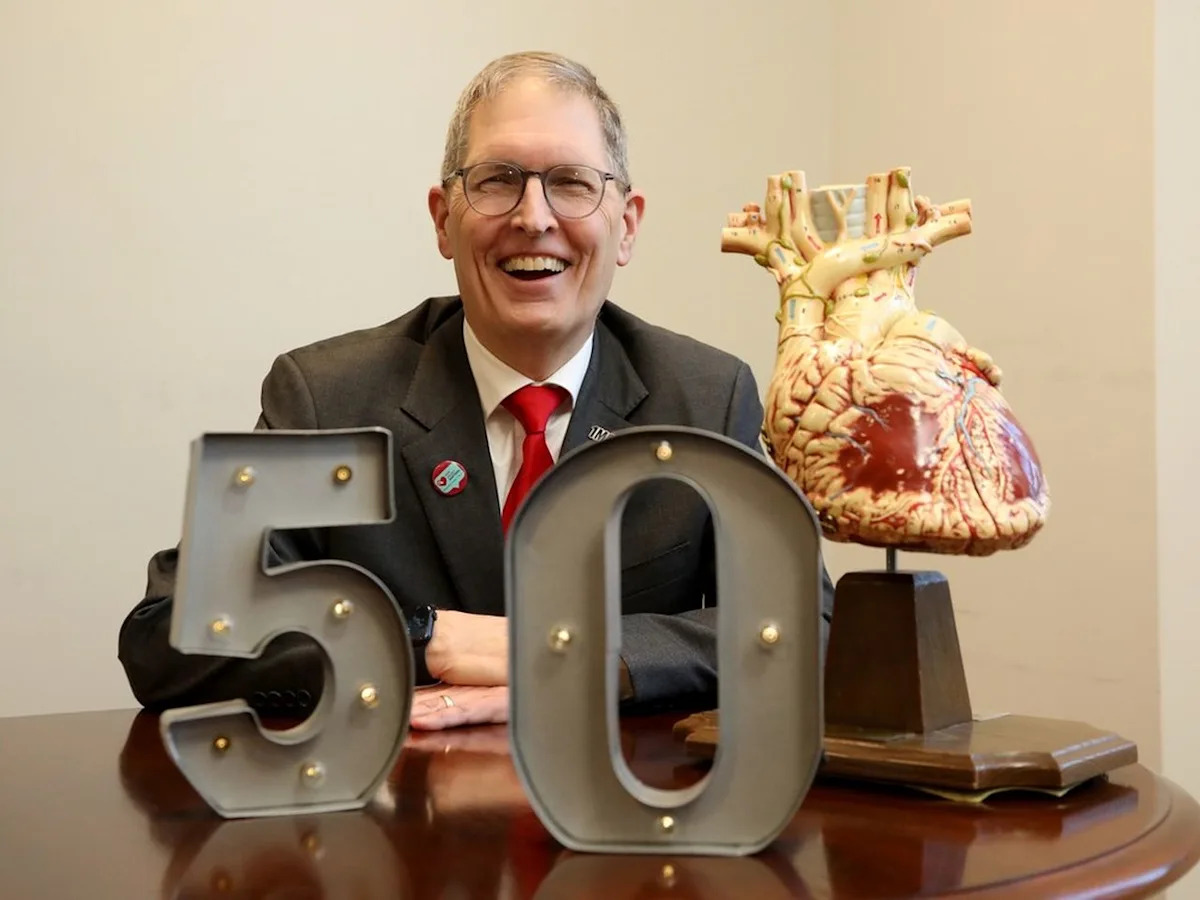
Things have changed since cardiac surgeon Dr. Wilbert Keon and cardiologist Dr. Donald Beanlands co-founded the University of Ottawa Heart Institute 50 years ago, motivated by the belief that Ottawa could set a new standard in heart care.
Robotic surgery, minimally invasive surgery, the expanding use of artificial intelligence, groundbreaking research and treatment innovations and the promise of more rapid change are all part of the reality of modern cardiac medicine at the Heart Institute.
For patients, the evolution of cardiac care has been game-changing. When the University of Ottawa Heart Institute opened its doors in 1976, cardiac surgery meant a lengthy hospital stay and a sizable scar for patients to remember it by.
Today, some patients go home the same day or soon after following minimally invasive surgery, and it is often performed with the assistance of a robot.
This year, as the Heart Institute celebrates a half-century, all those changes and its achievements are under a spotlight.
The institute that was built from the ground up by co-founders Keon and Beanlands is now one of the few independent heart institutes in Canada (most are imbedded within hospitals). That became Ontario law with the 1999 University of Ottawa Heart Institute Act, which codified that the Heart Institute was a specialized cardiac care centre, distinct from a public hospital, working closely with The Ottawa Hospital for administrative and clinical support, but receiving its funding directly from and reporting directly to the province.
That “pivotal” event came during a period when hospitals across Ontario were being amalgamated, notes Dr. Rob Beanlands, current president and CEO of the Heart Institute.
“Dr. Keon basically said, ‘We aren’t into merging, we want to be independent.’ He wanted us to have our own funding and our own responsibilities.”
That independence has helped create a culture that enables the kind of care the Heart Institute gives patients, Beanlands said.
Beanlands, the son of co-founder Dr. Donald Beanlands, grew up with the burgeoning cardiac care centre as a backdrop. As a teenager, he admits, he was more interested in the fact that the Ottawa Rough Riders won the 1976 Grey Cup Game than in the birth of the Heart Institute. As head of the institution 50 years later, the work that went into its creation has come into focus.
“It was bold. It was innovative. It was really stepping outside of the box and saying, ‘We want to do what’s best for cardiac care, for patients and people in the community; we want to build a centre that can give outstanding care but also develop research and translate that into care,’” he said.

Left to right, Ron Jackson, Dr. Donald Beanlands and Dr. Wilbert Keon at the University of Ottawa Heart Institute tribute to Dr. Beanlands on May 1, 2008.
The Heart Institute has frequently led innovation in cardiac care and research across the country. Among achievements and research projects over the years:
The Heart Institute’s STEMI (ST-elevation myocardial infarction) program, in which patients having serious heart attacks are taken directly to the Heart Institute’s catheterization lab for urgent intervention, bypassing emergency departments. It was the first of its kind in Canada. The program, which involves special training for paramedics and preparation at the Heart Institute, was shown to reduce death rates by 50 per cent when it was launched in 2005. It is now the standard of care across the country.
The Canadian Women’s Heart Health Centre was also a first in Canada. The centre represents key recognition that heart disease — the leading killer of Canadian women — is underdiagnosed. It is dedicated to improving women’s heart health through research, education, clinical programs and support. It has been around for more than a decade and now sponsors the Canadian Women’s Heart Health Alliance, which is in more than 50 cities across the country.
The Ottawa Model for Smoking Cessation was developed at the Heart Institute. Dr. Andrew Pipe, considered Canada’s foremost expert on smoking cessation, was instrumental in its development. The model has been adopted around the world.
More recently, the Heart Institute created an Acute Cardiac Triage Unit designed to provide rapid care for patients with cardiac issues and to help keep them out of emergency departments. The unit, which opened in 2024, has seen 5,000 patients, Beanlands said. It is open weekdays, operating until 11 p.m. Beanlands said the Heart Institute would like to see it open 24/7, if funding was available.
The Heart Institute already serves 16 hospitals as a centre for advanced care, as well as West Quebec, Nunavut and Newfoundland. Increasingly, researchers and health professionals are reaching beyond its walls to take cardiac care into the community.
In 2023, the Heart Institute launched a mobile screening program to detect undiagnosed heart valve disease, setting up in community centres, retirement homes and other locations in the National Capital Region. It was clear early on that there was a need for that kind of outreach. Previously undetected heart disease and heart disease risk factors were identified in numerous participants. In one case, the program identified an aortic aneurism in a participant — a potentially fatal condition requiring urgent treatment — who was brought in for urgent surgery.
The Heart Institute has expanded its mobile screening program, launching the One Million Canadian Hearts initiative in 2025 with a goal of screening one million Canadians for cardiovascular disease. It will eventually partner with hospitals and other organizations to screen people for heart disease.
As part of its birthday celebrations, the Heart Institute will take its mobile screening program to Parliament Hill.
“We are here for the community,” Beanlands said. “We want people to know that the institute is theirs.”
Related
Our website is your destination for up-to-the-minute news, so make sure to bookmark our homepage and sign up for our newsletters so we can keep you informed.