
Breadcrumb Trail Links
Moncton to MiramichiNew BrunswickThe IssuesHealth care
Horizon asking the province for funding to expand clinic helping patients with undiagnosed neurological symptoms
Published Feb 22, 2026 • Last updated 11 hours ago • 6 minute read
You can save this article by registering for free here. Or sign-in if you have an account.
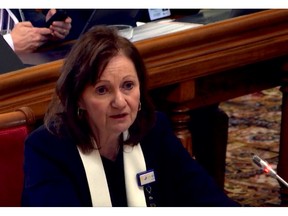 Horizon Health Network CEO Margaret Melanson told the public accounts committee recently that the health authority had put in a budget request to the province asking for funds to expand its MIND Clinic. The resource shortages are causing long wait times for patients, including those with undiagnosed neurological symptoms. Photo by Sarah Seeley/Brunswick NewsArticle content
Horizon Health Network’s CEO says a lack of resources at the MIND Clinic in Moncton is preventing the regional health authority from implementing the province’s recommendations about patients living with undiagnosed neurological symptoms.
Advertisement 2
This advertisement has not loaded yet, but your article continues below.

THIS CONTENT IS RESERVED FOR SUBSCRIBERS
Subscribe now to read the latest news in your city and across Canada.
Unlimited online access to articles from across Canada with one account.Get exclusive access to the e-Edition, an electronic replica of the print edition that you can share, download and comment on.Enjoy insights and behind-the-scenes analysis from our award-winning journalists.Support local journalism and the next generation of journalists.
SUBSCRIBE TO UNLOCK MORE ARTICLES
Subscribe now to read the latest news in your city and across Canada.
Unlimited online access to articles from across Canada with one account.Get exclusive access to the e-Edition, an electronic replica of the print edition that you can share, download and comment on.Enjoy insights and behind-the-scenes analysis from our award-winning journalists.Support local journalism and the next generation of journalists.
REGISTER / SIGN IN TO UNLOCK MORE ARTICLES
Create an account or sign in to keep reading.
Access articles from across Canada with one account.Enjoy additional articles per month.Get email updates from your favourite journalists.
THIS ARTICLE IS FREE TO READ REGISTER TO UNLOCK.
Create an account or sign in to continue with your reading experience.
Access articles from across Canada with one accountShare your thoughts and join the conversation in the commentsEnjoy additional articles per monthGet email updates from your favourite authors
Article content
At public accounts committee sessions in the legislature recently, Kent South MLA Benoit Bourque asked chief medical officer Dr. Yves Léger, as well as the CEOs of both health authorities, for an update on the work being done for patients living with the so-called “mystery disease.”
The report’s findings released last month determined neither herbicides nor heavy metals have contributed to the symptoms of more than 200 patients in New Brunswick. It also found no evidence of unknown or new brain diseases.
New Brunswick’s most recent investigation had been prompted by Dr. Alier Marrero, the neurologist behind the theory of a novel illness affecting a cluster of patients centred in the province. Marrero had raised concerns about elevated levels of heavy metals and pesticides, such as glyphosate, metabolites and glufosinate in those with unexplained neurological symptoms.
Advertisement 3
This advertisement has not loaded yet, but your article continues below.
Article content
The findings from the herbicide analysis showed the vast majority of patients’ results were within the normal or expected values when compared to the laboratory’s reference ranges, and similar to the levels of other Atlantic Canadians obtained through surveys.
Léger told the public accounts committee about 90 per cent of the population has measurable quantities of glyphosate in their blood, “but that doesn’t mean (it) causes a problem.”
“We didn’t think, based on our results, there was a link between the exposure and the sicknesses,” he said.
The province’s report made three recommendations, including confirming the test results for patients with elevated levels using the appropriate sample types; putting a process in place to support patients in receiving a second, independent assessment and a diagnosis of their illness; and ensuring that a formal process is in place to have two specialists review and agree on any report of undiagnosed neurological illness in a patient.

Morning Email Telegraph-Journal
Thanks for signing up!
Article content
Advertisement 4
This advertisement has not loaded yet, but your article continues below.
Article content
Léger said following the release of the report he had discussions with the regional health authorities about the recommendations. He added the rollout of the report’s recommendations, and the patient assessments will depend on co-operation from the RHAs .
“They offer clinical services and they will have to assume leadership when it comes to that,” he said in French.
Margaret Melanson, Horizon Health Network’s president and CEO, told the public accounts committee Feb. 12 a lack of resources at the Moncton Interdisciplinary Neurodegenerative Diseases (MIND) Clinic was impacting clinicians’ ability to see patients.
The clinic serves patients with degenerative neurological diseases, as well as patients suffering with symptoms who’ve not received a diagnosis.
“We have a fairly lengthy wait list and wait time for these patients that are referred to the clinic,” Melanson said. “The clinicians and others that are working there are, I would say, working as hard as they can.
Advertisement 5
This advertisement has not loaded yet, but your article continues below.
Article content
“They need more resources.”
Horizon submitted a comprehensive budget request last year asking for funds to expand the MIND Clinic, said Melanson, noting the request was for additional medical resources and to bolster nursing and other services.
The MIND Clinic team currently includes two neurologists, a registered nurse, a neuropsychologist, a social worker, and an administrative assistant, as well as an associate neurologist and an associate psychiatrist, Horizon’s website states.
In response to a question from Green party Leader David Coon, Melanson said the health authority was experiencing a “dearth of neurologists in basically every (health) zone.” Horizon is looking to recruit for the profession and would like to hire at least five new neurologists for the network, she said.
Brunswick News asked the Department of Health if the province was intending to approve the budget request.
Advertisement 6
This advertisement has not loaded yet, but your article continues below.
Article content
“All budget requests are considered as part of the regular budgeting process,” wrote Meghan Cumby in an emailed response. “Work is ongoing to implement the recommendations made in the report. More information about this work will be communicated when available. The Office of the Chief Medical Officer of Health is aiming to implement the two-specialist sign-off process by April.”
The newspaper also asked Horizon how much it would take to expand the MIND Clinic, and to describe what an expansion would look like.
“As this request is still under review, we cannot share specific details at this time,” said Dr. Susan Brien, Horizon’s senior vice president of medical, academic and research affairs said in a statement.
Asked about progress on the report’s recommendations, Brien said the health authority is working with the Department of Health and Léger’s office to finalize a “collaborative approach” to determine the next steps
Advertisement 7
This advertisement has not loaded yet, but your article continues below.
Article content
“This includes working toward establishing appropriate processes that support patients in receiving accurate diagnoses and coordinated care,” she said.
Dr. France Desrosiers, president and CEO of Vitalité, said at the public accounts committee that even before receiving the province’s report, there had been a meeting with the head of neurology at the Dr. Georges-L.-Dumont University Hospital to talk about offering services for patients to have a second assessment.
She added Vitalité’s physicians will also have a meeting with Public Health this coming week to discuss how to implement the report recommendations.
In a statement to Brunswick News, the health authority said it accepts the recommendations from the province’s report and is committed to implementing them.
“Each affected patient will be contacted and, with their consent, will be offered support and an appropriate clinical reassessment,” said Vitalité in the statement. “Additional information will be sent directly to patients as soon as the details of the process are finalized.”
Advertisement 8
This advertisement has not loaded yet, but your article continues below.
Article content
Léger said his office has also committed to speak directly to the patients once the processes have been set up to inform them directly of next steps if they would like to take part.
He said he believes it is possible for clinicians to work with patients on finding a diagnosis for their symptoms and highlighted the additional assessments as an important next step.
Autopsies from some of the late patients led to posthumous diagnoses such as Alzheimer’s disease, Lewy body disease and Creutzfeldt-Jakob disease (CJD).
“We recognize those people are quite sick. It’s not a matter of saying those people aren’t suffering from illness. It’s clear to us those patients are quite ill,” Léger said. “The work didn’t answer all the questions and it would not end our work.”
Bourque asked Léger if the province was going to be undertaking any more studies.
Advertisement 9
This advertisement has not loaded yet, but your article continues below.
Article content
Léger said if patient assessments show “abnormal findings,” or if the patients have a known illness with “out of the ordinary” characteristics, it could warrant the question: “Is there something else to be done?”
But, he concluded, “at this point no other investigations are expected,” he said.
The medical officer noted the Public Health Agency of Canada was performing its own independent review of patient data separate from New Brunswick’s investigation, upon the request of the province, and the federal agency had not yet provided a timeline for its work.
PHAC spokesperson Anna Maddison said in an email the New Brunswick government and the federal health agency have signed a formal data sharing agreement, and the province obtained consent from patients for data sharing with PHAC.
Timelines for PHAC’s review and analysis of the available data will depend on the time required for Léger’s office to transfer the full dataset to the agency, said Maddison.
Advertisement 10
This advertisement has not loaded yet, but your article continues below.
Article content
“The review has begun with the first set of data received, noting that further data is expected from the province,” she said. “The estimated duration of the review and analysis itself is several months after all the data has been received.”
Bourque told Brunswick News in an interview he asked his questions to the chief medical officer and the health authorities because he had constituents in his riding who were in the patient group.
Though he had received varied responses from the health authorities, Bourque was pleased to see Léger’s office and the RHAs striving to help the patients get a diagnosis and treatment plan, and that the province’s work was not over.
“I’m happy that I brought this up because it gives me a much better understanding of what the current situation is,” said Bourque.
Article content
Share this article in your social network