
NASA has formally classified Boeing’s CST-100 Starliner Crewed Flight Test as a Type A mishap, the agency’s highest-level incident designation, following the release of an independent investigation into the spacecraft’s troubled 2024 mission.
The report, completed in November 2025 by a Program Investigation Team chartered earlier that year, examined technical, organisational and cultural factors contributing to propulsion anomalies and loss of manoeuvrability during Starliner’s first crewed flight to the International Space Station (ISS).
Starliner launched on June 5, 2024, carrying NASA astronauts Butch Wilmore and Suni Williams on what was initially planned as an eight-to-14-day test mission. However, propulsion system anomalies emerged as the spacecraft approached the ISS, complicating docking operations and prompting an extended on-orbit stay while engineers assessed the issue.
The mission ultimately lasted 93 days. After ground testing and data reviews at White Sands Test Facility, NASA opted to return the spacecraft to Earth without its crew. Starliner landed autonomously in September 2024 at White Sands Space Harbor in New Mexico. Wilmore and Williams later returned aboard SpaceX’s Crew-9 mission in March 2025.
In a statement accompanying the report’s release, NASA Administrator Jared Isaacman acknowledged both technical and managerial shortcomings.
“While Boeing built Starliner, NASA accepted it and launched two astronauts to space,” he said. “Beyond technical issues, it is clear that NASA permitted overarching programmatic objectives of having two providers capable of transporting astronauts to-and-from orbit influence engineering and operational decisions.”
The reference underscores a central tension within NASA’s Commercial Crew Program: maintaining two independent crew transport providers — Boeing and SpaceX — to ensure redundancy and competition. Investigators found that this strategic objective, while foundational to the program, may have shaped risk decisions before and during the mission.
The investigation identified what NASA described as an interplay of hardware failures, qualification gaps, leadership missteps and cultural breakdowns. While the spacecraft ultimately regained control prior to docking and no injuries occurred, the temporary loss of manoeuvrability created conditions inconsistent with NASA’s human spaceflight safety standards.
Under NASA’s mishap classification system, a Type A designation reflects incidents involving high-risk potential outcomes and significant financial impact. Although the crew remained safe, the agency determined that the circumstances met the threshold for the highest classification due to the potential for a more serious outcome.
NASA and Boeing have been working jointly since the spacecraft’s return to address technical deficiencies, with root cause analysis continuing. The agency has stated it will incorporate the investigation’s recommendations before approving any future Starliner flights.
The findings represent a setback for Boeing’s long-delayed entry into operational crew rotation missions. SpaceX’s Crew Dragon has conducted regular astronaut transport flights since 2020, while Starliner has faced repeated software, valve and propulsion-related challenges across both uncrewed and crewed test missions.
NASA says it will not authorise another Starliner mission until corrective actions are implemented and verified. The agency has framed the report as part of a broader commitment to transparency and leadership accountability in human spaceflight programs.
The future cadence of Starliner missions remains unclear, as does the impact of the mishap classification on contract milestones within the Commercial Crew Program. What is clear is that NASA’s dual-provider strategy — designed to reduce reliance on any single contractor — now faces renewed scrutiny over how competitive and schedule pressures intersect with safety oversight.
For now, Starliner’s return to flight will hinge on demonstrating not only technical fixes, but organisational changes capable of restoring confidence in the program’s safety culture.
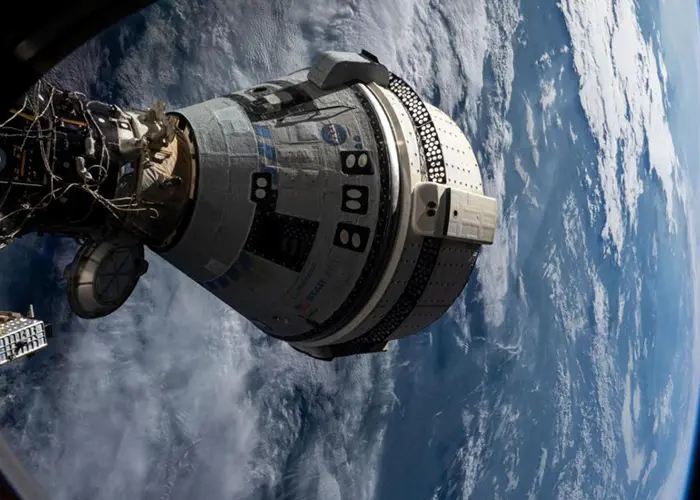
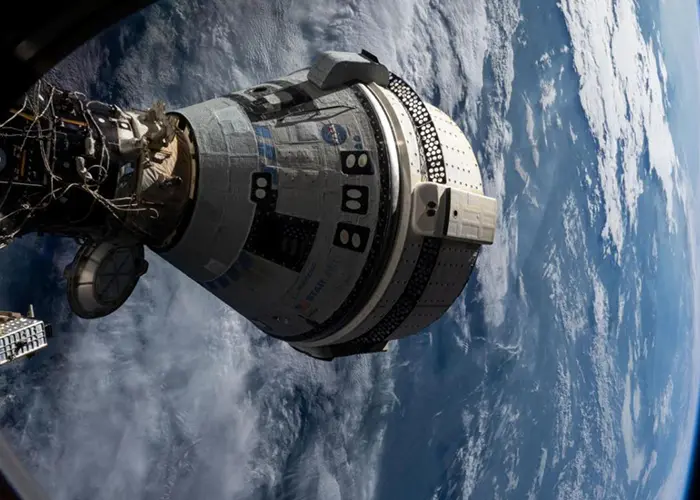
Boeing’s Starliner spacecraft that launched NASA’s Crew Flight Test astronauts Butch Wilmore and Suni Williams to the International Space Station is pictured docked to the Harmony module’s forward port on July 3, 2024. This view is from a window on the SpaceX Dragon Endeavour spacecraft docked to the port adjacent to the Starliner.
Credit: NASA