
Get the best of Vancouver in your inbox, every Tuesday and Thursday. Sign up for our free newsletter.
If you’re like us, you’ve just finished a run of being glued to the TV in the morning of every day, patiently and meticulously watching the Olympics as they unfold during the Italian nighttime but in the morning here in good ol’ PST.
And yes, that’s usually reserved for Canadian teams competing in various sports. But if you’re addicted to watching hockey like yours truly, you don’t really mind getting up in the early morning to watch Switzerland take on Czechia. That exercise is made all the more fruitful by the fact that there are (well, were, now that only two teams remain in the Olympics) a handful of Vancouver Canucks on Olympic teams.
And yes, it’s been an interesting and rewarding experience to see how those Canucks have fared in situations where their team isn’t a total dumpster fire. After the immense letdown of Team USA toppling Team Canada, let’s check in with the six Canucks that represented their countries at the Olympics and assign them a grade.
Teddy Blueger, Latvia
Blueger is one of two Canucks on this list that is likely auditioning for a new job next year (and probably at this year’s trade deadline). Blueger is on an expiring contract that is very affordable and has played some reliable hockey for teh Cnaucks this year when he has actually suited up. Sure, that 50 percent goal rate looks pretty good, but of course he’s only played in 10 games. Eight points in those 10 contests is very solid as well, even if it’s likely a huge outlier.
Blueger didn’t quite reach that level in Italy, with one assist in four games for an over-matched Latvian squad. Still, Blueger was one of the ice-time leaders when it came to Latvian forwards, and often gave the team a strong presence down the middle. He didn’t do anything to really boost his cause as a trade deadline rental, but he didn’t do much to hurt it either. Grade: C+
Filip Hronek, Czechia
Hronek has been the Canucks’ best player this season (not sure it’s even arguable) and he continued that trend while with Czechia during the Olympics. The Czechs’ undisputed number one defenceman logged almost four minutes more than the next closest member of the team (Michal Kempny) on average.
Hronek also scored five points in five Olympic games, quarterbacking the Czech powerplay and generally being one of the team’s best players.
Vancouver has already said that it likely wouldn’t be trading Hronek at the deadline, given what his leadership and stable play means to a rebuilding team (there are even whispers that he might be made captain). But… you have to think he’d command a pretty package if the Canucks did decide to make a move. Grade: A
David Kampf, Czechia
Kampf is the other pending unrestricted free agent on this list and though he likely went into the tournament without a ton of value, given that he recently had his contract dissolved with the Maple Leafs, Kampf showed well in Italy. After a largely uninspiring season with the Canucks in which he’s played solid defensive hockey but only put up six points in 34 games, Kampf posted three points in five games at the Olympics. He often played on a line with Czechia’s best player at the tournament, Martin Necas. He probably gets bumped down a bit for being part of the three Czech players who couldn’t stop Mitch Marner breaking through in overtime, but maybe he learned something from the encounter. Grade: B-
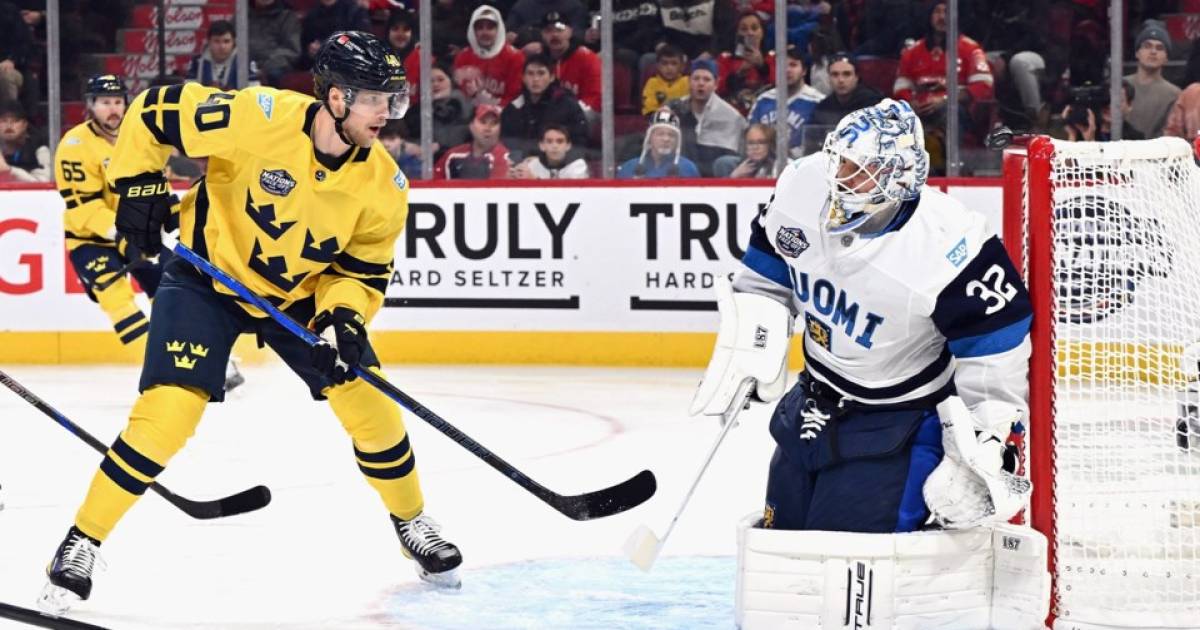
Kevin Lankinen, Finland
After playing two games for Team Finland at the Four Nations tournament, Lankinen didn’t get into a single contest at the Olympics as Finland was (to our knowledge) the only team to only ice one goalie the entire tournament. It’s hard to argue against the decision, as the Finns almost beat Team Canada and they did secure a bronze medal with Juuse Saros leading the way. Grade: Incomplete
Elias Pettersson, Sweden
If you’ve spent any time on Canucks Reddit during the Olympics, chances are that you’ve seen every possible take on Pettersson’s play for Team Sweden. Last year, at the Four Nations, Pettersson was bad. That’s hard to argue with—he was supposed to be one of the team’s top players and he was not that at all.
This time around, Pettersson showed much better. But Swedish coach Sam Hallam (who took molten lava levels of heat for all sorts of decisions that he made) didn’t take advantage of Pettersson’s improved form. Maybe he still had the Four Nations vision of Petey in his head. Whatever reason, it’s fair to say that Hallam underutilized Pettersson, who had two goals against Team Slovakia but was otherwise held scoreless.
That doesnt tell the whole story though. Pettersson was given just under 11 minutes per game in the tournament while centering Sweden’s third line. He was excellent defensively and had many chances. Hallam also didn’t play him at all in Sweden’s overtime loss to the U.S., where his defensive acumen and offensive skills both would have helped a ton. Hallam is going to wear a lot of Sweden’s loss, and that’s what should happen. Pettersson’s usage was just one part of that. Grade: B
Lukas Reichel, Germany
If you had asked before the tournament who the most dangerous Canuck forward at the Olympics would be, odds are that Lukas Reichel wouldn’t have been the obvious answer. Reichel, after all, isn’t even a Vancouver Canuck right now—he’s been plying his trade in Abbotsford after a trade with the Chicago Blackhawks at the start of the year gave him 14 games and one assist in Vancouver.
He’s been better in Abbotsford, to the tune of 12 points in 21 games. But he was a legitimate threat for Team Germany, mostly playing on a line with Leon Draisatl and scoring two goals and adding an assist. It was probably enough to give him another look at the NHL level. What do the Canucks have to lose anyway? Grade: B+